RIO DE JANEIRO, 12 June 2024 (WAM) -- In a bid to attract investment and partnerships from Gulf region entrepreneurs and sovereign funds, Aloizio Mercadante, President of the Brazilian National Development Bank (BNDES), highlighted Brazil's economic potential and vast green economy opportunities. He emphasised Brazil's ambitions in the energy transition, leveraging its unique assets: the world's largest rainforest and abundant water resources.
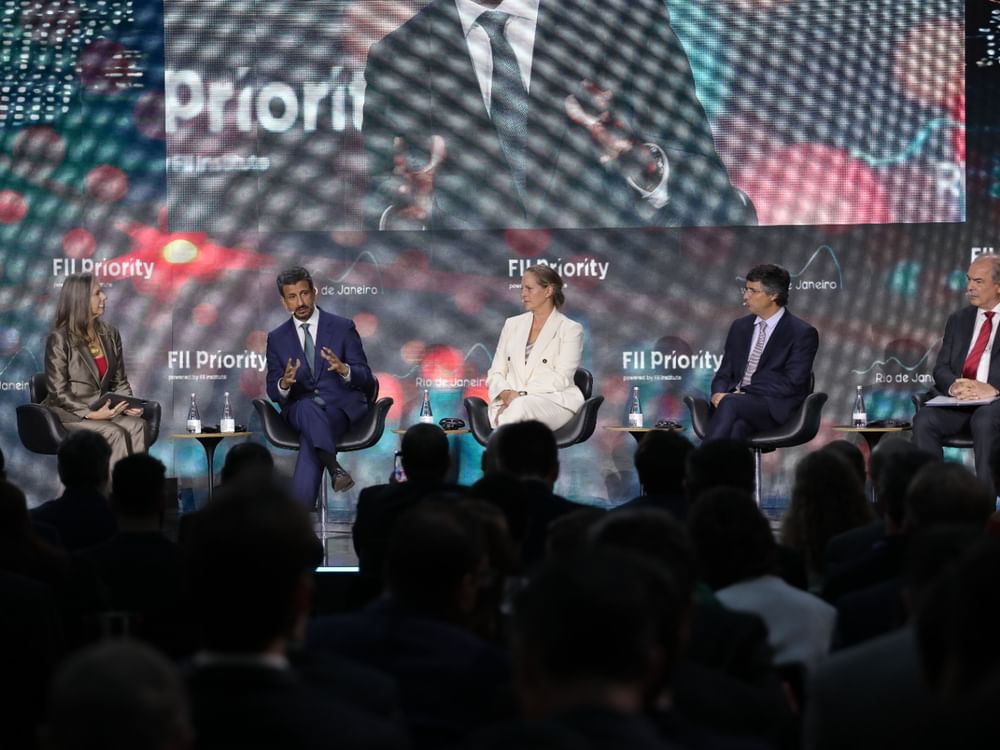
Mercadante's remarks came during the FII Priority event in Rio de Janeiro (June 12-13). He participated in a panel discussion titled "Will Rising Economic Powers Redefine the Future of Investment?" which explored the changing landscape of global investment as emerging economies gain greater influence.
These resources position Brazil perfectly for data centres, clean energy production, and participation in the AI revolution, Mercadante declared, noting that Brazil is already the second-largest recipient of direct investment, boasting the cleanest energy matrix within the G20, with 47% of itsenergy coming from renewable sources.
In this context, the Brazilian Development Bank representative criticised the nations of the so-called Global North. “We are increasingly facing heightened commercial protectionism from industrialised countries,” he said. According to Mercadante, “more discussion between the North and the South is needed”, as well as “more partnerships in the displacement of production chains and greater integration of the global South's production chains”.
Alongside the BNDES president, speakers such as Ahmed AlKhatteb, Minister of Tourism from the Kingdom of Saudi Arabia, and André Esteves, Chairman & Senior Partner of BTG Pactual, discussed how these rising economic powers are shaping investment trends, creating new opportunities for global investors, and redefining the dynamics of international capital flows.
During his panel speech, Aloizio Mercadante highlighted the role of BNDES as the world's leading financier of renewable energy. Between 2004 and 2019 alone, the bank financed US$31 billion in clean energy projects in Brazil. Last year, 83% of Latin America's renewable energy investments went to Brazil, according to the Brazilian development bank. “BNDES today has an alliance with 20 development banks – called the Amazon Coalition – to preserve the Amazon. We are investing in Amazon restoration and planting to combat deforestation,” said the president.
Rafael Solimeo, the head of the Arab-Brazilian Chamber of Commerce office in Dubai, told WAM that Brazil has “excellent structural conditions to lead the energy transition, with the country having ample availability of decarbonised energy in more than half of its energy matrix, including the use of fossil fuels.”
Solimeo also emphasised that the Brazilian market is capable of producing sustainably. “[Brazil] also has different biomes, besides the Amazon, that hold what is perhaps the greatest biodiversity heritage of humanity. The country also has efficient food production chains that adopt the best sustainable practices available to the market and is one of the few in the world that can grow without cutting down a single tree,” he concluded.
Urging investors to “choose Brazil,” the president of BNDES presented the nation to Gulf region investors as open to investment and business partnerships. “Amidst geopolitical changes, tensions, and war, this is a country that has not had a war with any neighbour for 150 years. There are only 15 countries in the UN that have relations with all other nations, and Brazil is one of them. This is a country of peace, that wants dialogue, partnerships, and bridges,” said Aloizio Mercadante.
The BNDES president also highlighted the latest economic indices of Brazil, which has a projected GDP growth of 2.09% for this year, according to the Central Bank of Brazil. The World Bank also projected an improvement in Brazil's GDP growth forecast to 2% in 2024. “The unemployment rate in Brazil today is the lowest in the last 10 years, the workforce is the largest in the history of the index, the real wage mass is the best in Brazil's economic history. The average income of the population is growing by 6.1%. We continue to face immense challenges, but we have a deep commitment to fighting poverty and distributing income,” concluded the BNDES president.
The inaugural FII PRIORITY Summit, which began on Wednesday, brings together global authorities alongside business leaders from various sectors. The event addresses urgent issues under the theme “Investing in Dignity.” On its first day, the event gathered over 1,500 delegates who participated in 66 sessions with more than 190 speakers.
By: Renan Leoncio and Pablo Augusto