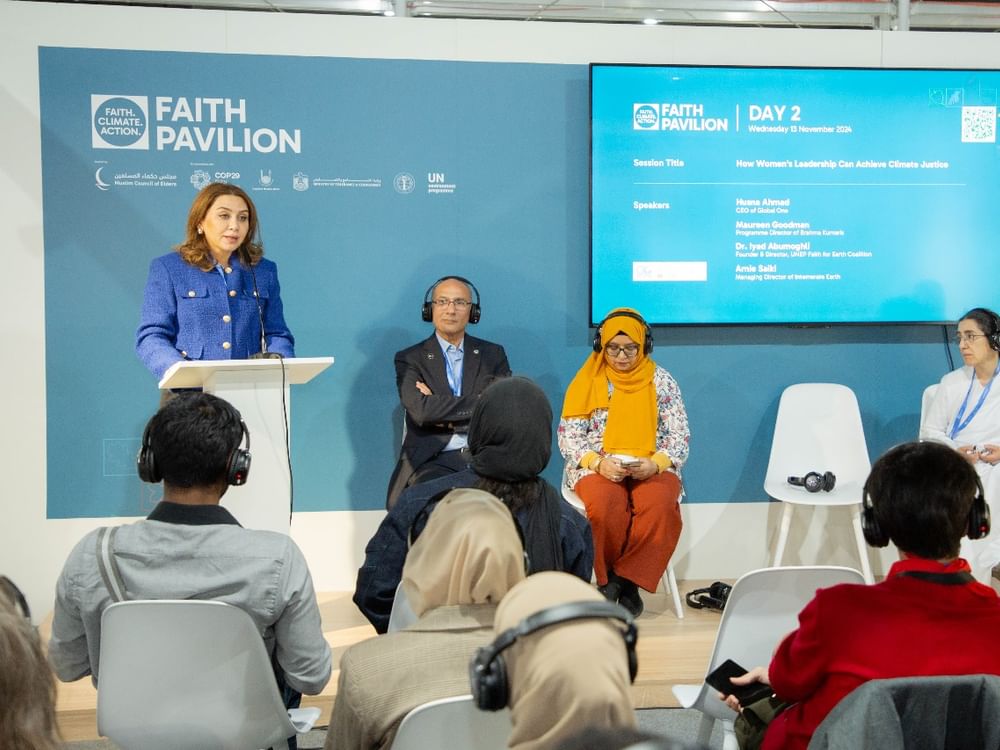
BAKU, 15th November, 2024 (WAM) -- The Faith Pavilion at COP29 featured a series of significant sessions that focused on issues of loss and damage resulting from climate change and their non-economic impacts through faith-based perspectives.
In the first session, "Beyond Material Loss: Exploring Non-Economic Impacts of Climate Change Through Faith-Based Perspectives," speakers underscored the psychological, spiritual, and environmental effects of loss and damage.
The speakers called for the fair allocation of climate loss and damage funds and the inclusion of climate change education in school curricula to safeguard the future of children. They also highlighted the necessity of inclusive dialogue with local communities to find collective solutions to the climate crisis.
Participants in the second session, "Science and Policy Gaps for Effective Measures to Avert, Minimise, and Address Loss and Damage," discussed the scientific gaps that impede effective measures to prevent and address losses and damages caused by climate change.
In a session titled "Accessibility and Utility of Loss and Damage Funding for Community Resilience: Advocating Local Accountability Mechanisms," participants emphasised the importance of accessing and utilising dedicated loss and damage funding to enhance communities' resilience to climate challenges, particularly in Global South countries most susceptible to climate change impacts.
They also commended efforts by religious organisations in Africa to form networks that promote climate justice and gather precise data on climate-induced damages, including infrastructure loss and impacts on mental health and biodiversity.
The fourth session focused on "How Women's Leadership Can Achieve Climate Justice," highlighting pivotal issues related to women's roles in confronting climate and environmental challenges. The discussion addressed strategies to enhance women's inclusion in environmental dialogues and conferences at both local and international levels.
Running until 22nd November, the Faith Pavilion aims to build on the success achieved in its first edition during COP28, hosted by the UAE last year, which garnered wide global participation and significant international acclaim.
By holding over 40 discussion panels—the pavilion focuses on enhancing cooperation among religions to care for the Earth, exploring best practices for sustainable adaptation planning by faith actors, encouraging sustainable lifestyles through religion, examining non-economic impacts of climate change through faith-based perspectives, improving access to loss and damage funding, advocating for local accountability mechanisms, and promoting inclusive climate justice for all.