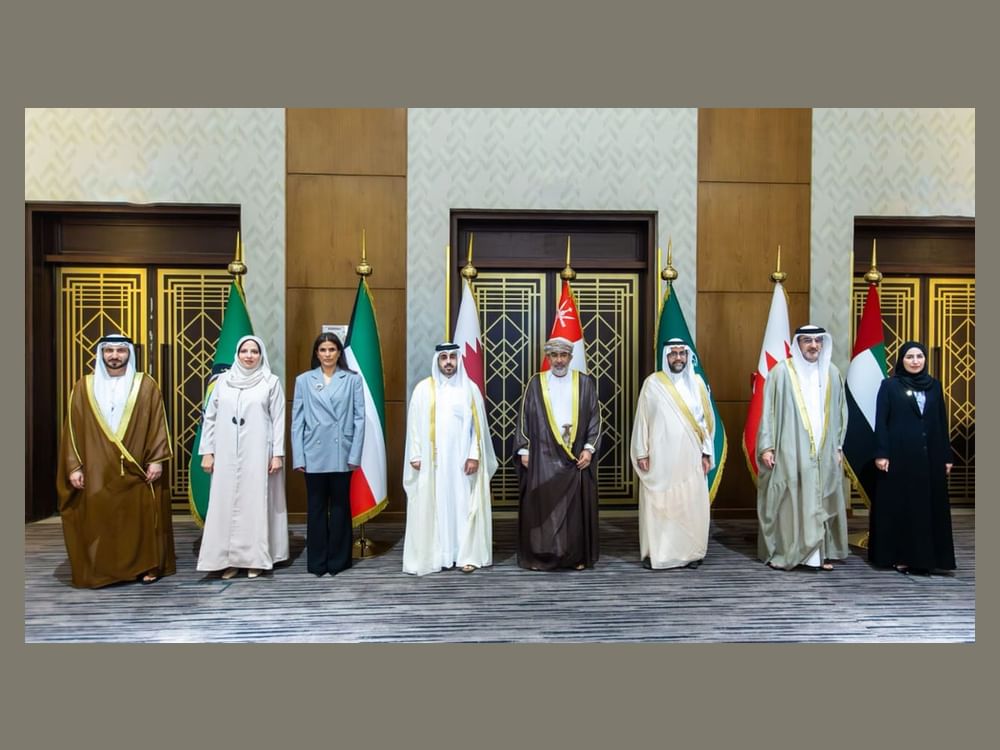
AL JABAL AL AKHDAR, Oman, 6th September, 2025 (WAM) – Representatives of the national statistical agencies of the Gulf Cooperation Council (GCC) countries emphasised the need to develop the statistical system to enhance data integration and its use in serving development policies.
This will be achieved through the strategic plan for joint Gulf statistical work 2026-2030, which aims to explore prospects for Gulf statistical work and realise the GCC countries' statistical vision of building a smart and reliable statistical system capable of keeping pace with the requirements of sustainable development and enhancing joint Gulf integration.
The 12th meeting of the GCC Permanent Committee for Statistical Affairs, held in the Jebel Akhdar from 3 to 5 September, and organised by the GCC-Stat in the Wilayat of the Jebel Akhdar, Dakhiliyah Governorate, Sultanate of Oman, reaffirmed the strategic plan as an ambitious roadmap for the next phase of joint GCC efforts in the field of data and statistics.
The plan lays the foundation for a new beginning towards achieving the vision of "Smart and Reliable Statistics 2030," and for strengthening the position of the GCC states as a unified bloc capable of competing and leading in the era of the data revolution. Its implementation represents a collective responsibility that requires commitment and cooperation from all parties, in order to build a brighter, more innovative, and sustainable statistical future for the GCC.
The plan is based on an in-depth analysis of the status of GCC statistical work, examining the achievements made during previous plans, and anticipating future prospects. It constitutes an ambitious reference framework aimed at achieving the GCC statistical vision of building a smart and reliable statistical system capable of keeping pace with the requirements of sustainable development and enhancing Gulf integration, while considering the challenges and opportunities posed by the current phase. It also anticipates prospects and enhances the benefits of the accelerating digital transformation and the steady development of various types of technology, as well as the increasing reliance on big data and artificial intelligence in various aspects of life.
The proposal to prepare the first GCC national report to monitor progress towards achieving the 2030 Sustainable Development Goals was also reviewed. The project's features were addressed, with the aim of providing a comprehensive picture of progress made towards achieving the Sustainable Development Goals across the GCC countries, enhancing regional cooperation and sharing best practices, and highlighting the importance of collective action in addressing common challenges such as climate change, food security, and water resource management. It also seeks to support national efforts through regional integration, highlight the alignment of the Sustainable Development Goals with national policies and plans, and clarify the role of the GCC countries in supporting international development efforts.
The committee's discussions addressed the project's phases, emphasizing the report's comprehensiveness to reflect progress and challenges, analyse capacity disparities among countries, and offer future recommendations, such as establishing a regional center for sustainable development goals and developing joint strategies. The report is expected to contribute to strengthening collective action, presenting a true picture of progress, and defining an effective roadmap for a sustainable future for the GCC. It will also enhance the position of GCC countries in international forums and support their efforts to achieve sustainable development.
The meeting also discussed enhancing data resource management and developing the foreign trade database. This stems from the fact that foreign trade statistics are among the fundamental pillars for supporting the economic and trade policies of the GCC countries, as they enable decision-makers to analyze the structure of foreign trade, monitor trade exchange trends with partners, and evaluate levels of dependence on foreign markets. It was emphasised that member states must commit to providing the GCC Statistical Center with foreign trade data in a timely manner, in accordance with approved international recommendations, and to enhance cooperation with customs administrations in member states. This will contribute to accelerating the flow of customs data to national statistical agencies and enable the GCC Statistical Center to obtain foreign trade data in a timely manner, with a quality that meets the requirements of publication and analysis and supports the readiness of the GCC countries in regional and international forums.
The project to establish an infrastructure database was also discussed, along with a review of tourism, culture, and antiquities statistics indicators. It was recommended that national statistical agencies should be supported to continue providing the updated national statistical data necessary to feed the tourism, culture, and antiquities statistics platform.
As part of the ongoing implementation of joint Gulf action decisions, the progress of the study being conducted by the Gulf Statistical Center on this matter was reviewed, with emphasis on the mechanisms for uploading data to the databases of the joint Gulf market, as well as updating and making these databases available.
As part of the transformations related to e-commerce and the digital economy, the GCC-Stat’s memorandum on the e-commerce and digital economy project was reviewed, along with the establishment of a task force to measure e-commerce and the digital economy in GCC countries. This comes in light of the rapid growth of e-commerce and the digital economy and their importance in supporting economic diversification and shaping modern policies in the GCC. The participants agreed to form a dedicated task force on e-commerce and digital economy statistics. The task force will include experts from GCC-Stat and national statistical offices, representatives from government entities concerned with e-commerce and the digital economy in member states, in addition to representatives from the GCC Secretariat General.
Representatives of the Council's statistical agencies also emphasized the proposal to support statistical agencies in developing the Gulf Environmental Performance Index, by including a list of the main and sub-indicators that make up the index's calculations within the data being worked on by the national statistical agencies, to provide this data to the Gulf Statistical Center.
Based on the fact that consistent and reliable indicators relating to the current and future population size and composition in the GCC countries play a fundamental role in making vital and effective decisions in the region, the meeting emphasized the formation of a regional working group for population estimates and projections in the GCC countries, leading to the development of a Gulf model that reflects the demographic reality of the GCC countries with its various assumptions and diverse dimensions, whether in the social or economic aspects.