
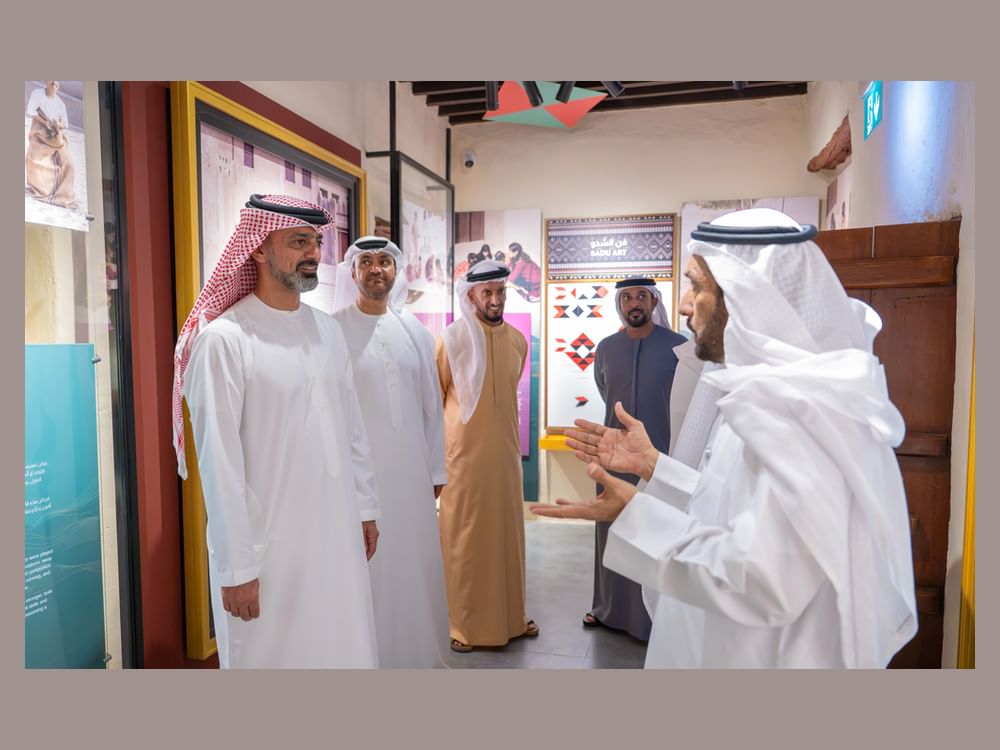
AJMAN, 23rd October, 2026 (WAM) -- H.H. Sheikh Ammar bin Humaid Al Nuaimi, Crown Prince of Ajman and Chairman of the Executive Council, inaugurated Manama Museum, which offers a cultural and heritage experience documenting the area’s history and local memory, while presenting aspects of its agricultural, social and environmental heritage and the features of Emirati life within it.
Accompanying H.H. Sheikh Ammar at the opening were Sheikh Abdulaziz bin Humaid Al Nuaimi, Chairman of the Department of Tourism, Culture & Media - Ajman; Sheikh Rashid bin Humaid Al Nuaimi, Chairman of Ajman Municipality & Planning Department; Abdullah bin Mohammed bin Butti Al Hamed, Chairman of the National Media Authority; Mahmoud Khalil Al Hashimi, Director General of the Department; and a number of directors general of government entities in the emirate.
The Crown Prince of Ajman toured the museum and explored its collections and visitor experience, distributed across 13 rooms and a central courtyard known as the Liwan. The Museum recounts milestones in Manama’s history and development and provides an insight into the ways of life experienced by the area’s people across different periods.
Its displays explore agriculture, livestock farming, traditional crafts, social customs and local architecture, alongside aspects of the history of the ruling family and its contributions to the development and prosperity of the area.
H.H. Sheikh Ammar bin Humaid Al Nuaimi affirmed that preserving history is an investment in identity and a means of strengthening the roots of the future. He noted that Manama Museum reflects the commitment to presenting civilisational heritage to future generations through contemporary approaches that enable them to learn about the history of their fathers and grandfathers and understand the relationship between people, their land, environment and natural resources.
H.H. said: “Through its collections and historical artefacts, Manama Museum represents a living space that revives the memory of the place, tells the story of the people who shaped its character, and preserves the details of the life that formed our national identity.”
He added: “Through projects such as these, we are committed to ensuring that our heritage remains alive in the conscience of future generations and is transformed from a legacy of which we are proud into a source of knowledge and inspiration, and a bridge linking our rich past with our aspirations for the future.”
The museum houses the historic Al Murair Fort, which was associated with the residence of members of the ruling family during their visits to the area. It also provides a knowledge journey through the history of Manama and its community, and the role of agriculture, palm trees and water sources in shaping its economy and way of life.
The visitor experience further introduces the area’s environmental characteristics and presents historical artefacts, coins, stamps and traditional children’s games. It also documents a number of heritage sites, traditional construction methods, and local materials used in the construction of buildings and traditional palm-frond houses.
The Museum also documents Manama’s historical role as one of the principal training areas for the Trucial Oman Scouts before the Union, along with milestones associated with this period in the history of the United Arab Emirates.
Sheikh Abdulaziz bin Humaid Al Nuaimi, Chairman of the Department of Tourism, Culture & Media - Ajman, said that Manama Museum draws on the area’s historical and cultural assets to provide a tourism experience that enriches visitors’ knowledge of the destination and enables them to discover aspects of its agricultural character, local environment, traditional architecture and social life.
He added: “We were keen to integrate the museum's contents into an experience that combines knowledge and discovery, highlighting Manama’s distinctive character within Ajman’s cultural and tourism landscape. This enhances the diversity of the tourism offering and creates broader opportunities to introduce the emirate’s cultural and heritage assets.”
For his part, Mahmoud Khalil Al Hashimi, Director General of the Department of Tourism, Culture & Media - Ajman, said that Manama has a distinct historical and environmental character that has shaped the features of the area and its social identity, with the Museum presenting aspects of this history that may be unfamiliar to many visitors.
He added that developing cultural destinations contributes to presenting a more diverse image of Ajman, revealing the richness of its areas and the variety of its historical dimensions, while giving each area its own presence within the emirate’s cultural and tourism experience. It also promotes awareness of the value of local heritage and the importance of preserving it.
The opening of Manama Museum forms part of Ajman’s efforts to preserve its historic sites, showcase its cultural heritage and strengthen the role of museums in safeguarding local memory and making it accessible to future generations through experiences that combine knowledge, history and discovery