
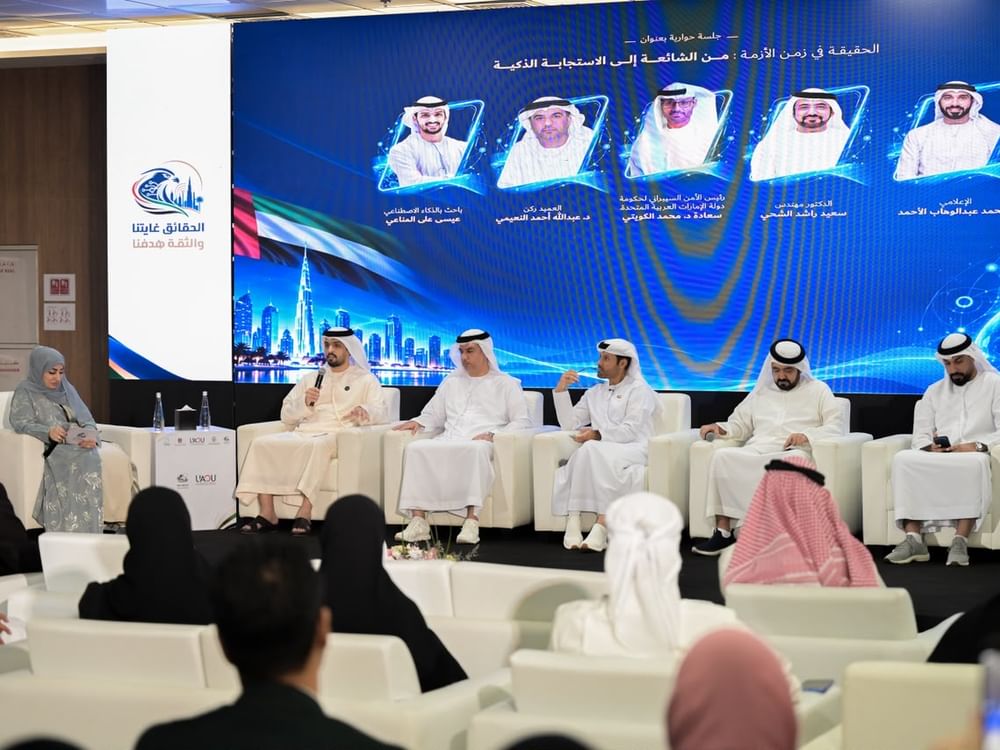
ABU DHABI, 7th November, 2026 (WAM) -- TRENDS Research & Advisory, part of TRENDS Group, participated in a dialogue session organised by Umm Al Qaiwain University students to discuss the use of smart technologies in addressing rumours and misinformation during crises.
The session, organised by students of the College of Mass Communication as part of their graduation project titled “Truth in Times of Crisis: From Rumor to Smart Response”, brought together officials and specialists in cybersecurity, policing, artificial intelligence (AI) and media.
Discussions addressed the challenges posed by rumours and misinformation during crises, the role of smart technologies in detecting and countering them, and the responsibility of institutions and individuals to protect the information environment and strengthen trust in reliable sources.
Participants included Mohamed Hamad Al Kuwaiti, Head of Cybersecurity for the UAE Government; Brigadier-General Abdullah bin Salman Al Nuaimi, Deputy Director of the Operations Department at Ras Al Khaimah Police General Command; Saeed Rashid Al Shehhi; media professional Mohammed Al Ahmad; and Isa Al Manaei, a researcher at TRENDS specialising in AI.
Al Manaei reviewed the development of intelligent systems and their expanding capabilities, noting that they are no longer limited to answering questions but can search multiple sources, generate text, images and video, and perform complex tasks with a degree of autonomy.
He said these capabilities provide significant opportunities to accelerate work, improve analytical efficiency and support decision-makers, journalists and researchers, while also increasing information-related challenges by making realistic digital content easier and less costly to produce.
Al Manaei added that the danger of misleading content lies not only in the ease of creating it but also in the speed at which it can spread through social media, reaching large audiences within minutes before authorities or media organisations have time to verify or correct it.
He noted that crises can intensify this challenge as demand for information increases while the time people spend verifying content may decline.
Al Manaei stressed the importance of promoting a culture of verification before information is shared or relied upon, including checking the publisher, comparing information with official sources, exercising caution with emotionally charged content and avoiding treating AI-generated outputs as final facts without review.
He added that AI can also help detect suspicious patterns, analyse the spread of rumours and support rapid responses, provided that human oversight remains central to review and decision-making.
TRENDS said its participation reflects its commitment to supporting academic and student initiatives, strengthening cooperation with national universities and sharing research expertise in modern technologies and AI with future media professionals and researchers.