
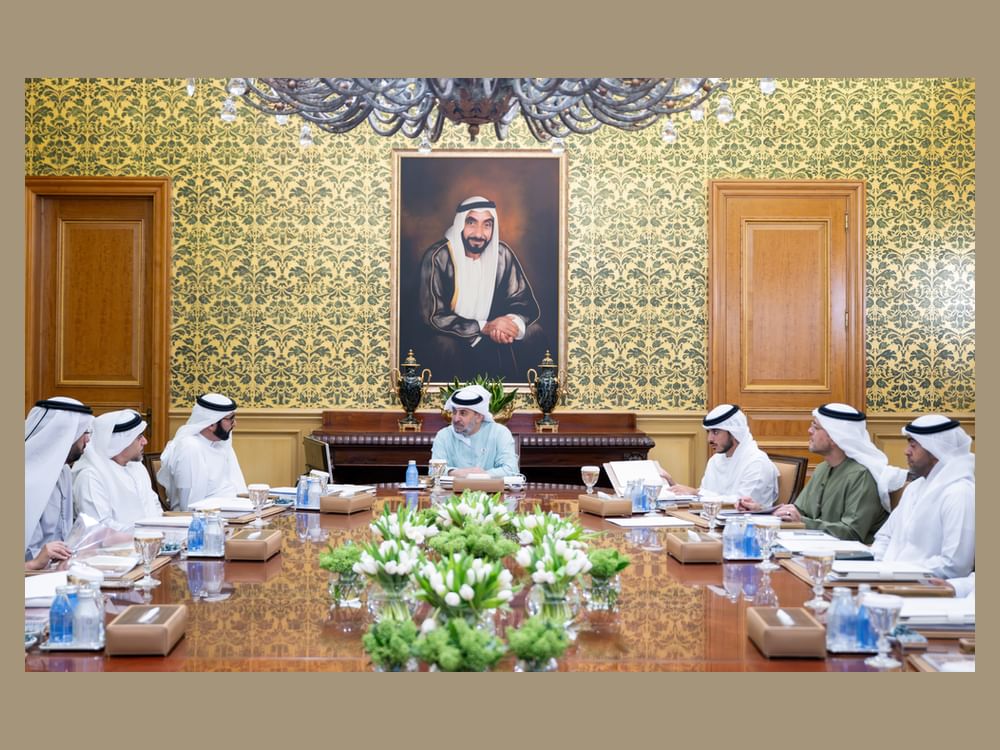
ABU DHABI, 28th September, 2026 (WAM) -- H.H. Sheikh Hamdan bin Zayed Al Nahyan, Ruler’s Representative in Al Dhafra Region and Chairman of the Board of Directors of Environment Agency – Abu Dhabi (EAD), has chaired the agency’s third board meeting of 2026, during which H.H. Sheikh Hamdan reviewed EAD's key performance indicators and achievements, as well as its plans and initiatives to conserve natural resources and biodiversity and enhance environmental quality across the emirate of Abu Dhabi.
H.H. Sheikh Hamdan affirmed that protecting the environment and natural resources is a shared responsibility that brings together the efforts of government entities and institutions with the participation of the community. He noted that the rapid growth of the emirate of Abu Dhabi requires a proactive environmental system built on legislation, scientific data and effective partnerships, reflecting the vision of President His Highness Sheikh Mohamed bin Zayed Al Nahyan, and his commitment to preserving the nation's natural heritage and ensuring its sustainability for future generations.
The meeting, held at Al Nakheel Palace, was attended by Sheikh Rashid bin Hamdan bin Zayed Al Nahyan; Mohammed Ahmed Al Bowardi, Deputy Chairman of the Board of Directors of Environment Agency – Abu Dhabi; Mansour Ibrahim Al Mansouri, Chairman of the Department of Health – Abu Dhabi; Ahmed Jasim Al Zaabi, Chairman of the Abu Dhabi Department of Economic Development; His Excellency Dr Abdulla Humaid Al Jarwan, Chairman of the Department of Energy – Abu Dhabi; Mohamed Ali Al Shorafa, Chairman of the Department of Municipalities and Transport; Nasser Mohammed Al Mansoori, Undersecretary of the Ruler's Representative Court in Al Dhafra Region; Razan Khalifa Al Mubarak, Managing Director of Environment Agency – Abu Dhabi; Dr Shaikha Salem Al Dhaheri, Secretary General of Environment Agency – Abu Dhabi; Dr Tarek Ahmed Al Ameri, Acting Director General of the Abu Dhabi Agriculture and Food Safety Authority.
His Highness Sheikh Hamdan bin Zayed Al Nahyan reviewed the roadmap of environmental policies, legislation and strategies for 2026–2028, covering groundwater, air quality, ecotourism, species and habitat protection, greenhouse gas emissions, waste, climate change, and the circular economy, as well as the update of the Climate Change Strategy 2028-2032. His Highness approved the environmental policy and legislation roadmap for 2027-2028 and directed that its delivery be accelerated in coordination with relevant stakeholders.
EAD presented its key performance indicators for the period from January to August 2026. Air quality compliance with national standards reached 91.2 percent, exceeding the federal target of 90 percent, while the Sustainable Fisheries Index and the microbial water quality indicator both maintained their optimal score of 100 percent. The Marine Water Eutrophication Index reached 80 percent, exceeding its target of 70 percent.
In environmental quality, the environmental compliance rate reached 94 percent following more than 193 enforcement actions, including judicial and administrative violations across the industrial, commercial and waste management sectors. EAD's efforts also included securing a strategic groundwater reserve in Umm Ghafah and Al Shuwaib with a capacity of 22,000 cubic metres to support the emirate's emergency preparedness, as well as licensing major strategic projects, reflecting the agency's role in enabling development and strategic projects while ensuring environmental protection and compliance with requirements from the earliest planning stages.
In the marine and terrestrial environment, EAD highlighted the launch of the Abu Dhabi Mangrove Observatory and the expanded protection of important species and habitats. The agency also reported progress on the Abu Dhabi Coral Gardens initiative, which has exceeded 85 percent of this year's target, as well as its management of protected areas, where more than 71,000 users took part in ecotourism activities. H.H. Sheikh Hamdan bin Zayed Al Nahyan commended these achievements, which reflect the richness of the emirate's biodiversity and the expertise of national talent in research and field monitoring.
EAD also presented its proposal for the Abu Dhabi Desert Vegetation Cover Restoration Initiative, which aims to rehabilitate desert sites with suitable native plants using minimal water, with the participation of environmental associations, volunteer groups and educational institutions. His Highness directed the launch of a two- to three-year pilot phase at selected sites, to be followed by a scientific evaluation before the initiative is expanded.
At the conclusion of the meeting, H.H. Sheikh Hamdan bin Zayed Al Nahyan was briefed on the latest developments at Abu Dhabi Falcon Hospital, where 1,325 falcons and 1,930 pets have been treated. H.H. praised EAD's achievements as it marks 30 years since its establishment, and directed the agency to continue advancing the environmental sector, investing in national talent, modern technologies, and artificial intelligence. H.H. also called for strengthening partnerships with the private sector, academic institutions, and international organisations to support Abu Dhabi's ability to address future environmental challenges and ensure the sustainability of its natural resources for generations to come.