
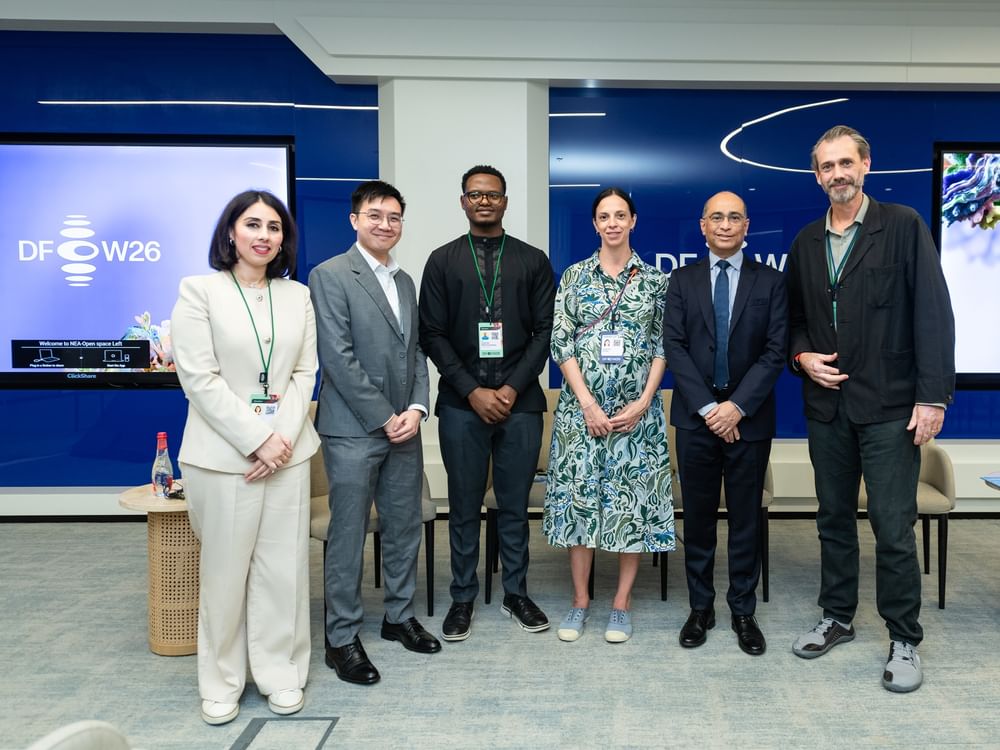
DUBAI, 19th November, 2026 (WAM) -- Dubai Future Week 2026 hosted a joint discussion featuring experts from the Centres for the Fourth Industrial Revolution in the UAE, Malaysia and Rwanda, exploring their experiences in developing advanced AI ecosystems that bring together innovation, governance and responsibility.
The session highlighted a fundamental shift in the global AI conversation: the defining question is no longer who develops the fastest technology or most advanced model, but who can deploy these technologies responsibly to deliver meaningful economic and societal impact.
Discussions drew on the report ‘AI in practice: Highlights from UAE, Malaysia, and Rwanda’, jointly developed by the Centres for the Fourth Industrial Revolution in the three countries, which identifies three distinct pathways towards AI maturity.
The UAE adopts a ‘Living Lab’ model built on rapid experimentation and institutional leadership. Malaysia, meanwhile, places people and inclusion at the heart of digital transformation, while Rwanda follows a policy- and development-driven approach that harnesses AI to address national priorities in healthcare, agriculture and education.
Participants highlighted the importance of establishing responsible governance frameworks that enable innovation to advance alongside transparency, public trust and human oversight, transforming AI from a technological tool into a driver of development and improved quality of life.
The UAE's experience in building an advanced AI governance model is rooted in integrating emerging technologies into government operations. This approach has positioned the country among the most ambitious in adopting AI as part of a comprehensive national vision for economic diversification and the development of government services.
Malaysia presented a different perspective, focusing on making AI more accessible and responsive to society's linguistic and cultural diversity.
Among the examples discussed was ILMUchat, a Malaysian AI assistant powered by a locally developed multimodal language model. Designed to understand the Malay language, regional dialects and cultural nuances, the platform attracted more than 10,000 users during its pilot phase, reflecting growing demand for AI solutions developed around local needs.
Rwanda, meanwhile, demonstrated how AI can be closely aligned with national development priorities. The report highlighted an AI-powered agricultural advisory platform that provides farmers with voice-based guidance in local languages through basic mobile phones, extending access to rural communities without smartphones or reliable internet connectivity.
Following a successful pilot in four regions, the initiative aims to reach one million farmers over the next three years, with support from the Bill & Melinda Gates Foundation.
Speakers and participants concluded that successful AI adoption does not depend on a single model applied across all countries, but on governance frameworks tailored to the priorities and development needs of individual societies.
While the UAE demonstrates the value of rapid innovation and institutional leadership, Malaysia highlights the importance of human-centred inclusion, and Rwanda shows how public policy can turn technology into a tool for development.
The shared message was that the success of AI should be measured not only by the capabilities of algorithms, but by their ability to deliver meaningful and sustainable improvements in people's lives.
Established in 2019 through a strategic collaboration between the UAE government and the World Economic Forum, and overseen by Dubai Future Foundation, UAE Centre for the Fourth Industrial Revolution (UAE C4IR) works to examine major transformations in economies, societies and public policy. The Centre promotes collaboration and the responsible use of emerging technologies to improve services and unlock opportunities across future sectors.
The session ‘The Many Futures of AI Across Borders’ took place during Dubai Future Week 2026, organised by Dubai Future Foundation from 18th to 21st November under the theme ‘For the Human of the Future’.
Held under the patronage of H.H. Sheikh Hamdan bin Mohammed bin Rashid Al Maktoum, Crown Prince of Dubai, Deputy Prime Minister, Minister of Defence, and Chairman of the Board of Trustees of Dubai Future Foundation, Dubai Future Week brings together leading international experts, innovators and institutions to explore the transformations shaping humanity and key sectors in the decades ahead.