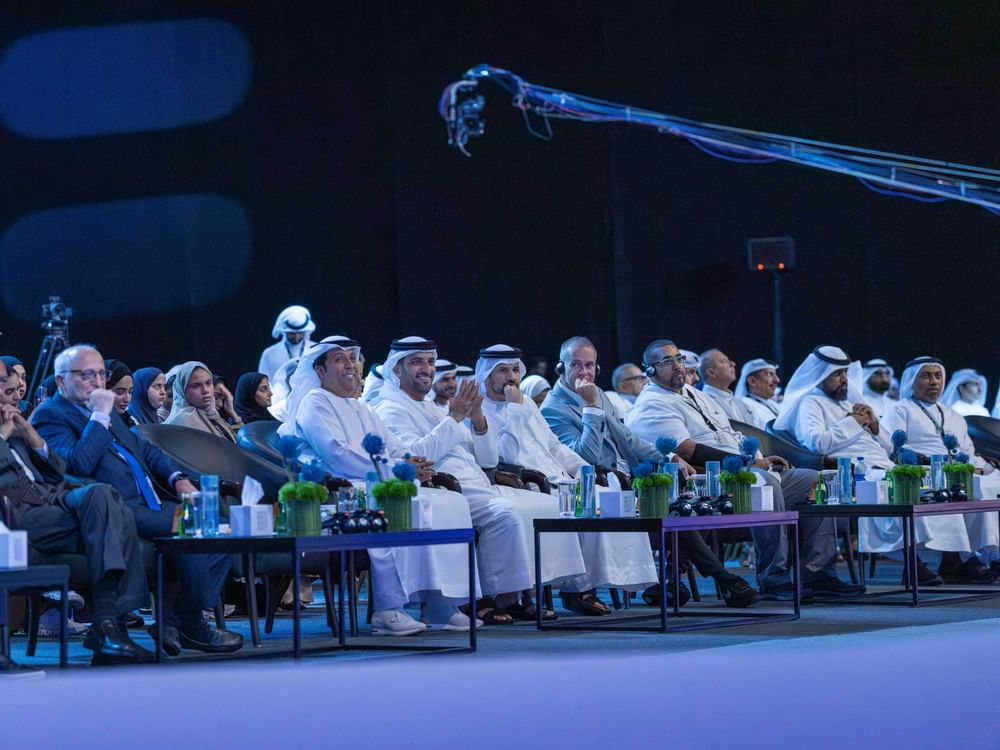
SHARJAH, 5th September, 2024 (WAM) -- H.H. Sheikh Sultan bin Ahmed bin Sultan Al Qasimi, Deputy Ruler of Sharjah and Chairman of the Sharjah Media Council (SMC), attended the opening discussions on the second and concluding day of the 13th International Government Communication Forum (IGCF 2024). From serving as a strategic tool to navigate global challenges to enhancing countries' soft power by promoting tourism, the critical importance of strategic government communication was highlighted by leading UAE officials.
In his keynote address, Tariq Saeed Allay, Director-General of the Sharjah Government Media Bureau (SGMB), said that how societies respond to global changes will dictate the trajectory of nations, determining whether their governments advance or fall behind.
Allay stressed the importance of nurturing developmental projects within a supportive environment and fostering collaborative partnerships to ensure their success. He said, "Only through exchanging knowledge and collaborative partnerships can these initiatives thrive and uplift their societies," highlighting that the IGCF 2024 theme "Agile Governments... Innovative Communication" was coined in response to recent global shifts.
He noted that traditional communication models have become outdated and must be replaced with strategies that resonate with modern societies. "Our mission is to move beyond outdated frameworks and develop new models that resonate with contemporary societies," Allay added.
Adventure sports and outdoor activities have the power to inspire future generations to work in harmony with nature for conservation and sustainable development of their homeland and the planet, agreed panellists during a session titled ‘When Adventure Turns into Soft Power’.
Sheikh Fahim Al Qasimi, who has also served as the Chairman of the Emirates Golf Federation, said that one cannot think of adventure without stability, and the emirate of Sharjah and the UAE have been able to provide that. Urging everyone to embrace adventure, he pointed out that entrepreneurship too involves an adventurous spirit, evident in Sharjah’s investment in universities and the establishment of Sheraa to empower and support young people in realising their ideas. Sheikh Fahim shared how his passion for sustainable development and turtle conservation inspired his children’s interest in waste management, recycling, and sustainable practices.
Ahmed Alhendawi, Secretary-General of the World Organisation of the Scout Movement, noted that unlike formal education, scouting offers a unique blend of soft power and adventure. He added that the impact of scout activities is significant, providing youngsters with knowledge, skills, and awareness that give them an edge.
The panellists agreed that innovative communication strategies can drive sustainable development in tourism by promoting adventure-based experiences in environmental, sports, cultural, and other tourism sectors.
Sheikh Sultan bin Ahmed Al Qasimi also listened to powerful narratives from humanitarians, local officials, and influencers—individuals with remarkable experiences.
Maya Ghazal, the world’s first female Syrian refugee pilot and Goodwill Ambassador for the United Nations High Commissioner for Refugees (UNHCR), moved the audience with her personal journey from war-torn Syria to breaking barriers in the aviation industry, in her talk ‘Refugee Hopes and Diana's Legacy’. Reflecting on her arrival in the UK as a 15-year-old refugee and being rejected by schools due to language barriers, Ghazal stressed the need for better education opportunities for refugees, noting that only 6 percent of refugees have access to university education, compared to a global average of 22 percent.
She shared, "Given the right opportunities, refugees don’t just survive — they thrive. It’s up to governments and individuals to change lives by investing in their potential." Ghazal called on governments, educational institutions, and the private sector to collaborate in ensuring that refugees, particularly girls, have access to education and meaningful livelihoods.
Dr. Ahmad Al Awadhi of the Emirates Genome Programme (EGP) showcased this ambitious initiative, which aims to create a comprehensive genome map of UAE citizens, underscoring the UAE’s commitment to securing a healthier future for its population.
The Director of the Emirates Genome Programme explained the importance of understanding the Emirati genome, stressing the need for locally developed genetic data rather than relying on Western genome maps. "The programme is the largest of its kind in the world, with over one million samples, and it's revolutionising how we understand and treat genetic diseases like thalassemia, diabetes, and various types of cancer," he said.
Since its launch in 2021, the EGP has achieved significant milestones, including raising awareness about genetic diseases and securing the participation of more than 650,000 citizens by September 2024. The programme has utilised cutting-edge technologies, including artificial intelligence (AI), to analyse the vast amounts of genetic data collected.