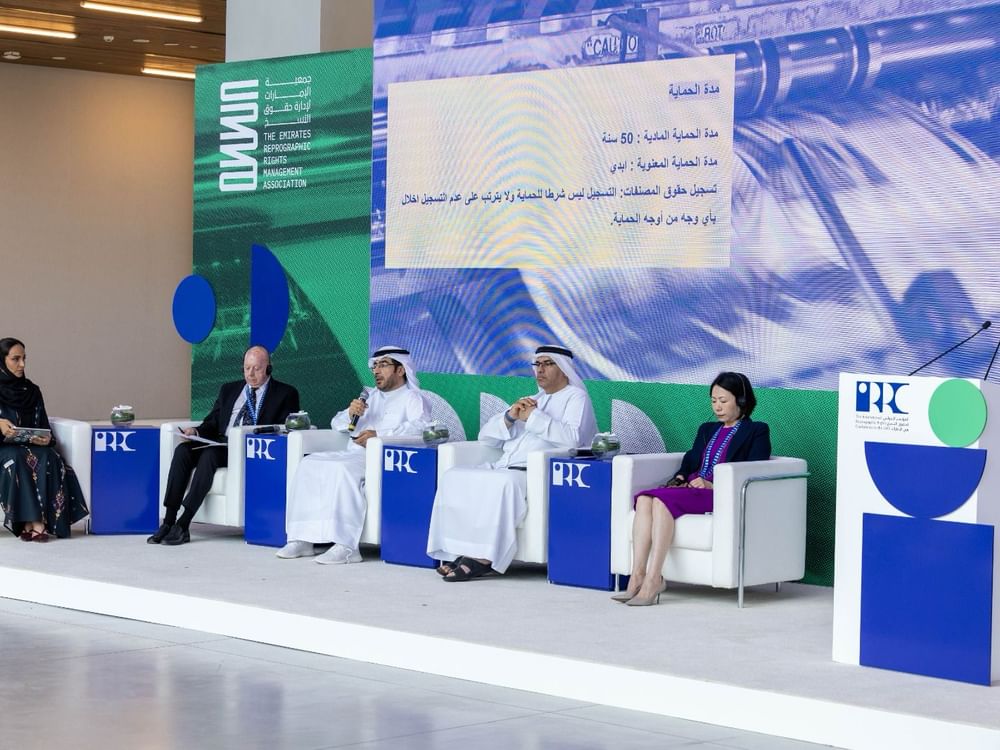
SHARJAH, 24th February, 2025 (WAM) – The first International Reprographic Rights Conference in the UAE concluded by reaffirming the essential role of reprographic rights and intellectual property rights in fostering the growth of creative industries.
Bringing together experts and decision-makers, the conference explored strategies for protecting authors’ rights in the digital age while fostering a balance between innovation and intellectual property protection. The event resulted in ambitious recommendations outlining a roadmap for a fair global system that safeguards the rights of creators.
Organised by the Emirates Reprographic Rights Management Association (ERRA) in cooperation with the UAE Ministry of Economy and International Federation of Reprographic Rights Organisations, the conference provided a rich platform that brought together distinguished speakers in sessions and workshops discussing key issues, including “Unauthorised use and its impact on the returns of creative works”, “Collective management as a solution”, “Artificial intelligence and libraries in the digital age”, and “The impact of technological and social changes on rights holders”. These sessions offered a valuable opportunity for various stakeholders to exchange insights and perspectives on reprographic rights-related matters.
The conference concluded by reaffirming the essential role of reprographic rights and intellectual property rights in fostering the growth of creative industries. Participants stressed the importance of leveraging technological advancements in copyright management, particularly through digital tools and artificial intelligence, to monitor compliance and enhance data collection. The discussions underscored the need to update reprographic rights legislation to accommodate rapid developments in artificial intelligence and address emerging challenges. Additionally, the conference called for the launch of international initiatives aimed at harmonising reprographic rights policies and ensuring legislative alignment between countries. Speakers also advocated for the expansion of collective licensing as an effective framework for protecting authors' rights, while developing adaptable licensing models to meet the needs of educational and commercial institutions.
At the close of the conference, participants stressed the importance of cooperation between governments, international institutions, and reprographic rights organisations to safeguard intellectual property in a rapidly evolving digital landscape. The discussions reaffirmed that collective management and flexible licensing solutions are fundamental to building a fair and sustainable creative ecosystem that ensures a thriving future for content creators worldwide.