
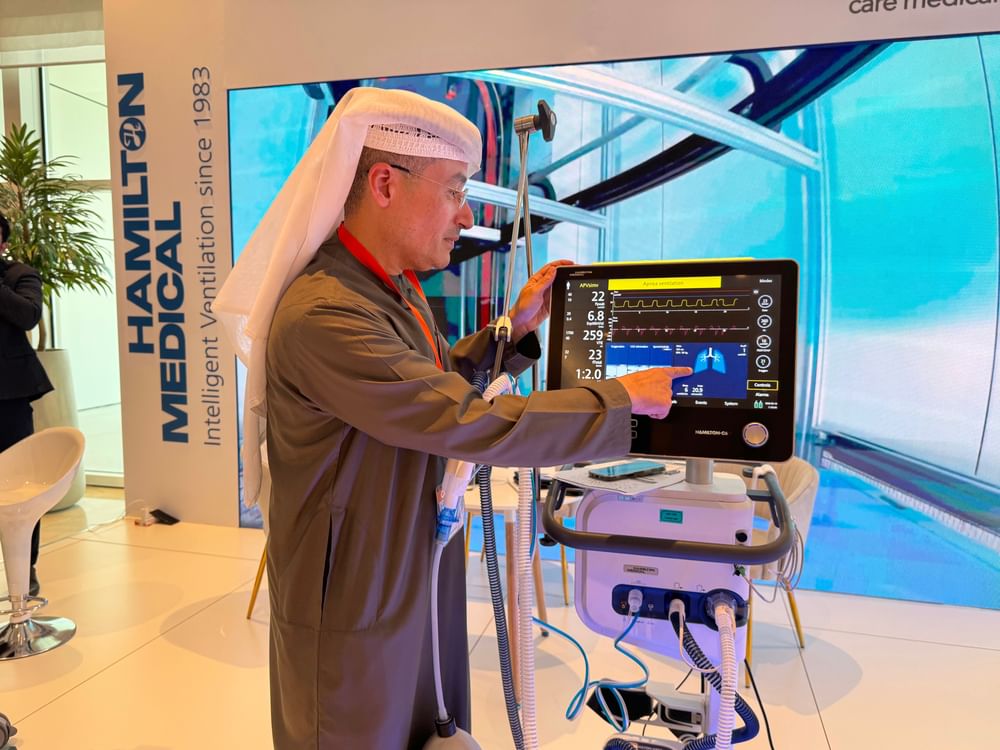
DUBAI, 10th May, 2025 (WAM) – With the rapid development of healthcare technologies, artificial intelligence plays a pivotal role in improving the quality of medical services provided in critical care units. The integration of artificial intelligence into ventilator systems is one of the most prominent innovations that contribute to enhancing treatment accuracy, reducing complications and improving patient outcomes.
Dr. Zeyad Alrais, Head of the Emirates Division of Intensive Care at the Emirates Medical Association, who participated in the activities of the twenty-first UAE Critical Care Conference and the Second World Summit of the World Federation of Intensive Care Societies (WFICC), said:''As part of efforts to improve respiratory care for patients in intensive care units, artificial intelligence contributes to providing advanced solutions that include smart ventilation systems that automatically adjust parameters in response to the patient's condition, and adjust the stimuli of inhalation and exhalation.
‘’ Improving the timing of the transition between inhalation and exhalation in proportion to the patient's physiological needs, implementing automatic and safe alveoli opening protocols without continuous manual intervention, and initiating the process of weaning from the ventilator based on objective clinical indications and criteria.''
He indicated that the integration of AI technologies into the critical care environment represents a strategic step towards improving clinical efficiency and quality of healthcare. By relying on smart systems, a faster and more accurate response to patients' needs can be achieved, contributing to reduced ICU stays and improved recovery opportunities.
On the other hand, the exhibition accompanying the conference, in which 34 international and local companies specialised in critical care devices and ventilators are participating, witnessed the launch of three drugs to be offered for the first time in Dubai, including two new drugs to treat severe infections inside critical care units that help in speeding recovery and recovery, in addition to a small device for inhaling through sprays, a resuscitation device dedicated to ambulances, and another device to cool the body when the patient's temperature rises and reaches the stage of danger.
Amid expectations that some deals will be concluded by decision-makers in hospitals, especially that the drugs and devices offered are offered for the first time in the critical care conference, especially since Dubai is considered a gateway to the Middle East countries by international manufacturers of the latest medicines and medical devices, especially with the rapid growth in the health care sector in all countries of the region in light of the increasing population and geographical expansion witnessed by the countries of the region.
In parallel the conference continued for the second consecutive day to discuss dozens of scientific papers, which are a summary of the experiences and research of the participating critical care experts such as blood poisoning, fluids in the intensive care unit, kidney disease with acute kidney injury, artificial ventilation, acute respiratory distress syndrome, anesthesia and pain management, cardiacology, nutrition, cardiopulmonary resuscitation and infection surveillance to share with the attendees to exchange experiences, best practices and treatment protocols that they have reached over the past years.