
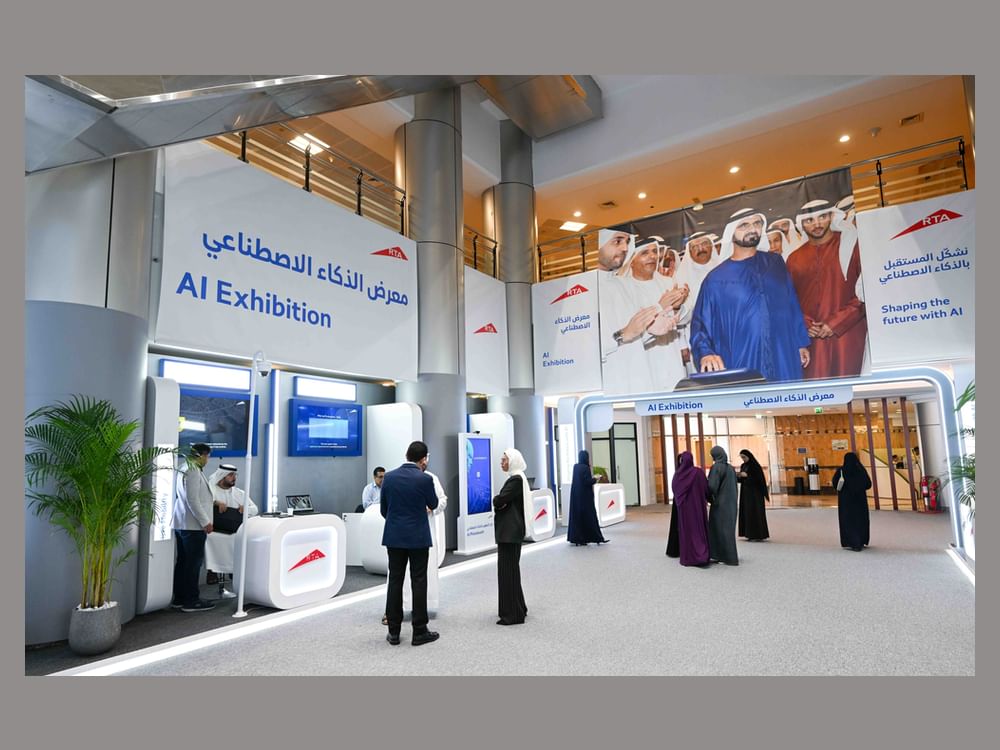
DUBAI, 7th July, 2025 (WAM) -- Dubai’s Roads and Transport Authority (RTA) organised an exhibition showcasing its leading artificial intelligence (AI) initiatives to promote the implementation of its Artificial Intelligence Strategy 2030.
The week-long event, held at RTA’s headquarters, aimed to engage employees and strategic partners, and to demonstrate the role of AI in enhancing service delivery, integrated mobility systems, and global best practice adoption.
The exhibition featured 11 AI-powered initiatives aligned with six strategic pillars of the AI Strategy: Seamless and Innovative Mobility, People Happiness, Smart Traffic Management, Smart Licensing, Asset Excellence, and Future Readiness.
Among the highlights was the Bus Drivers Support System: Control and Operation Centre, which uses AI to analyse voice and data for real-time communication between drivers and the control centre. Another was the Dubai Metro Water and Electricity Consumption Forecast Dashboard, a predictive analytics tool for sustainable and cost-efficient resource use.
Other initiatives included the AI-driven Madinati WhatsApp service for reporting public transport asset damage, and the Smart Assessment of Cycling Track Infrastructure, which uses new global indicators to assess safety and comfort. Also on display was the Smart Road Asset Assessment System, employing LiDAR technology and AI to prioritise maintenance and update digital asset records.
The Smart Traffic Management initiative showcased at the Dubai Intelligent Traffic Systems Centre utilises big data and AI to optimise traffic flow, while the AI-Powered Bus Network Management tool analyses ridership data to improve route planning. The Instructor Monitoring System uses in-vehicle AI cameras to monitor driving instructors and enhance training standards.
Other innovations included the Plate Price Prediction System, using historical data to forecast auction revenues, and Microsoft Copilot-Enabled Operations for task automation and data analysis. The Public Transport Station Management Using AI initiative tracks crowd density and movement to improve passenger flow and reduce wait times.
RTA’s AI Week also featured sessions, forums, and expert-led discussions on AI’s role in smart mobility and city development. A key component was the three-day AI Hackathon, where RTA staff competed to develop AI-driven mobility solutions. The event concluded with an awards ceremony for the competition winners.
Mohammed Yousef Al Mudharreb, CEO of the Corporate Technology Support Services Sector and Deputy Head of RTA’s AI and Data Science Team, said the event built on momentum from Dubai AI Week, held last April under the directives of H.H. Sheikh Hamdan bin Mohammed bin Rashid Al Maktoum, Crown Prince of Dubai, Deputy Prime Minister, Minister of Defence, and Chairman of The Executive Council of Dubai, and organised by Dubai Centre for Artificial Intelligence.
He emphasised the importance of engaging employees and partners in adopting practical AI use cases and enhancing AI governance and technical capabilities.
In April, RTA launched its Artificial Intelligence Strategy 2030, which comprises 81 projects aimed at positioning RTA as a global leader in AI-driven mobility and improving quality of life in Dubai.