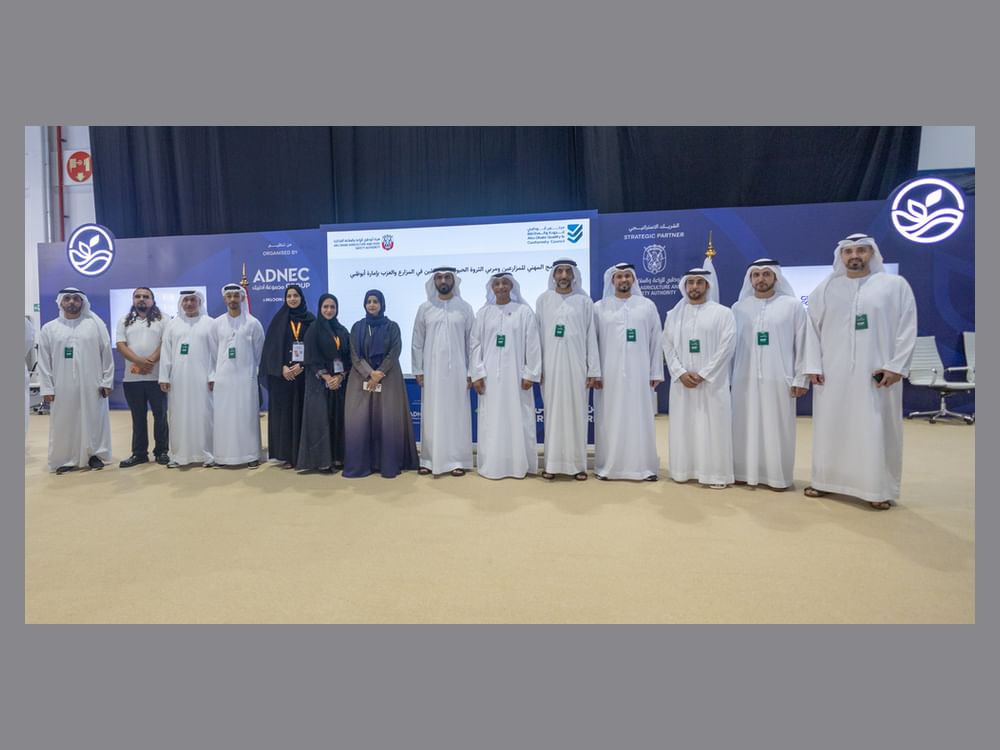
ABU DHABI, 22nd October, 2025 (WAM) – In a strategic initiative to enhance the efficiency of the agricultural sector and ensure the sustainability of food production, the Abu Dhabi Agriculture and Food Safety Authority (ADAFSA), in collaboration with the Abu Dhabi Quality and Conformity Council (ADQCC), has launched a Professional Training Programme targeting farmers, livestock breeders, and agricultural workers across plant farms and livestock holdings in the Emirate of Abu Dhabi.
The initiative forms part of a broader development plan designed to transition the sector towards a more professional, knowledge-based, and sustainable model.
The programme aims to build the technical and professional capacities of workers in both plant and animal production by establishing clear occupational standards and designing specialised training modules. These modules promote unified agricultural practices, enhance operational quality, and raise professionalism in farm management and animal care — thereby strengthening biosecurity and ensuring the highest standards of occupational safety.
Launched during the second edition of Global Food Week, the programme underscores ADAFSA’s commitment to developing the agriculture and food safety ecosystem and advancing national priorities in food security and sustainability. It also reflects ADAFSA’s pivotal role as the competent local authority responsible for agriculture, food safety, and biosecurity in the Emirate.
The programme’s design is based on the findings of a comprehensive field survey conducted by ADAFSA to assess the knowledge and skills of farm and livestock workers. The results highlighted the need to strengthen both technical and managerial capabilities and to provide practical training aligned with future demands — particularly in light of climate challenges and resource constraints.
Dr Tariq Ahmed Al Amri, Acting Director-General of ADAFSA, said: “The Professional Training Programme for farmers and livestock breeders represents a significant step forward in developing Abu Dhabi’s agricultural sector. It reflects our commitment to building a knowledge-driven, innovation-led production environment. Today, it has become essential to move from traditional farming practices to a professional model based on qualified expertise and sound agricultural methods — an objective we are realising through our partnership with the Abu Dhabi Quality and Conformity Council.”
He added: “We firmly believe that human capital development is the cornerstone of any successful transformation. The programme therefore includes a range of critical agricultural professions — such as livestock, poultry, and aquaculture workers, farm supervisors, and crop production specialists — with a strong focus on hands-on training and vocational qualification that directly improve production quality and operational efficiency.”
Dr Al Amri further noted: “The programme goes beyond training; it also involves the establishment of clear professional standards, awareness-raising among workers, and the promotion of compliance with best practices. These measures ensure alignment with both local and international benchmarks and strengthen the competitiveness of Abu Dhabi’s agricultural and food products.”
He concluded: “At ADAFSA, we are guided by a comprehensive vision that places people at the heart of development. Through this programme, we aim to empower farmers and livestock breeders with the knowledge and tools necessary to be active partners in achieving food security, advancing sustainability, and building a more resilient and efficient agricultural future.”
The Professional Training Programme forms part of ADAFSA’s Sustainable Agricultural Development Plan, implemented in cooperation with the Food and Agriculture Organisation of the United Nations (FAO). The plan leverages technology and innovation to enhance productivity, reduce resource waste, and strengthen the agricultural sector’s contribution to the national economy. The programme also features awareness campaigns, workshops, printed materials, and interactive digital content on social media platforms to reach target audiences and encourage community participation.
A number of government and private sector entities are participating in the initiative, including the Department of Economic Development, the Abu Dhabi Public Health Centre, and national companies such as Al Foah and SILAL, alongside representatives from commercial farms and small-scale producers. This broad collaboration highlights the programme’s participatory nature and its role in building an integrated and resilient agricultural ecosystem.
The initiative is expected to improve performance indicators across farms and livestock holdings, raise workers’ knowledge levels, and enhance the sector’s readiness to meet future challenges — including climate change, resource scarcity, and evolving global market dynamics.