
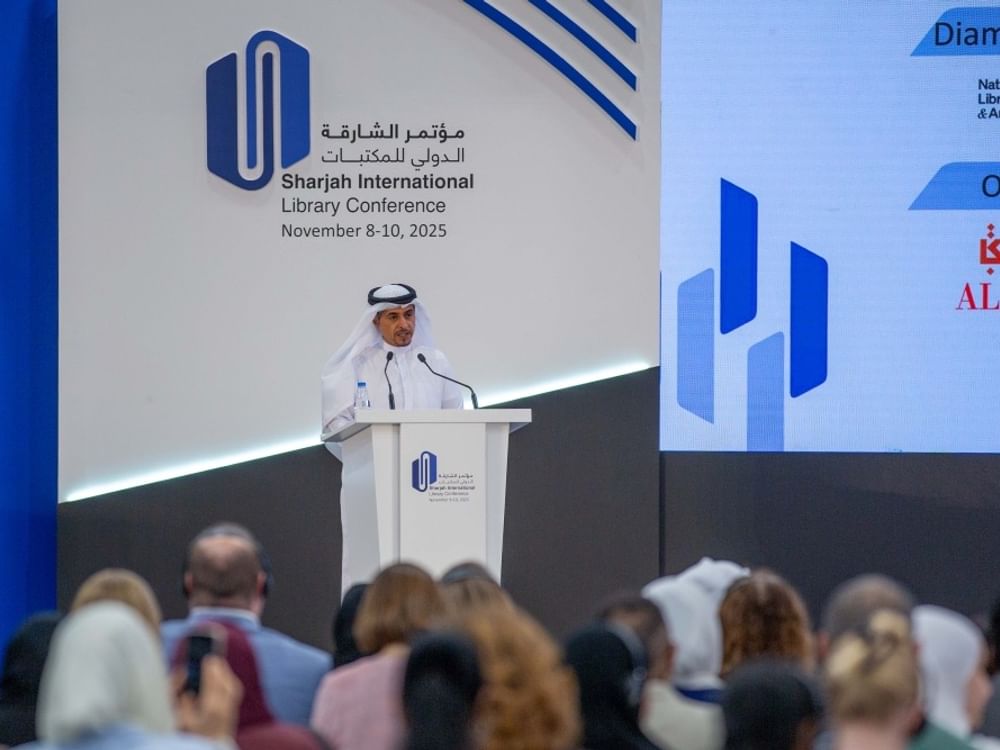
SHARJAH, 9th November, 2025 (WAM) -- The 12th Sharjah International Library Conference (SILC), organised by the Sharjah Book Authority (SBA) in partnership with the American Library Association (ALA); convened over 400 library professionals, educators, and technology experts from 30 countries for its 2025 edition.
Taking place as part of the 44th Sharjah International Book Fair at Expo Centre Sharjah, the three-day conference served as a platform to address the future of libraries in both physical form and the digital age; and celebrate their evolving role as hubs for knowledge, innovation, and sustainable community growth.
This conference is vital for bringing together experts to exchange best practices and discuss how libraries can become even more relevant to people’s lives, with a focus on the future of libraries in the digital era, access to information, and libraries' role in innovation and lifelong learning.
In his opening remarks, Ahmed bin Rakkad Al Ameri, CEO of the SBA, expressed pride in hosting the conference alongside the American Library Association for the twelfth year. He emphasised that their collaboration stands as a model for international cooperation in developing the library sector and has strengthened Sharjah’s status as a global centre for dialogue on the future of libraries, education, and culture.
“In Sharjah, we draw daily inspiration from the vision of His Highness Sheikh Dr. Sultan bin Mohammed Al Qasimi, Supreme Council Member and Ruler of Sharjah; who believes that building nations begins with the book and that libraries shape individuals committed to noble values and engaged in their communities. This philosophy guided Sharjah’s cultural journey, placing libraries at the core of its advancement. As we mark 100 years of Sharjah Public Libraries, we take pride in how they’ve become an essential part of life across the emirate.”
Dr. Maria McCauley, ALA President-elect and Director of Libraries at Cambridge Public Library, delivered a resonant keynote where she invited the audience to reflect on the question: “What is the purpose, meaning, and impact of libraries?”
Emphasising that libraries are spaces of learning, healing, and peace, Dr. McCauley described them as fostering a culture of access to information, empowering individuals, and strengthening community bonds. “As the hearts of our communities, libraries bring us together,” Dr. Maria further stated, underscoring their role as lifelines that fulfil individual curiosity and serve as essential community partners.
Michael Dowling, Director of the Chapter Relations Office and International Relations Office at ALA, expressed gratitude to the sponsors making this year's conference possible. He also highlighted a special achievement; with several ALA books that have been translated into Arabic by the Emirates Libraries and Information Association (ELIA) through a translation grant from SBA, reinforcing the strong cultural and literary collaboration between the organisations.
The first session of the conference was led by Dr. Sandra Hirsh, PhD, Special Assistant to the Provost for AI Initiatives from San Jose State University; where she highlighted key themes from her book, ‘Library 2035: Imagining the Next Generation of Libraries’. The book, divided into main topics including landscape, community, equity and inclusion, organisations, library workers, and vision; she added that she invited 29 thought leaders, contributors to the book, to offer their insights on what libraries will look like in 2035.
Dr. Hirsh emphasised adaptability and community alignment as integral lessons from the past decade’s challenges, saying, “Libraries must prepare for the unexpected by learning from recent experiences and aligning services with ever-changing community needs.”
She underscored the importance of effective leadership and managing change, stating, “To lead libraries into the future, we must embrace change with intent and guide our organisations to be resilient, relevant, and responsive.” This session set the tone for envisioning libraries as community-centered institutions that adapt to technological, social, and demographic shifts while maintaining their core mission of access, inclusion, and empowerment.
Day one of the conference continued to cover current and emerging trends across library settings, including public, academic, school, and special libraries; and topics included staff development, leadership training, promoting literacy and the love of reading, and integrating new technologies that enhance user experiences.
Day two will look into practical solutions and case studies focused on organisational development and frontline library innovations. Workshops and talks will highlight creative strategies for outreach, community engagement, and improving library services using both traditional and digital tools.
Preceding the conference, a series of in-depth workshops provided practical training across teaching, AI integration, and technical services for all in attendance; and were designed for direct skills transfer, equipping library professionals with actionable strategies to enhance their practice.
What distinguished the 2025 edition was the inclusion of new features such as a marketing poster wall for publishing businesses, and a broader exhibition space, where cutting-edge technologies and library solutions were on display.
Exhibitors presented innovative tools for information management, resource sharing, and user engagement, making the event an incubator for fresh ideas and digital transformation. The conference also offered the ‘Librarians’ Lounge’ for professionals to connect, network, and share success stories, discussing evolving challenges such as digital equity, artificial intelligence in cataloguing, and the integration of library services with community needs.