
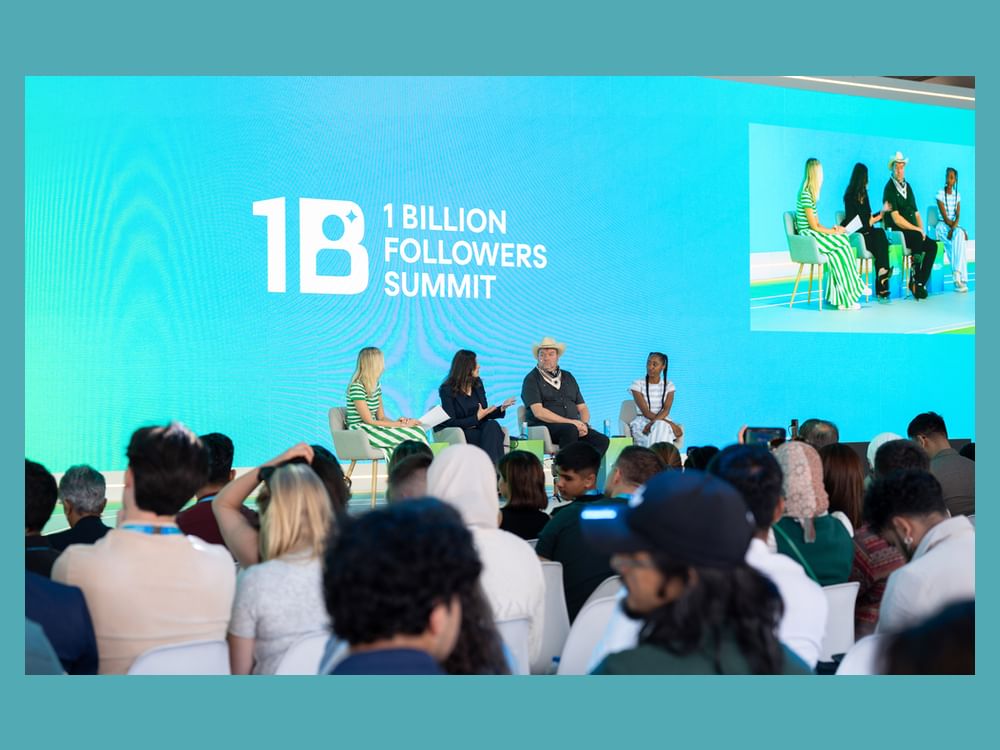
DUBAI, 9th January, 2026 (WAM) -- Content creators and independent journalists speaking at the 1 Billion Followers Summit in Dubai urged legacy media outlets to rethink their storytelling approaches to keep pace with rapidly evolving social media audiences.
In a session titled “The Newsroom Is Dead: Why News Is Now Creator-Driven,” three independent journalists shared why they left legacy media, arguing that building their own platforms gave them greater editorial control, ownership, and a closer connection with audiences.
Tara Palmeri, founder of FTMM LLC and The Red Letter, and host of the Tara Palmeri Show, said social media enabled journalists to build direct relationships with audiences, foster communities and establish credibility at a time of declining public trust in traditional media.
Highlighting that trust is built through transparency and accountability, Palmeri said “these big institutions did not realize that you don’t talk at your audience, you talk with them. You have to be accountable to them and admit when you get things wrong, taking them through the process to show them how you’re doing your journalism.”
She noted the shift in news consumption with more people getting their news through their phones and online platforms, fundamentally changing storytelling, the nature of readership, and business models.
Palmeri, who spent 15 years in journalism before starting her own content, addressed the need for traditional media to learn engagement and storytelling techniques from content creators, noting that the media’s “blind spots are that they think they are invaluable and you cannot be that way with people anymore.”
Despite changing platforms, speakers stressed that the core principles of journalism including fact-checking, investigation, sourcing, and ethical responsibility, remain unchanged. What has changed is how stories are found and told.
Robb Montgomery, founder of Smart Film School, described smartphones as “the most powerful reporters notebook ever invented,” saying they enable journalists to report and publish directly from the field. He noted that being an independent reporter gave him more flexibility to experience new media.
As an independent journalist, he said he finds his stories from everyday observations while being on field, asking questions and researching the ideas’ connections to the community.
“I can find a knowledge gap and experience gap that becomes a storyline and I'll chase it down with my phone, or with doing 3D scanning and creating virtual models,” said Montgomery, explaining how finding a new bicycle pump in Berlin unveiled a culture that defines every citizen’s experience.
Realizing that some news outlets are establishing creator studios to diversify their content and engage with online audiences, Montgomery highlighted successful collaborations between newsrooms and creators, arguing that journalistic standards and creator energy can coexist when institutions are willing to adapt, mentor, and co-create.
He urged outlets to abandon the rigid institutional thinking in the new media age, noting the collaborations with creators help bridge these gaps without comprising journalistic values.
The panelists said that content creation, however, does not come without risks. Sharon Machira, CEO of Studio Unconventional, said besides the rise of misinformation, harmful narratives can be amplified by algorithms, including stereotypes and rage-driven content that generates engagement but damages public discourse.
She stressed that, unlike professional journalists, some content creators lack formal training in fact-checking, research, and information verification, which can contribute to the spread of misinformation.
Machira, a former journalist, said social media has enabled her to deliver simplified and engaging content that highlight Africa as a luxury destination and encourage more readers to visit African cities.
Using her previous journalism experience, she said: “I try to live the story first in terms of making sure it's factual and then publish it on various websites whether it's my platform or another publication.”
With the increased competition, Machira argued that legacy media still has a role to play, particularly in analysis and explanation. While audiences may get breaking news first from social media, there remains strong demand for context and clear explanations of why events matter, especially for younger audiences.
Panelists advised future journalists to get their training in legacy media outlets to understand standards and rigors of journalism before starting their own platforms as a way to contribute to raising a generation of responsible content creators.
Montgomery advised aspiring young journalists to start their own platform to practice storytelling and communicating with an audience while finding a mentor or an opportunity in legacy media. “Have your own platform just to understand audience feedback and how to navigate these platforms,” he urged.