
DAVOS, 22nd January, 2026 (WAM) -- The United Arab Emirates has announced the publication of the third annual Trade Tech report which offers a state-of-play review of the role of advanced technology in enabling efficient and resilient global supply chains.
As one of the pillars of the TradeTech Global Initiative, which was launched at Davos in 2023 as a partnership between the UAE, the World Economic Forum (WEF) and the Abu Dhabi Department of Economic Development (ADDED), the report is titled “The Trade Tech paradox: Connectivity and Fragmentation” and introduces the concept of the TradeTech Stack – an integrated framework powered by technology in which nations, regulators and businesses all contribute to the development of a more resilient, inclusive and efficient global trading system.
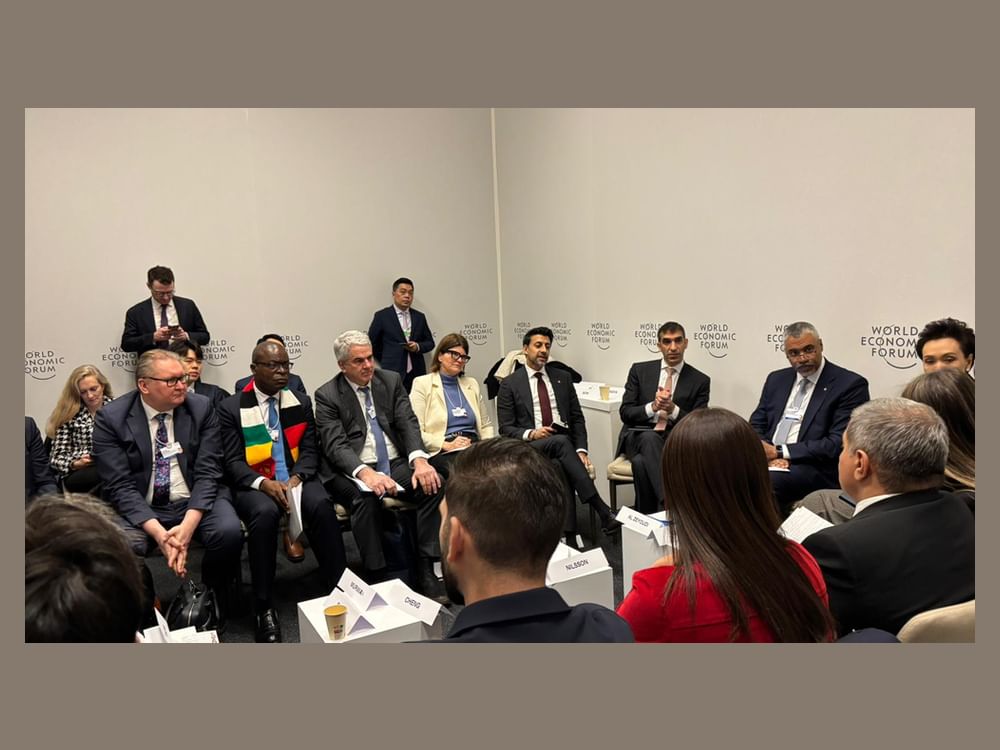
The report was officially announced at the World Economic Forum in Davos by Dr. Thani bin Ahmed Al Zeyoudi, Minister of Foreign Trade, during his keynote address to the “Recoding Trade” session. He said the report’s findings underline the need for collaborative thinking to ensure advanced technology is fully embraced by the trading community worldwide. “The integration of technology into our supply chains promises to deliver a new era of trade agility that will accelerate the flow of goods and increase the participation of emerging markets into the global economy,” he said. “Today’s third annual TradeTech report offers a comprehensive overview of the different areas in which technology is making a tangible difference, with real-world examples of the transformations TradeTech is now making. While it highlights the possibilities of a new, technology-powered trading landscape, it also serves as a reminder of the impediments to widescale adoption, which we must all come together to overcome – for the sake of our economies and those of our trading partners. It is an important distillation of where we are and where need to get to if we are to deliver a trading system fit for the 21st century.”
Ahmed Jasim Al Zaabi, Chairman of the Abu Dhabi Department of Economic Development (ADDED), said: “We believe the TradeTech Initiative has been a key enabler of modernising global trade, the lifeblood of economies, since its launch in 2023. Over the past three years, this collaborative initiative has proved the power of concerted efforts in developing and employing advanced technologies and methods to enable free and fair trade to enrich communities around the world”.
“As a key node of international supply chains, Abu Dhabi continues to advance trade ecosystems and make trade more predictable, faster, safer, and easier based on strong partnerships between government and businesses. We remain committed to support TradeTech initiatives to further develop global trade by driving innovations that enhance efficiency and security”.
Borge Brende, the CEO and President of the World Economic Forum, said: “In a period of rapid global change, technology is increasingly serving as the connective infrastructure of modern trade, helping economies and businesses to maintain continuity through enhanced coordination, efficiency, and confidence in cross-border processes.”
The report lays out the four layers of what it calls the TradeTech Stack. They are: the Global Foundational Framework, which is set by institutions such as the World Trade Organisation, the World Bank and UNCTAD; the National Governance Layer, where policy and regulation combine to enable markets to cooperate; the Trade Enabler Layer, which is provided by logistics companies and transport nodes; and finally the Enterprise Layer, which is the producers, manufacturers and exporters that provide the goods and services to be traded. The TradeTech Stack is tied together by technology, the connective fabric of the trading system, which brings actors within and across these different layers together in a more efficient and resilient manner. The report provides a detailed overview how advanced technologies such as artificial intelligence and blockchain are augmenting human-centric processes and have been integrated into key steps in global supply chains, including customs procedures, logistics solutions or cross-border payment platforms.
The TradeTech Global initiative was launched three years ago after the formation of a partnership between the UAE and the World Economic Forum. The program is designed to promote and facilitate the deployment of technology in international trade. The initiative releases an annual TradeTech report, which focuses on the nexus of cutting-edge technology and the international trading system.