
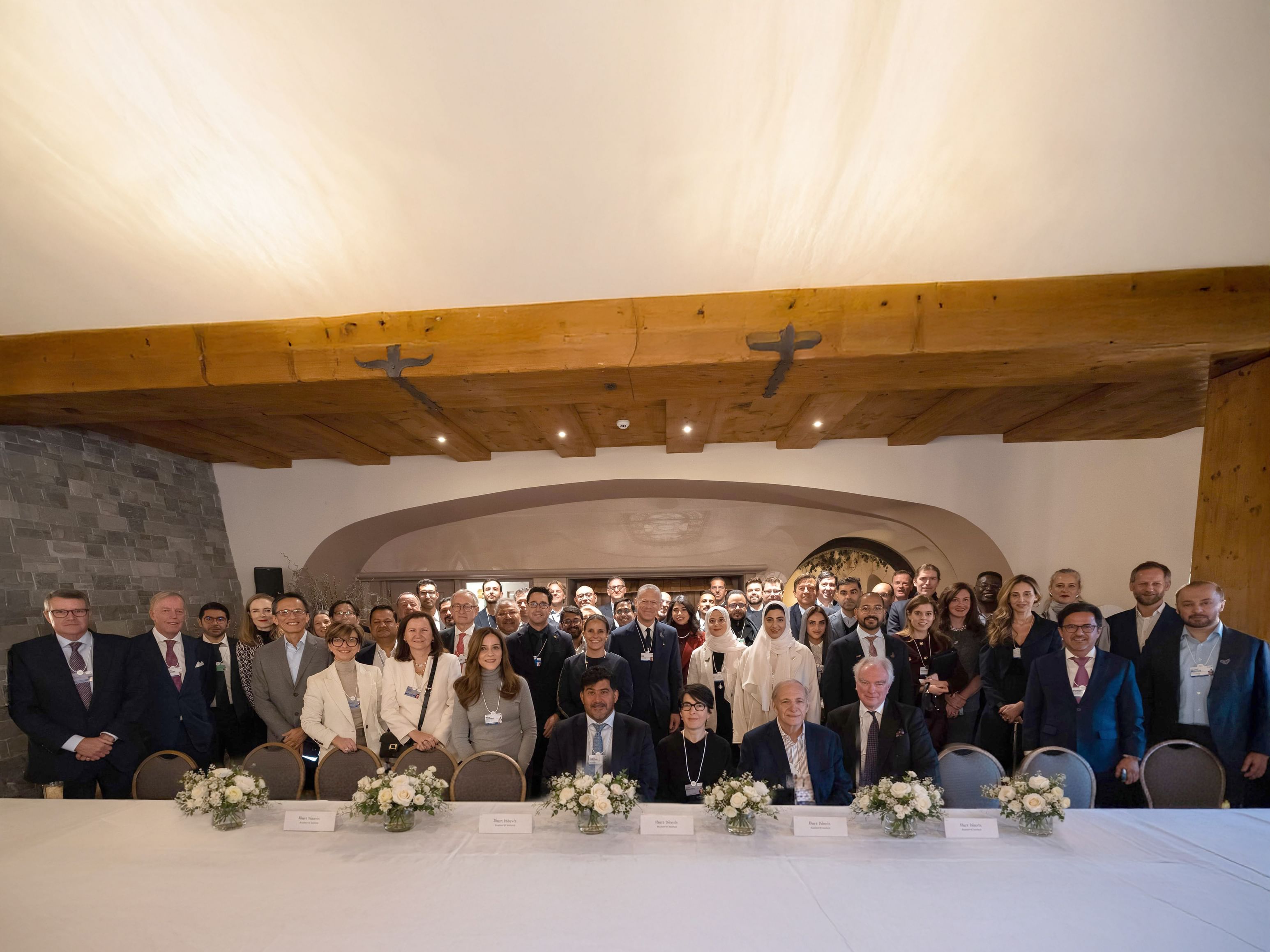
DAVOS, 22nd January, 2026 (WAM) -- Global leaders from government, business, philanthropy, and civil society underscored the importance of deploying artificial intelligence (AI) to reduce inequality and address development gaps, during a high-level dialogue hosted by Badr Jafar, UAE Special Envoy of the Minister of Foreign Affairs for Business and Philanthropy, in collaboration with the UAE Prime Minister’s Office, titled “The AI Impact Flywheel: Government, Business & Strategic Philanthropy” held on the sidelines of the World Economic Forum Annual Meeting in Davos.
The session brought together Badr Jafar; Huda Al Hashimi, Deputy Minister of Cabinet Affairs for Strategic Affairs; and more than 50 senior leaders from government, global technology companies, philanthropy, multilateral institutions, and social innovation organisations.
Participants discussed the need for strengthening coordination and alignment between public policy, private-sector innovation, and strategic philanthropy, to ensure AI innovations are translated rapidly and effectively into social outcomes, particularly in underserved and emerging markets.
Participants brought perspectives from across regions and sectors, reflecting a shared recognition that no single actor can address the opportunities and risks presented by AI alone.
In his opening remarks, Badr Jafar highlighted the growing disconnect between the pace of AI innovation and its application to real-world social challenges. “Aligning AI with social innovation is key to unlocking transformative growth, because innovation advances where risk is understood and outcomes are rewarded. In the UAE we have seen how early investment in digital infrastructure, skills, and public-sector adoption – combined with strong governance and trust – has helped move promising ideas beyond pilots and into real-world impact. When government, business, and philanthropy come together around that principle, strategic philanthropy can play a catalytic role in absorbing early risk and investing in the infrastructure that helps what works travel faster and further.”
Sheikha Shamma bint Sultan bin Khalifa Al Nahyan, President & CEO of Frontier25 and The Climate Tribe
Many existing AI tools built to support climate adaptation have also generated significant societal impact. It is often the most vulnerable populations, including women, youth, and the economically disadvantaged, that are disproportionately impacted by extreme weather and rising temperatures – but by effectively using AI, we have the ability to use insights on energy production and consumption, develop early warning systems to mitigate risk, and create data-driven strategies to build resilience. The UAE is leading the way in investing in the most innovative technological solutions and, while AI has the potential to help our planet, we have an ethical responsibility to use it with intentionality and transparency.
Huda Al Hashimi, Deputy Minister of Cabinet Affairs for Strategic Affairs, affirmed the UAE Government’s commitment to deepening multilateral international cooperation in developing and governing AI-enabled technologies, advancing responsible cross-sector innovation, while ensuring these efforts support development goals, strengthen the global philanthropic ecosystem, and empower communities worldwide to benefit from future-ready solutions that drive sustainable growth and prosperity.
Al Hashimi stressed that impact-driven innovation is the primary force guiding the responsible development and adoption of AI, and a key determinant in shaping the trajectory of this rapidly evolving sector, maximising its positive contributions while addressing future challenges most closely tied to people’s lives and livelihoods.
Discussions focused on ensuring that AI’s accelerating infrastructure build-out narrows rather than deepens global divides, particularly as advanced computing capacity, data, and talent remain concentrated in a small number of economies. Participants also examined how incentives shape where and how AI innovation is adopted, noting that while significant capital is flowing into AI globally, relatively little is directed towards applications that address pressing social and development challenges.
The session featured a wide range of insights from participating leaders, including H.R.H. Princess Beatrice, Founder of BY-EQ; Ray Dalio, Founder of Bridgewater Associates; Musabbeh Al Kaabi, CEO of ADNOC Upstream; Ahmed Galal Ismail, CEO of Majid Al Futtaim; Dr. François Bonnici, Director of the Schwab Foundation for Social Entrepreneurship and Head of Foundations at the World Economic Forum; Dr. Ernest Darkoh, Founder of Broadreach Group; Tom Fletcher, Under-Secretary-General for Humanitarian Affairs and Emergency Relief Coordinator at United Nations Office for the Coordination of Humanitarian Affairs (OCHA); Yalda Aoukar, Co-Founder and Managing Partner at Bracket Capital; Cherie Blair, Founder of the Cherie Blair Foundation for Women; and Dr. Mona Hammami, Managing Partner at Oliver Wyman.
Participants called for more coordinated action to deliver positive social impact, through structured collaboration between government, business, and philanthropy, underpinned by clear governance frameworks from public institutions, philanthropic capital supporting shared infrastructure, and private-sector leadership in developing, scaling, and sustaining solutions. The UAE was cited as an example of how this model can be operationalised. Shaped by early adoption, rapid experimentation, course correction, and sustained investment in skills, governance, and public trust – the UAE ranks first globally in Microsoft’s AI Diffusion Report, with levels of trust in AI trust double those of the United States and most of Western Europe.
The discussion further explored AI’s role in strengthening resilience and supporting more proactive and scalable approaches at a time when traditional development and aid models are under increasing strain. Participants shared perspectives on emerging applications across diagnostics, early-warning systems, education, logistics, and localised service delivery, highlighting how AI enables philanthropic and social organisations to identify high-impact initiatives and measure outcomes more effectively.
The session formed part of an ongoing dialogue among partners to advance AI-enabled social innovation, with further engagement expected following the Annual Meeting. The 56th Annual Meeting of the World Economic Forum convenes global leaders from government, business, and civil society from 19–23 January 2026. The prominence of AI across this year’s programme reflects growing recognition of the critical role that AI governance and deployment will play in shaping future growth, inclusion, and resilience.