
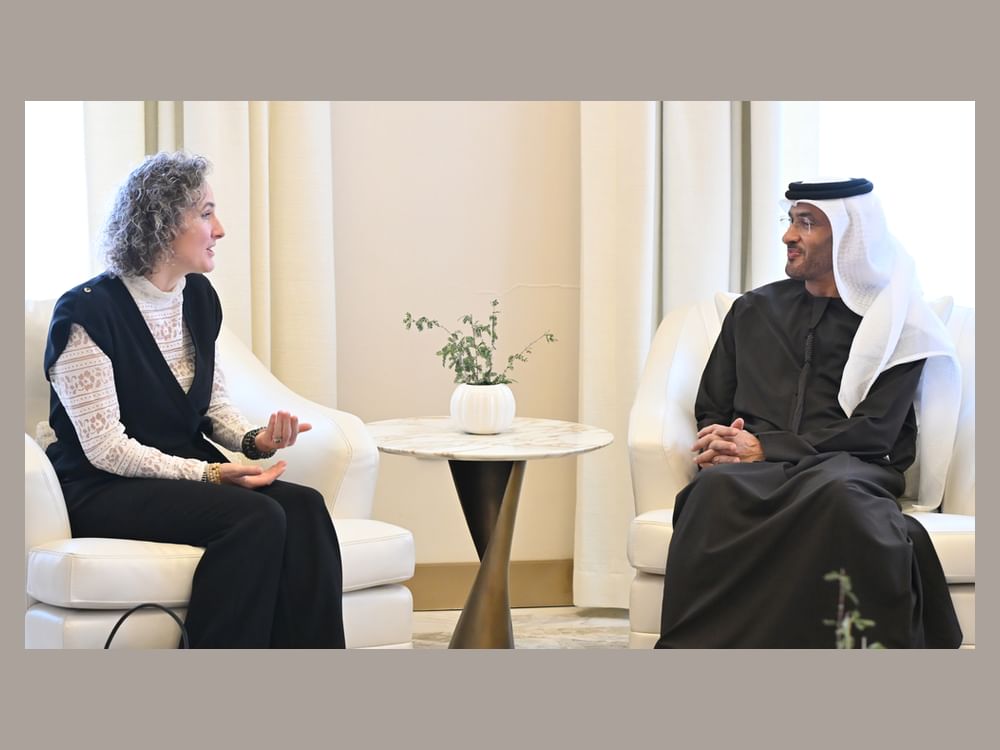
ABU DHABI, 26th January, 2026 (WAM) -- The Federal Public Prosecution today launched the third phase of the regional training programme aimed at developing investigation capabilities in crimes related to chemical, biological, radiological and nuclear materials (CBRN), under the patronage of Dr. Hamad Saif Al Shamsi, UAE Attorney-General, as part of a strategic partnership with the European Union.
The opening session was attended by Lucy Berger, Ambassador of the European Union to the United Arab Emirates, as guest of honour, at the invitation of the Regional Secretariat of the CBRN Risk Mitigation Centres of Excellence.
After attending the training programme, the EU ambassador spoke to the Emirates News Agency (WAM) at her office at the EU Embassy in Abu Dhabi, stating that the EU has "very strong cooperation" with the United Arab Emirates in the area of CBRN crimes investigation, and that it wants to "leverage this bilateral cooperation and build it into a regional one".
She said that working with the UAE hand in hand could help the EU build collaboration not only in the GCC, but across all the Arab states. "That is, I think, what we would like to see going forward," she added.
Today at the CBRN Prosecutors Training titled “Building a Case for the Prosecution of CBRN Crimes” in Abu Dhabi, the EU Ambassador delivered the opening speech, underlining the importance of building specialised judicial capacities and strengthening international cooperation in the investigation and prosecution of CBRN crimes.
In further remarks to WAM, she stated that the primary way of complementing the UAE’s experience, legal framework and prosecution efforts is, in fact, sharing best practices. “We do have a lot of best practices across the European Union, because we have the advantage of having 27 member states who already cooperate together quite a lot. And I think this is how we try to contribute to the UAE's evolving environment when it comes to the prosecution of CBRN cases.
“We share what we do, and we share what we've learned over the years, but I also think that we are at a stage where we also learn from the UAE, and we try to take this into account in our ways of dealing with CBRN cases.”
The ambassador said that one of the strengths that she particularly values in the cooperation with the UAE is the collaboration with the Gulf states. “In this training, we also had participants from other GCC member states, and we would like to see this cooperation grow.”
She added, “So I think one of the strengths is the cross-border cooperation across the GCC.”
On the challenges in the area of CBRN-related crimes, the ambassador said, “I think, currently, one of the greatest challenges is also that it is an area that keeps evolving. We have new technologies implicated in CBRN-related crimes. This is also where we need to continuously work together, and we have to continue to build capacity, but also, we have to continue learning how to develop ways to handle such crimes.”
The ambassador concluded, “In the European Union, we are increasingly focusing on our own security, and we are building capacities, and we are looking for partners with whom we can work on security-related measures as well.”