
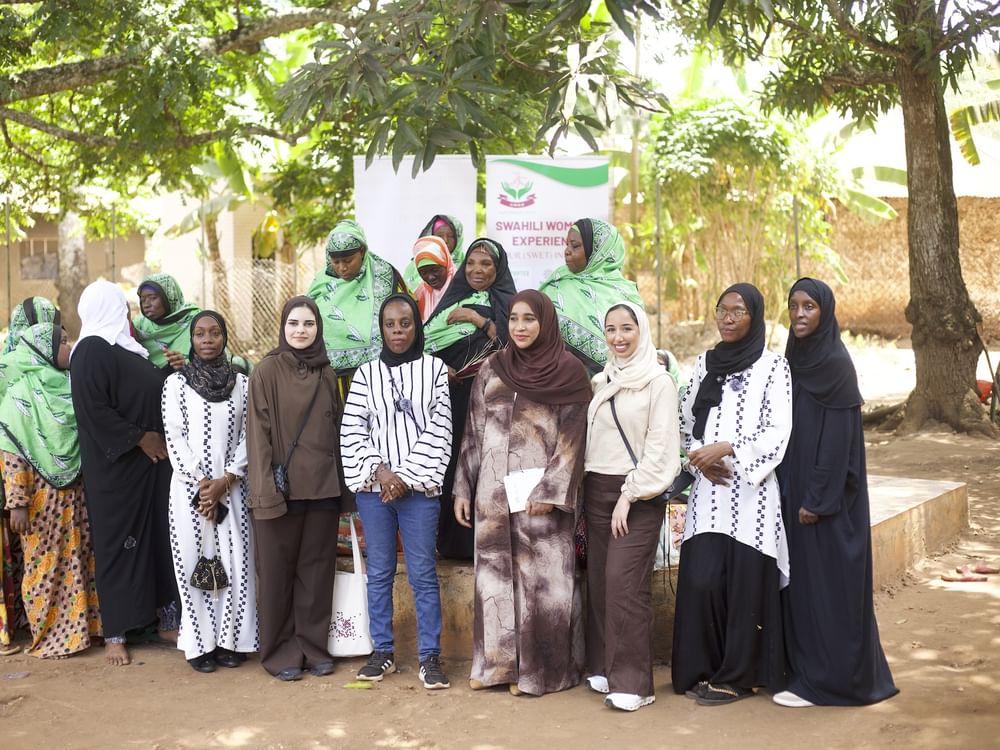
SHARJAH, 26th February, 2026 (WAM) -- NAMA Women Advancement (NAMA) concluded a two-day field visit to Zanzibar to assess progress under the NGO Empowerment Programme and advance the development of financially sustainable women-led and women-focused social enterprises.
The delegation engaged directly with programme partners and participating organisations to assess institutional performance, strengthen coordination channels, and advance practical frameworks that transform community initiatives into structured income-generating models.
The ongoing programme aims to provide direct support to 25 NGOs and build the capacity of 400 women engaged in business activities.
In partnership with NAMA Foundation and implemented by NICE Tanzania, the four-year initiative integrates interest-free social loans with governance training, capacity building, strategic planning, and long-term mentoring.
The visit focused on ensuring that supported organisations progress beyond short-term funding cycles and evolve into revenue-generating entities capable of increasing income, strengthening financial independence, and expanding measurable community impact.
During the visit, the delegation met with the Zanzibar Women Chamber of Commerce (ZWCC), reviewed the Women Tour Guide Project at Utalii Women, and assessed the Assalam Village Women Empowerment initiative in Kizimkazi.
At the Zanzibar Gender Coalition, discussions centred on the Clean Cooking Business Project, which combines environmental solutions with sustainable enterprise models. The delegation also visited ZAWOSA to review the Women Captains Tourist Boats Project, an initiative opening non-traditional maritime sectors to women and embedding income-generation within tourism value chains.
Mariam Al Hammadi, Director-General of NAMA, said, “NAMA Women Advancement prioritises responsible social financing and practical strategic planning as the foundation for sustainable development. Supporting women-led and women-focused civil society organisations requires structured capital, operational discipline, and institutional clarity that convert community initiatives into stable, scalable income-generating models."
She added that through this programme in Zanzibar, NAMA support organisations in reducing reliance on short-term funding and building long-term financial resilience anchored within their communities.
The visit concluded with a technical review session defining priorities for the programme’s next phase. These include linking training outputs directly to implementable income-generation models, reinforcing follow-up mechanisms to ensure social financing aligns with project growth plans, strengthening medium-term institutional measurement frameworks, and advancing structured performance tracking systems.