
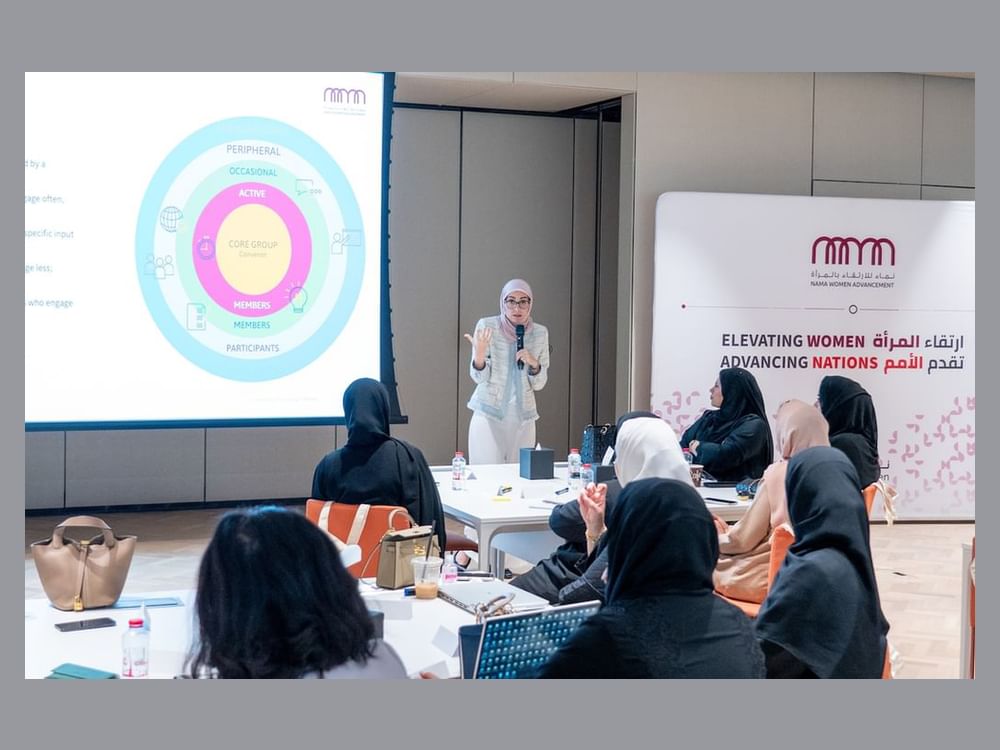
SHARJAH, 10th April, 2026 (WAM) -- NAMA Women Advancement convened government, semi-government, and private sector entities at its “Women Councils Connect” forum to strengthen the role of Women Councils in driving sustained institutional impact.
Held under NAMA’s Irtiqa initiative, the forum positioned Women Councils as key internal governance mechanisms that enable organisations to embed gender equality into policy, decision-making, and leadership development. As these councils continue to emerge across entities at varying stages of maturity, discussions focused on what distinguishes high-impact models from those that remain largely advisory.
Mariam Al Hammadi, Director-General of NAMA Women Advancement, said, “Across institutions today, there is a clear intent to advance gender equality. The challenge lies in translating how that intent is translated into systems that are consistent, measurable, and responsive to the realities of the workplace. Women Councils, when effectively structured, serve as a critical interface between employees and leadership- enabling organisations to identify gaps, inform policy, and monitor progress effectively.”
She added that through Irtiqa, NAMA is working with organisations to bring greater structure to this space by offering practical tools, advisory support, and frameworks that enable councils to operate with clarity and purpose- and deliver outcomes that extend beyond internal initiatives.
The forum featured a session on the development of Women Councils in the UAE and their role within the national context, followed by interactive group discussions focused on benchmarking governance models, governance approaches and sharing practical experiences across sectors.
NAMA also presented the Irtiqa framework, outlining its structured approach to supporting organisations through practical tools, advisory support and capacity-building programmes, as well as partnership opportunities for entities seeking to establish or strengthen their Women Councils.
The forum provided participants with actionable insights into effective Women Council structures and mechanisms for translating initiatives and intent into measurable outcomes. It also strengthened engagement among participating entities and opened avenues for future collaboration.