
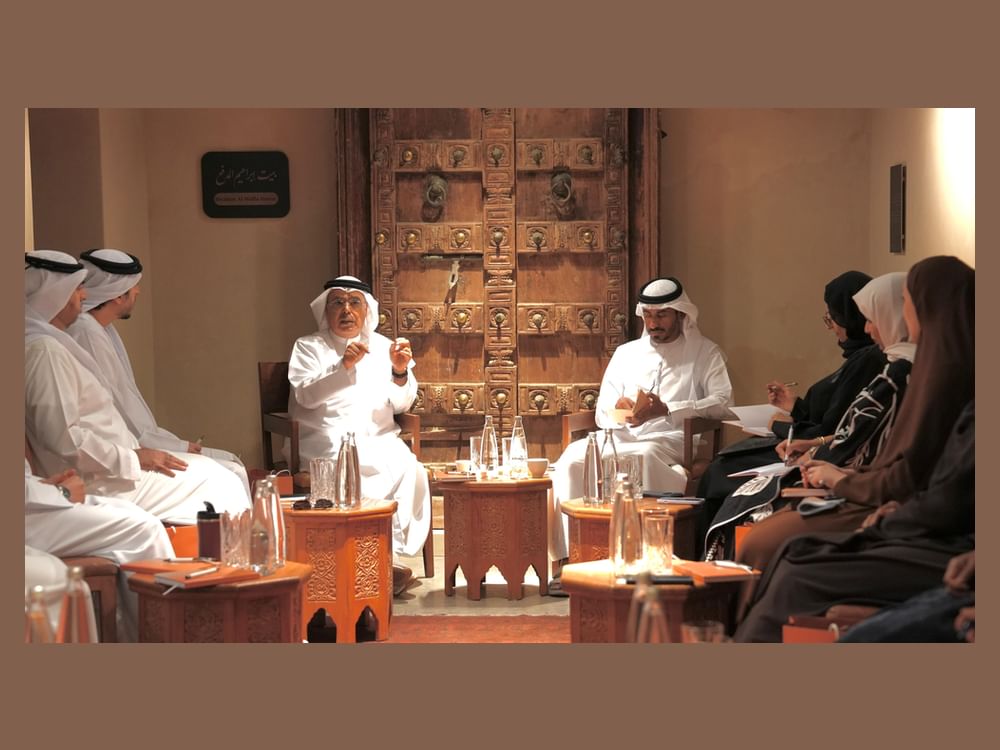
SHARJAH, 24th April, 2026 (WAM) -- The Sharjah Institute for Heritage (SIH) held an extensive coordination meeting. The meeting addressed the foundations of its institutional work and mechanisms for its development, supporting the preservation of Emirati cultural heritage and fulfilling the aspirations of the Emirate of Sharjah. It also focused on strengthening integration among the Institute's departments and branches, and enhancing performance and heritage programmes to meet the demands of the future.
The meeting, held on Thursday morning at Al Bait Hotel in the Al Muraijah area, was chaired by Dr. Abdulaziz Al Musallam, Chairman of SIH, and attended by Abubaker Al Kindi, Director of the Institute, and directors of departments and branches in Al Dhaid, Khor Fakkan, Kalba, and Dibba Al Hisn.
The meeting addressed SIH policies and strategic vision, with a focus on developing institutional performance and strengthening coordination among departments and branches. In addition to reviewing the progress of heritage programmes and initiatives and exploring ways to enhance the quality of services provided, the meeting also discussed the success of events and their outcomes, and their impact on strengthening the Institute's cultural presence.
Al Musallam emphasised the necessity of implementing the directives of His Highness Sheikh Dr Sultan bin Mohammed Al Qasimi, Supreme Council Member and Ruler of Sharjah, aimed at preserving Emirati heritage and raising awareness of its value. He pointed to Sharjah's pioneering role in heritage protection through well-established projects and initiatives that have spanned decades.
He directed that programmes and activities be implemented according to approved plans, with a focus on documentation and dissemination, and on strengthening the Institute's local and international presence through high-quality participation that garners widespread interest and significant acclaim.
Abubaker Al Kindi emphasised the importance of continuing to develop the institutional work system and enhancing integration between departments and branches. This contributes to achieving high-quality outcomes that reflect the institute's standing and cultural role. He praised the tangible cooperation among the work teams, affirming that this harmony contributes to the success of events and programmes and enhances performance efficiency and the quality of outputs.
At the conclusion of the meeting, attendees stressed the importance of supporting ongoing projects and strengthening institutional integration. This will contribute to achieving the institute's objectives and elevating the quality of work and outputs with efficiency and excellence.