
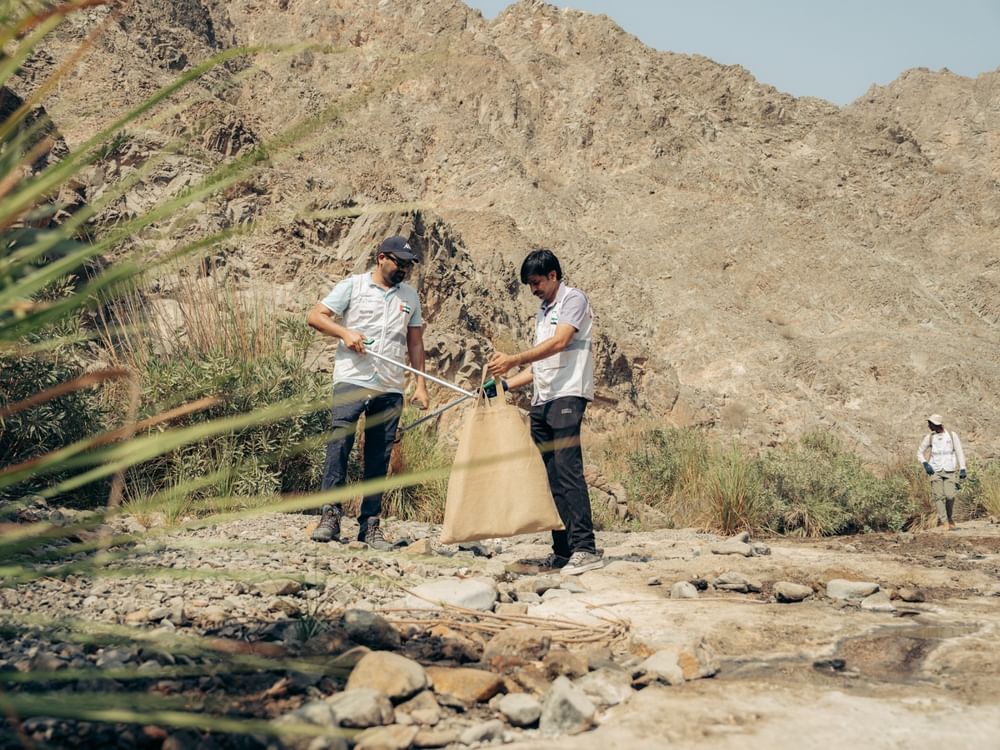
ABU DHABI, 7th August, 2026 (WAM) -- Environment Agency – Abu Dhabi (EAD) and the Department of Municipalities and Transport (DMT) have entered a new phase of collaboration under the Abu Dhabi Waste Management Strategy, focusing on delivering a programme of environmental clean-up activities that combine structured field operations with systematic data analysis, reflecting a shared commitment to supporting Abu Dhabi’s environmental protection and sustainability agenda.
This collaboration forms part of a broader vision to unify government efforts and transform clean-up operations into strategic tools for environmental monitoring.
To date, four clean-up campaigns have been carried out at selected sites, with plans underway to deliver two specialised marine operations, in addition to a series of land-based and coastal efforts throughout the year.
These activities are delivered in partnership with strategic stakeholders, including Tadweer Group, the Abu Dhabi Marine Sports Club, and a number of diving associations. Tadweer Group supports waste collection, sorting, and transport to appropriate treatment facilities and final disposal sites, while the Abu Dhabi Marine Sports Club plays a key role in executing marine operations in accordance with specialised professional standards.
The initiative goes beyond removing waste from targeted sites. It adopts a systematic methodology that includes waste classification, weighing, and documentation within a structured field database under the Sahim – Citizen Science programme. This data is then analysed to identify the most prevalent waste types across terrestrial and marine environments, providing a clear picture of waste patterns and spatial distribution.
This approach represents a significant shift from traditional waste management to a data-driven model, where findings support relevant authorities and decision-makers in developing more targeted and effective policies and interventions. Field data also helps to identify priorities, optimise resource allocation and tailor awareness efforts to the waste types most recorded at each location.
The initiative is aligned with Abu Dhabi's objectives to reduce waste generation and improve management efficiency, with the datasets generated providing indicators to strengthen reduction programmes and enhance monitoring systems.
Ahmed Baharoon, Executive Director of the Information, Science and Environmental Awareness Sector of EAD, said, “This collaboration with DMT reflects a strategic shift in the way waste is managed, as we work to link field operations with systematic scientific analysis through the Sahim: Citizen Science programme. Collecting precise data on waste types and quantities enables us to better understand waste patterns, identify potential sources through the Sahim application, and develop evidence-based solutions that support the emirate's sustainability objectives. This also allows us to continuously measure impact and refine policies and procedures based on real-world findings, improving long-term efficiency and ensuring resources are channelled towards priority areas.”
Rashed Abdullah Al Kaabi, Acting Executive Director of the Technical Operations Support Sector at DMT, said, “This initiative represents a model of integrated institutional cooperation in support of Abu Dhabi’s environmental objectives. Together with EAD and our strategic stakeholders, we are delivering structured clean-up initiatives that combine field operations with data collection and analysis, contributing to more precise and sustainable waste management solutions across land, marine and coastal sites. Through this collaboration, we are advancing a proactive planning approach and strengthening coordination with partners, enhancing the efficiency of field efforts and contributing to the cleanliness of public facilities and natural areas. We believe environmental protection is a shared responsibility, and involving the community in these initiatives builds awareness and positive behaviours, while reinforcing a culture of environmental stewardship and the preservation of Abu Dhabi’s urban and natural landscape.”
The initiative underscores that community participation is an essential element in achieving long-term environmental sustainability. It encourages individuals to adopt responsible waste management behaviours and fosters a culture of maintaining the cleanliness of natural and public spaces.
These efforts serve as a model of integration between fieldwork and institutional support, reinforcing Abu Dhabi's position as a pioneer in knowledge-based and partnership-driven environmental management.