
DUBAI, 23rd August, 2026 (WAM) -- Dubai hosted a series of high-level strategic meetings and dialogues, bringing together humanitarian leaders, experts, representatives of international organisations and key stakeholders as part of preparations for the 22nd edition of the Dubai International Humanitarian Aid and Development Conference & Exhibition (DIHAD 2026).
The discussions focused on the most pressing humanitarian challenges and explored the future of humanitarian action.
These meetings come at a time when the global humanitarian system is undergoing rapid transformation, driven by multiple crises, conflicts, climate-related disasters, economic challenges and rising levels of displacement, alongside widening funding gaps and growing challenges in reaching affected communities. These developments further underscore the need to adopt modern approaches to coordination, financing and aid delivery that can keep pace with changing realities and enhance the efficiency of humanitarian response.
As part of preparations for the 22nd edition of DIHAD 2026, the Executive Humanitarian Programme was launched today in collaboration between DIHAD Sustainable Organisation and the United Nations Office for the Coordination of Humanitarian Affairs (OCHA) UAE, at the Dubai World Trade Centre, under the theme:
The programme provides a strategic platform bringing together senior leaders and decision-makers in the humanitarian sector to examine emerging humanitarian challenges, exchange perspectives, align viewpoints and priorities, and contribute to the discussions leading up to DIHAD 2026. It also seeks to support the development of more effective approaches to addressing the rapid transformations taking place across the global humanitarian sector.
The Executive Humanitarian Programme examines the structural shifts shaping the humanitarian system, including growing global humanitarian pressures, the evolving role of states and humanitarian diplomacy, the impact of donor and partner policies on operational realities, as well as the growing role of the private sector, philanthropy and innovation. The programme also explores the implications of artificial intelligence and data governance for humanitarian action, while examining opportunities to develop more proactive, inclusive and sustainable approaches to humanitarian response.
Eng. Khaled Al Attar, Director General of DIHAD Sustainable Organisation, said, “Humanitarian action is at a pivotal moment, requiring us to move beyond traditional response models towards approaches that are more proactive, collaborative and sustainable. Through these meetings, we reaffirm the importance of uniting efforts, strengthening cross-border partnerships, and harnessing innovation and technology to develop solutions that address the root causes of crises and strengthen community resilience. We must work together to develop practical, forward-looking perspectives that contribute to building a more sustainable future for humanitarian action.”
The discussions emphasised the importance of keeping pace with the transformation of the humanitarian system, as part of wider efforts to develop the system, its financing mechanisms and implementation approaches in a way that ensures a response to growing needs, while upholding humanitarian principles and strengthening accountability to affected communities.
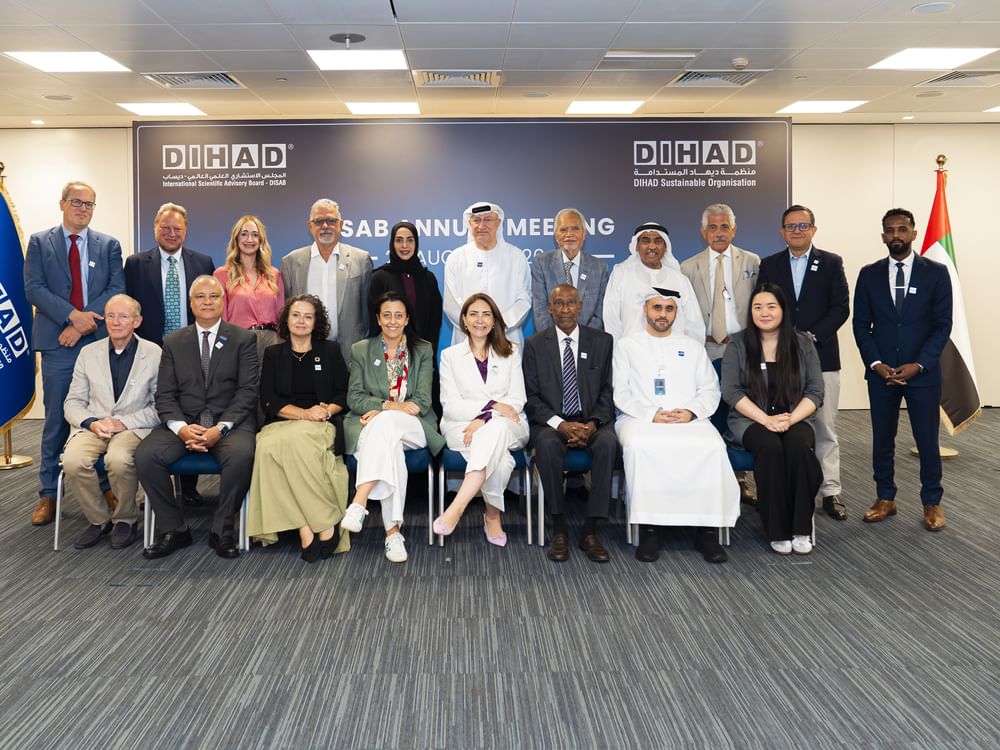
In parallel with the Executive Humanitarian Programme, the DIHAD International Scientific Advisory Board (DISAB) also held its annual meeting today at the Dubai World Trade Centre, chaired by Amb. Prof. Abdulsalam AlMadani, Chairman of DIHAD Sustainable Organisation and Chairman of DISAB, Roving Ambassador of the Parliamentary Assembly of the Mediterranean (PAM) for the GCC Region.
The meeting brought together members of the DIHAD International Scientific Advisory Board (DISAB) and senior representatives from leading international, governmental, humanitarian, and academic institutions, including the United Nations, the Red Cross and Red Crescent, and the Parliamentary Assembly of the Mediterranean.
Discussions focused on the overall activities and strategic direction of DIHAD 2026, alongside this year’s theme, “Humanitarianism in Transition: Shaping the Future of Humanitarian Action.” The DIHAD Main Conference took centre stage, with an overview of the three-day programme highlighting keynote addresses, fireside chats, panel discussions, case presentations, and other high-level sessions addressing key priorities and emerging challenges across the humanitarian and development sectors.
The meeting also highlighted the strengthened diversity and representation of the DIHAD 2026 speaker programme, achieving a near-equal gender balance of 51% male and 49% female speakers. Geographical representation includes Asia (42%), Europe (29%), Africa (15%), and the Americas (14%), while speakers represent a broad cross-section of the humanitarian ecosystem, including NGOs (31%), governments (24%), UN agencies (15%), the private sector (15%), the Red Cross and Red Crescent (9%), and academia (6).
The Board further reviewed preparations for the 22nd edition of DIHAD and exchanged perspectives on the strategic and scientific priorities that will contribute to shaping meaningful discussions and outcomes throughout DIHAD 2026.
During the meeting, Eng. Khaled Al Attar, Director General of DIHAD Sustainable Organisation, highlighted the organisation’s key initiatives and strategic plans aimed at strengthening cross-border humanitarian cooperation and contributing to rebuilding the future of humanitarian action.
DISAB serves as a strategic preparatory platform bringing together senior decision-makers to examine emerging challenges, align perspectives and provide insights that contribute to the discussions taking place during DIHAD.
It also provides a space for the exchange of expertise and the identification of strategic directions, strengthening the role of the United Arab Emirates as a global hub for humanitarian dialogue and action, while supporting engagement between governments, multilateral organisations, donors and partners.
Taken together, these high-level meetings and programmes provide an important platform for humanitarian leaders, experts, governments, international organisations, donors, private-sector representatives and innovation partners to exchange knowledge, anticipate emerging challenges and explore practical pathways towards more effective humanitarian response.
Through these strategic engagements ahead of DIHAD, the Dubai International Humanitarian Aid and Development Conference & Exhibition continues to strengthen its position as a global platform for humanitarian dialogue and international cooperation, laying the foundations for deeper discussions during DIHAD 2026 and contributing to a more innovative, inclusive and sustainable future for humanitarian action.
The 22nd edition of the Dubai International Humanitarian Aid and Development Conference & Exhibition (DIHAD 2026) will officially open tomorrow is organised by INDEX Conferences and Exhibitions Org., a member of INDEX Holding.
The Dubai International Humanitarian Aid and Development Conference & Exhibition (DIHAD) serves as a strategic meeting point bringing together senior government officials, diplomats and humanitarian leaders from around the world. It provides a platform for advancing international dialogue, strengthening multilateral partnerships and launching pioneering initiatives aimed at supporting sustainable development and effective humanitarian action.
The event reflects the leading role of the United Arab Emirates in advancing international solidarity and setting a global model for humanitarian action, further reinforcing the country’s position as an international hub that brings together governments, international organisations, humanitarian entities and the private sector to develop effective and sustainable responses to contemporary humanitarian challenges.