
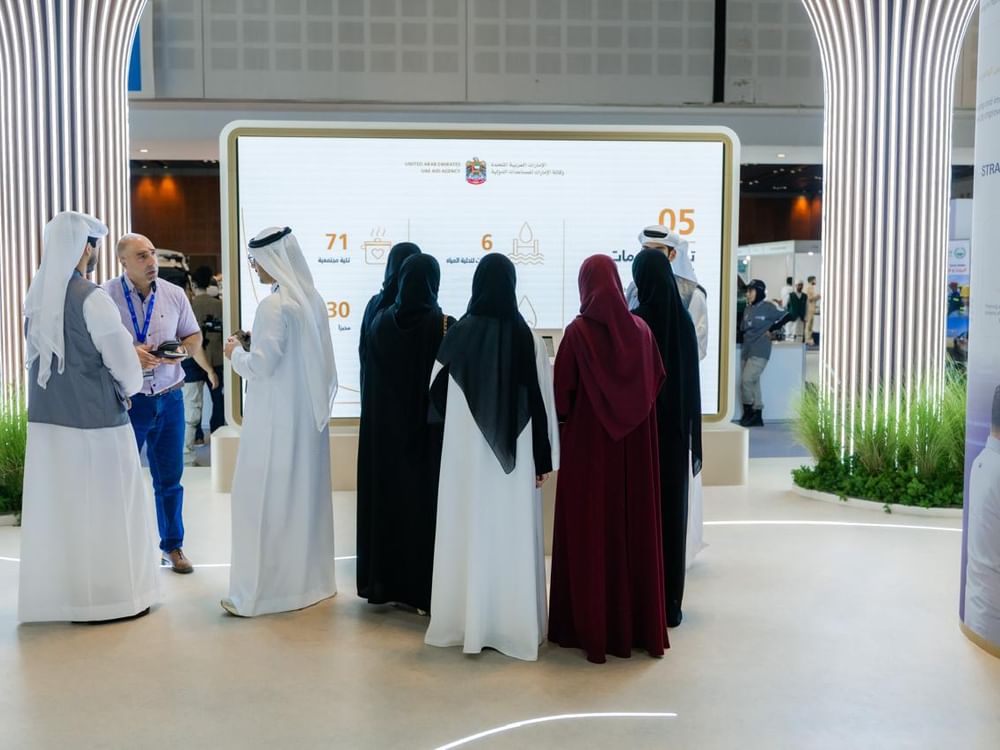
ABU DHABI, 24th August, 2026 (WAM) -- The UAE Aid Agency is currently taking part in the 22nd edition of the Dubai International Humanitarian Aid and Development (DIHAD) Conference and Exhibition, serving as the official partner of the international event.
The gathering is being held from 24th to 26th August at the Dubai World Trade Centre under the theme “Humanitarian Work in Transition: Shaping the Future of Humanitarian Action.”
The Agency’s participation forms part of a broader effort to exchange ideas and explore ways of advancing the humanitarian aid sector internationally — contributing to global solidarity and effective international cooperation in the face of natural disasters and humanitarian crises, and supporting the development of the world’s vulnerable communities.
As part of its participation, the Agency is hosting a number of sessions on humanitarian and relief work, bringing together leading international experts to focus on priority issues such as water, food, and livelihoods, as well as the optimal use of modern technology and artificial intelligence to strengthen the humanitarian and relief efforts of local, regional, and international institutions.
The goal is to help these institutions meet current challenges, improve living conditions, and reinforce vital sectors for countries and communities in need, in line with the UN Sustainable Development Goals.
The Agency is also hosting a dedicated pavilion at the event, giving local, regional, and international donors — along with the general public — the opportunity to explore a map charting the global footprint of Emirati aid and to learn about the UAE’s relief efforts and the key humanitarian projects and initiatives it has launched in countries around the world.
The pavilion further illustrates how the UAE’s efforts help ease the suffering of communities affected by disasters and crises while supporting rapid early recovery and stability.
The Agency continues to play a pivotal role globally in fostering sustainable community development, strengthening local economies, and delivering effective, advanced solutions to international crises and challenges — while meeting the specific needs of the countries it supports.