
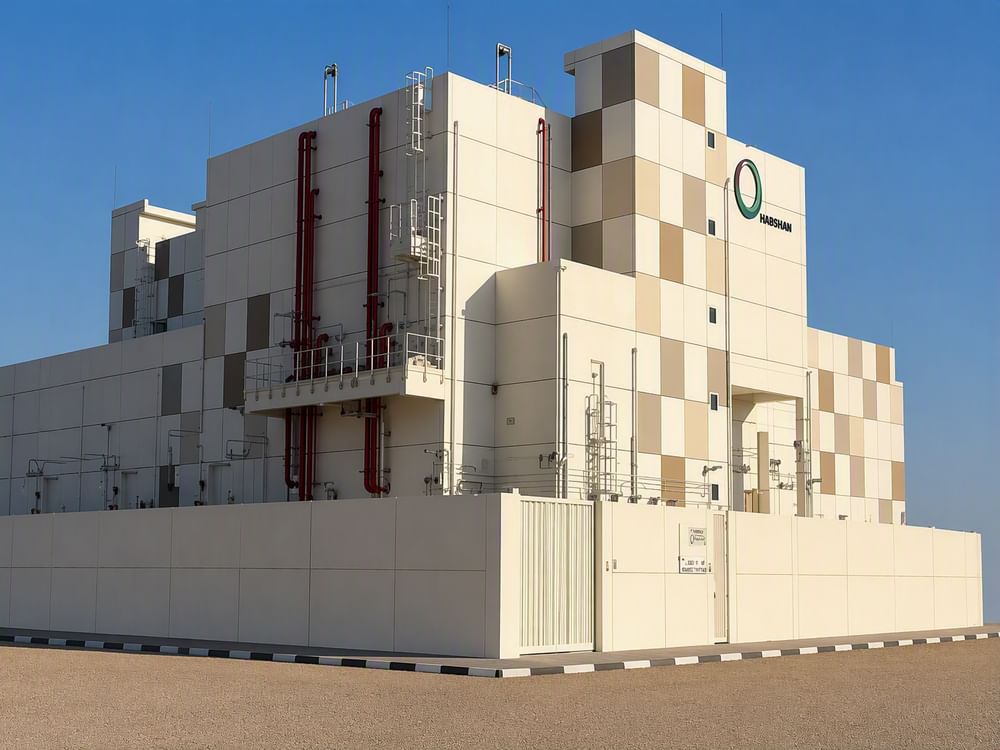
DUBAI, 31st August, 2026 (WAM) -- Dubai Electricity and Water Authority (DEWA) has developed a standardised and digitally optimised design for 132kV substations as part of its efforts to enhance the efficiency and resilience of Dubai's electricity infrastructure and keep pace with the rapid growth in energy demand while maintaining the highest standards of availability and reliability.
This innovation accelerates the design and execution phases, standardises engineering and technical criteria, and enhances the efficiency of power transmission projects. The application of this design has reduced the total time required for substation design and implementation while lowering execution costs.
Developed by DEWA's Transmission Power division, this practice was awarded a six-star rating at the International Best Practice Competition.
“The strategic projects implemented as part of this integrated digital approach underscore DEWA's commitment to fulfilling the aspirations of our wise leadership to make Dubai the world's smartest and most sustainable city. We continue to develop electricity transmission networks in line with a forward-looking vision that keeps pace with Dubai's urban and economic growth while providing advanced, resilient and reliable electrical infrastructure. The standardised and digitally optimised design for 132kV substations is not merely an engineering or operational development. Rather, it represents a strategic pillar in Dubai's smart energy transition journey. It directly supports our efforts to improve grid efficiency, accelerate project delivery, enhance the quality of engineering outputs, and strengthen planning and implementation efficiency. This, in turn, increases our capacity to meet growing electricity demand and reinforces Dubai's position as a global leader in developing smart, sustainable, resilient and future-ready energy networks that meet the highest international standards,” said Saeed Mohammed Al Tayer, MD & CEO of DEWA.
“This design is particularly significant in light of the continuous expansion of DEWA's power transmission network, opening new horizons for the deployment of Fourth Industrial Revolution technologies, most notably artificial intelligence and the Internet of Things. DEWA continues to implement major transmission substations and cable projects to meet the growing demand for electricity while ensuring the highest levels of availability, reliability and efficiency,” added Al Tayer.
At the implementation level, the standardised digital design has supported the construction of 90 132kV substations, 23 of which were commissioned during the first half of 2026. It has enhanced the quality of engineering outputs and facilitated the reuse of approved models in future projects.
Furthermore, the practice has achieved tangible results, including reducing the total time required for substation design and implementation by more than two months and lowering costs by approximately AED5 million per substation. It has also reduced annual energy consumption by the equivalent of 182 megawatt-hours (MWh) and lowered carbon emissions by approximately 447.24 tonnes of carbon dioxide annually.
The new design reduced substation components by eliminating around 8,000 electronic parts and 140 kilometres of copper wiring. In addition, optimising the substation layout and footprint in line with the digital design reduced the total construction area by 220 square metres and saved approximately 12,720 gallons of water annually used for cooling and auxiliary systems at each substation.
Hussain Lootah, Executive Vice President of Transmission Power at DEWA, noted that the standardised design is based on a repeatable and continuously improvable engineering model that ensures consistency in substation technical standards while simplifying the management of design, reliability and implementation stages. This approach helps reduce variations between projects, enhances coordination among engineering and technical teams, and accelerates workflows from the planning stage through to implementation readiness.
Moreover, digital optimisation enables the design to leverage advanced technologies in substation development by fostering greater integration between engineering and digital components. This enhances the technical readiness of substations and improves the management of data, drawings and technical specifications within a more efficient working environment. As a result, DEWA is better positioned to develop more resilient and reliable substations capable of supporting the emirate's continued urban and economic growth.