
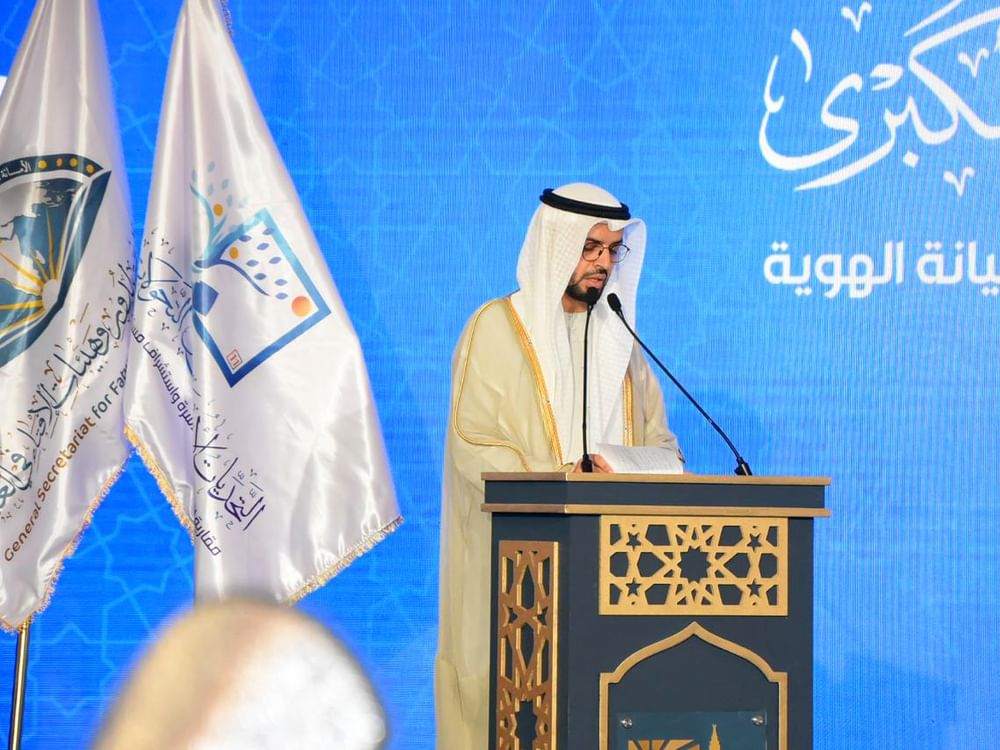
CAIRO, 2nd September, 2026 (WAM) -- Dr. Omar Habtoor Al Darei, Chairman of the General Authority of Islamic Affairs, Endowments and Zakat (AWQAF), and Vice Chairman of the UAE Fatwa Council, affirmed that the 11th International Conference of the Egypt's Dar Al-Ifta, which opened today in Cairo under the theme “Family Challenges amid Major Transformations: A Fatwa-Based Approach to Protecting the Family, Anticipating Its Future, and Safeguarding Identity”, holds particular significance within the national context of the United Arab Emirates.
This comes in light of President His Highness Sheikh Mohamed bin Zayed Al Nahyan, declaring 2026 the “Year of the Family,” placing the family at the heart of national priorities.
He noted the UAE Fatwa Council’s attention to this issue, including its international conference on the family and the jurisprudence of contemporary realities.
In his speech, titled “Family Fatwa and the Family of Fatwa”, Dr. Al Darei addressed four interconnected areas: assessing the realities and transformations of the family; highlighting the potential of fatwas to support family stability; drawing on specialized expertise and partnerships; and keeping pace with transformations while anticipating the future.
In this context, he noted that rapid social transformations, accompanied by changes in family structures and patterns, require fatwa institutions to continuously review their discourse, tools, and impact on families and society.
He explained that the social trust enjoyed by these institutions enables them to contribute to strengthening family stability, making it essential for them to develop their methodologies so they can respond to family-related issues with awareness and wisdom.
He stressed that protecting the family is a collective responsibility in which state institutions and various sectors must work together. Contemporary family fatwas require an integrated form of scholarly reasoning that draws on legal knowledge, psychology, sociology, and communication skills, thereby enhancing understanding of reality and contributing to the consolidation of family tranquility and balance.
Addressing the future, he called for developing the fatwa discourse and equipping specialists with skills to understand and anticipate developments and monitor emerging phenomena. He emphasized that engagement with digital and technological transformations and artificial intelligence should be based on informed understanding and responsible use, rather than isolation or apprehension, ultimately leading to “family-friendly fatwas” that protect values while keeping pace with the times.
Dr. Al Darei presented a number of practical recommendations, including strengthening institutional methodologies for family-related fatwas and taking into account the potential consequences of fatwas; addressing unregulated fatwas; reviewing the fatwa archive; updating content related to artificial intelligence; and developing the competencies of specialists in the humanities, law, and contemporary communication.
He called for greater integration between fatwa institutions and the educational, academic, judicial, media, and community sectors, as well as for strengthening the connection between fatwas and national priorities and strategies. He stressed that the national character of fatwas is reflected in their informed engagement with state plans to empower families, preserve identity, and strengthen social cohesion.
The Council’s participation comes as part of efforts to strengthen scientific and institutional cooperation with fatwa institutions and authorities, contribute to the development of fatwa-based approaches to contemporary family issues, and anticipate the transformations affecting them.
Held under the patronage of President Abdel Fattah El-Sisi of the Arab Republic of Egypt, the conference will examine the major transformations reshaping family life, values, relationships, and identity.
Over the course of two days, the conference addresses a number of issues related to the future of the family and fatwa institutions, most notably digital and technological transformations, challenges to family identity, the role of institutional fatwas in addressing family crises, and economic, social, ethical, and psychological challenges, in addition to anticipating the future of the family and fatwa institutions.
The conference will also address the social, cultural, economic, and technological transformations affecting the family, including their impact on marital relationships, family stability, and child-rearing. It will highlight the role of fatwa institutions and religious, cultural, and educational institutions in developing informed and practical responses to emerging challenges.