
ABU DHABI, 5th September, 2026 (WAM) -- Professor Florencia Lopez Boo, Director of Global TIES for Children and Professor of Economics and Applied Psychology at New York University (NYU) in the United States, said that winning the Khalifa International Award for Early Learning in the Research and Studies category for her research, titled “Research Study to Inform Quality Improvement at Scale in Early Childhood Development Interventions in Low and Middle-Income Countries,” marks a significant milestone for applied research and studies at NYU.
She noted that the recognition has served as an important catalyst for researchers and faculty members specialising in early childhood development to expand the application of such programmes to other regions of the world, building on the promising initial results achieved in the countries where the programme was implemented: Bolivia, Brazil, Ecuador, Jamaica, Nicaragua, Panama and Peru.
Lopez Boo added that the study and its applied programme contributed to wide-ranging reforms in early childhood policies in these countries through the introduction of tools for monitoring quality. More broadly, the study supports a research agenda focused on strengthening the quality of care and development services for young children, opening wider opportunities for healthy, social and educational development in environments that encourage creativity.
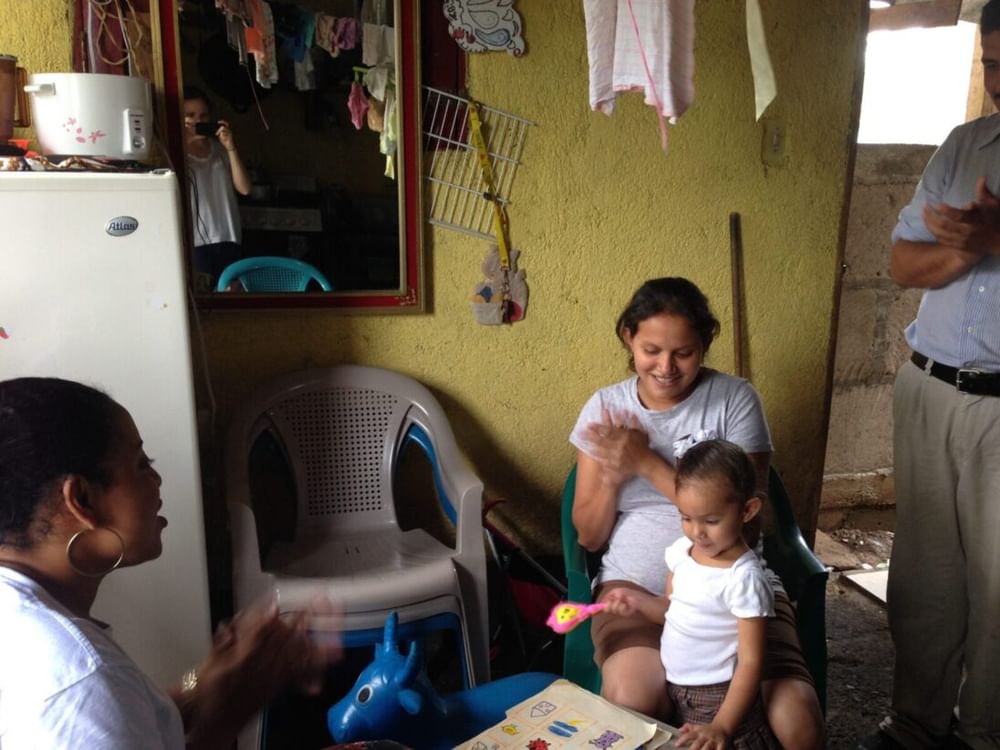
The award-winning researcher explained that the home-visiting programme targeted children from birth to three years of age. In its early years, it reached 33,190 children across 400 local communities in these countries before later expanding to serve approximately 150,000 children.
She said this demonstrates the importance of such programmes and reflects the need among many communities for them to serve as a foundation for early childhood systems, where investment in young children is an investment in the future.
She noted that the findings of the study could serve as a model for implementing similar programmes in comparable settings where resources allocated to early childhood care and development are limited.
Humaid Al Houti, Secretary General of the Khalifa Award for Education, said that the study’s recognition reflects the global role of the Khalifa International Award for Early Learning in supporting high-quality research that offers practical solutions to challenges related to children’s care and development.
Al Houti affirmed that the Award continues to work closely with the winning researcher in support of the Award’s mission and objectives to create a positive humanitarian impact worldwide.
He added that the Award provides logistical support that can enable programmes of this kind to expand into comparable settings around the world, benefiting young children, their families and their communities.