
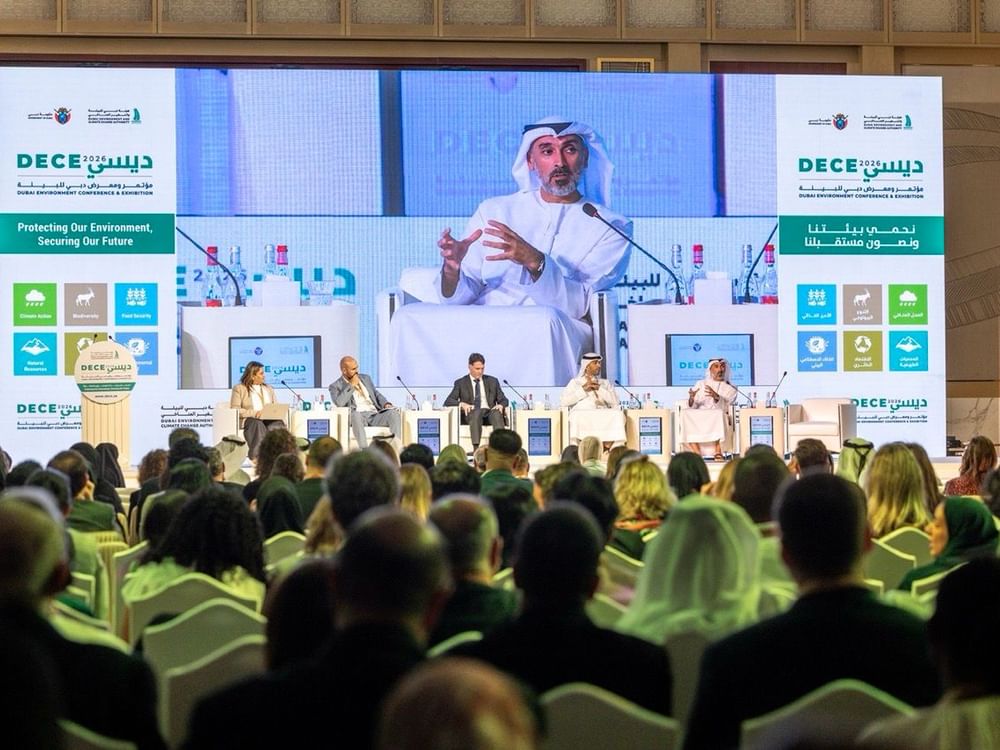
DUBAI, 9th September, 2026 (WAM) -- The Dubai Environment and Climate Change Authority (DECCA) and Dubai Customs have signed a memorandum of understanding (MoU) to strengthen biodiversity and wildlife protection through data analytics, artificial intelligence and electronic integration.
The MoU was signed on the sidelines of the Dubai Environment Conference and Exhibition 2026 at Grand Hyatt Dubai in the presence of Ahmed Mohammed bin Thani, Director-General of DECCA, and Abdulla Mohammed Busenad, Director-General of Dubai Customs.
The agreement supports the UAE's commitments under the Convention on International Trade in Endangered Species of Wild Fauna and Flora (CITES), as well as applicable federal and local environmental legislation.
It establishes a framework integrating DECCA's technical expertise in identifying protected species with Dubai Customs' operational capabilities across land, sea and air ports, strengthening efforts to combat illegal wildlife trade.
Ahmed Mohammed bin Thani said, “Protecting biodiversity extends beyond the boundaries of protected areas to border entry points, which play a pivotal role in global efforts to safeguard wildlife. Our cooperation with Dubai Customs represents an important extension of our efforts to develop an integrated environmental system that brings together technical expertise, regulatory capabilities and advanced technologies.”
He added that the partnership would strengthen the exchange of data and risk indicators and enhance the ability of qualified personnel to identify protected species and their products, supporting faster and more effective detection of potential risks.
Abdulla Busenad said Dubai Customs is deploying its technological and customs capabilities to safeguard supply chains from the smuggling and illegal trade of endangered species, supported by risk management and targeting systems that focus inspection and enforcement on high-risk shipments and transactions.
He said, “Our memorandum of understanding with the Dubai Environment and Climate Change Authority takes that cooperation to a new level of operational integration, pairing specialised environmental expertise with customs and technological capability.”
Busenad added that linking data and risk indicators with enforcement systems, alongside the use of artificial intelligence, data analytics and image recognition, would improve targeting accuracy and early detection of illegal wildlife trafficking while strengthening the implementation of CITES.
He also highlighted Project Zero, which combines customs innovation with circular economy principles and resource efficiency, supporting a proactive enforcement system designed to identify risks and intercept illicit trade before it reaches Dubai's ports and border crossings.
The MoU also provides for joint training programmes and workshops to strengthen the capabilities of inspectors and personnel from both entities. It promotes the use of data analytics and image-recognition technologies to detect and predict high-risk shipments and transactions, alongside the development of alert and notification mechanisms.