
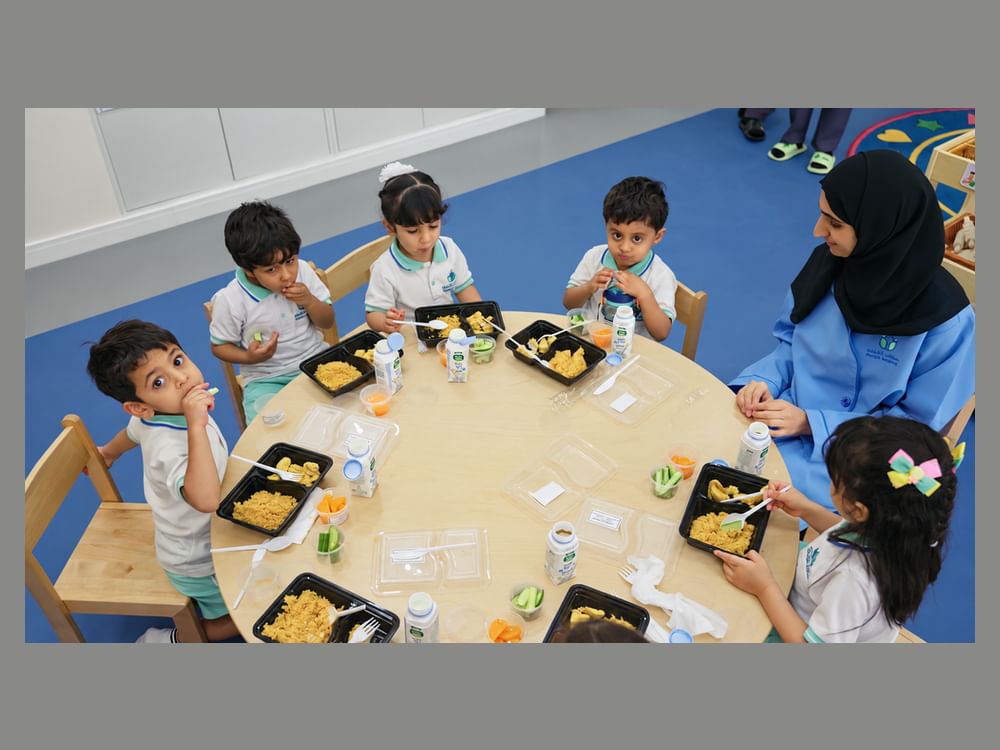
SHARJAH, 9th September, 2026 (WAM) -- In implementation of the directives of His Highness Sheikh Drز Sultan bin Mohammed Al Qasimi, Supreme Council Member and Ruler of Sharjah, Sharjah Government Nurseries, affiliated with the Sharjah Education Academy, have launched the Healthy Food via Central Kitchens project to enhance nutrition in government nurseries and kindergartens.
The project aims to establish an integrated healthy nutrition system that ensures meal quality and safety, while standardising preparation and service to meet children's needs at different developmental stages. It also seeks to make healthy nutrition part of children's daily experience and instil healthy habits from an early age.
The initiative complements the Baba Sultan’s Healthy Food Ambassadors programme, launched by the Sharjah Private Education Authority (SPEA) in collaboration with the Sharjah Department of Agriculture and Livestock. While the programme promotes awareness of healthy dietary practices, the central kitchens project translates this approach into daily meals for children.
Muhadditha Yahya Al Hashimi, Chairperson of the Sharjah Education Academy, said, “The Healthy Food via Central Kitchens project stems from the vision of His Highness Sheikh Dr Sultan bin Mohammed Al Qasimi, Supreme Council Member and Ruler of Sharjah. This vision places human health and quality of life at the core of development, affirming that building future generations begins with comprehensive care for their health and education from their earliest years.”
She added that the project combines food quality, safety and nutritional value with an operational and monitoring system designed to address the age-specific and health needs of each child.
The initiative brings together several Sharjah entities, using local products supplied by the Sharjah Agricultural and Livestock Production Establishment (Ektifa), with meals prepared by Sharjah National Hotels. The model links local production directly with meals served to children and supports Sharjah's food security objectives.
Khawla Ali Al Hosani, Deputy Director of the Sharjah Education Academy, said the project's first phase tested the system across 10 nurseries in different locations, enabling its impact on children, families and staff to be assessed.
She noted that 96 percent of parents participating in the evaluation recommended continuing the project, paving the way for the adoption of the central kitchens model.
Al Hosani said the model standardises meal preparation and monitoring according to approved benchmarks, ensuring consistent quality and efficiency in preparation, transport and service. She added that the Sharjah Government is subsidising 50 percent of meal costs, with parents covering the remainder.
Khalifa Musabah Al Tunaiji, CEO of Ektifa, said the partnership strengthens coordination between the participating entities, maximises the use of local agricultural and livestock products and enhances supply chain efficiency.
He explained that Ektifa supplies agreed products to Sharjah National Hotels for preparation into meals tailored to the nutritional needs of children served by the Sharjah Education Academy. He added that the model supports Sharjah's efforts to strengthen food security and sustainability while reinforcing confidence in local products.
Ian Phillips, CEO of Sharjah National Hotels, said, “At Sharjah National Hotels and its subsidiary, Sharjah National Catering, we are proud to partner with the Sharjah Education Academy to realise the vision of His Highness Sheikh Dr Sultan bin Mohammed Al Qasimi.”
He said the programme provides healthy, organic meals for children aged one to five, relying primarily on ingredients grown or produced locally in Sharjah, while supporting children's growth, learning and healthy eating habits.
The meal service operates under an integrated monitoring system covering menu approval, inspection of raw materials, preparation, cooking, packaging, transportation and delivery to nurseries, with specified quality and health standards applied throughout.
Digital platforms also support nutritional and health records for each child, enabling their needs to be monitored and improving communication with families.
The initiative also supports children's learning and development, with mealtimes helping to develop fine motor skills and introduce concepts such as colours, numbers, food sources and food groups.
Its impact is intended to extend beyond nurseries by encouraging families and children to adopt healthier dietary choices at home and establish sustainable habits from an early age.