
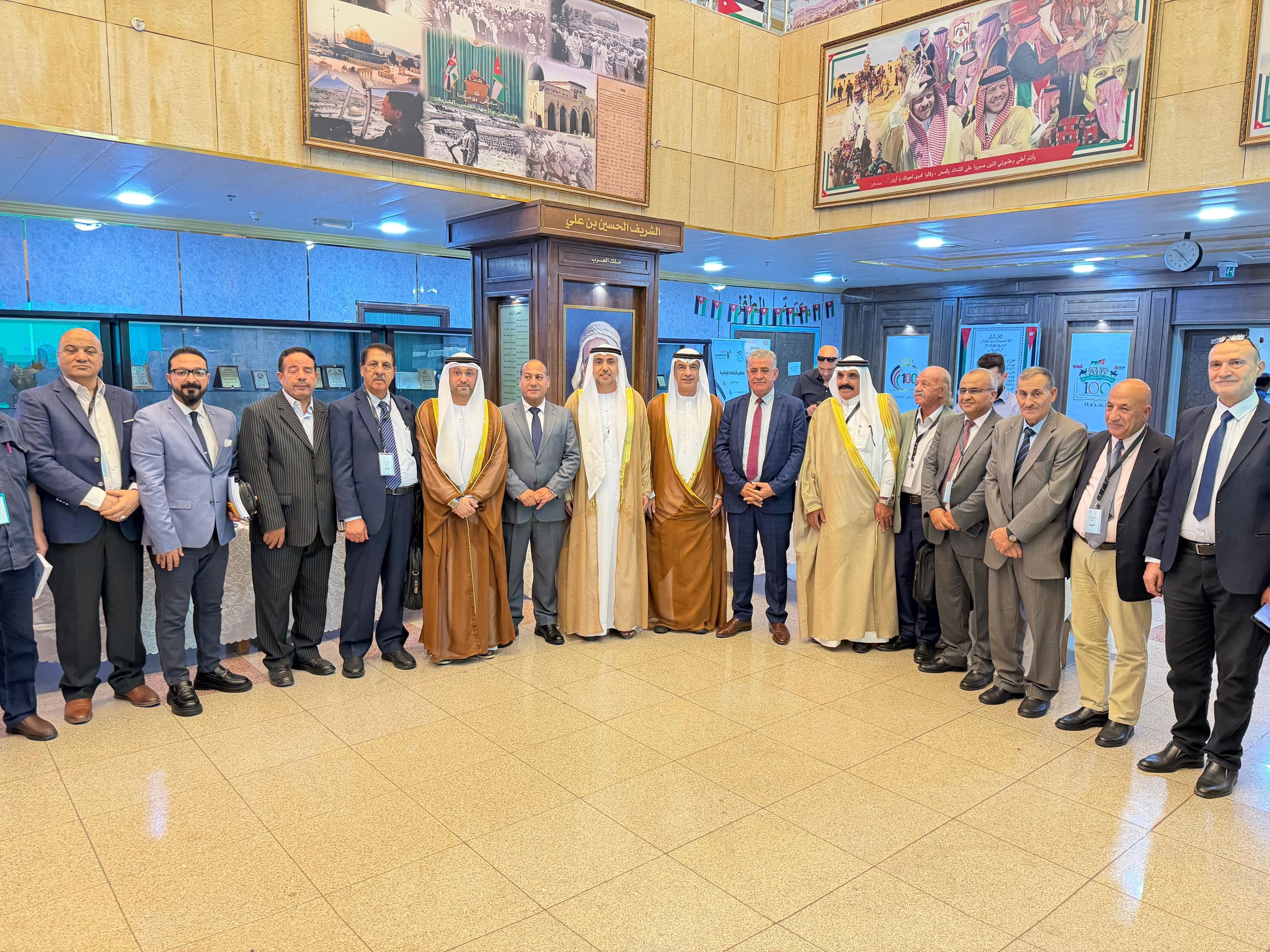
AMMAN, 9th September, 2026 (WAM) -- The 22nd Sharjah Narrative Forum has opened in Amman under the patronage of His Highness Sheikh Dr. Sultan bin Mohammed Al Qasimi, Supreme Council Member and Ruler of Sharjah, bringing together more than 50 novelists, short-story writers, academics and critics from Jordan and the Arab world.
Jordanian Minister of Culture Mustafa Al-Rawashdeh received Abdullah bin Mohammed Al Owais, Chairman of the Sharjah Department of Culture, and Mohammed Ibrahim Al Qaseer, Director of the Department's Cultural Affairs, at the National Library in Amman ahead of the forum's launch.
Al-Rawashdeh praised Sharjah's cultural work at Arab and international levels, saying it embodies the humanitarian and civilisational vision of His Highness Sheikh Dr Sultan bin Mohammed Al Qasimi.
He highlighted the strong ties between Jordan and the UAE and thanked Sharjah for its longstanding support for poetry, theatre and narrative literature in Jordan. He also conveyed greetings from Jordan and King Abdullah II ibn Al Hussein to the Ruler of Sharjah in appreciation of His Highness's support for cultural affairs.
Al Owais thanked Jordan's Ministry of Culture for hosting the Department's activities, noting that cooperation between the two sides has strengthened cultural ties between the UAE and Jordan.
He highlighted the House of Poetry in Mafraq, established under a memorandum of understanding between the two ministries, as well as cultural honouring forums, previous recognition of 20 Jordanian cultural figures and a session of the Sharjah Award for Arab Creativity.
Al Owais said the latest edition of the Sharjah Narrative Forum continues this cooperation by celebrating Jordanian writers and their contributions to the short story.
Held under the title “The Short Story: From the Imagination of Writing to Reception,” the two-day forum features four discussion tracks.
The opening ceremony at the National Library was attended by Al Owais; Al Qaseer; Hamad Al Matrooshi, Chargé d'Affaires of the UAE Embassy in Jordan; and Nidal Al-Ayasrah, Secretary-General of Jordan's Ministry of Culture, representing Al-Rawashdeh, alongside intellectuals and academics.
An accompanying exhibition showcased Sharjah Department of Culture publications, including Sharjah Culture, Al Rafid, Al Qawafi, Al Masrah and Al Hira magazines.
Al Qaseer recalled that Amman also hosted the forum's 16th edition in 2019, saying the return reflects the city's established Arab cultural presence and its shared interest with Sharjah in culture and knowledge.
He said the forum reflects the vision of the Ruler of Sharjah to organise it across Arab countries, strengthening a shared Arab cultural presence and broadening dialogue on narrative issues.
Al Qaseer noted that the forum has built a significant body of research on Arab narrative over its successive editions. He said this year's theme explores the short story from the writer's initial idea through to its reception and interpretation.
Al-Ayasrah, delivering remarks on behalf of the Jordanian Minister of Culture, said Jordan's cultural activities help position the country as an Arab cultural hub and strengthen cooperation with cultural institutions in the UAE.
He also highlighted the Ruler of Sharjah's support for Arab cultural initiatives, including Houses of Poetry, theatre festivals and programmes honouring cultural figures.
The opening session, “The Short Story: From the Horizon of Imagination to Expansive Reality,” examined the relationship between the short story and digital technology.
Zuhair Obeidat explored how digital transformation has affected writers, texts and readers, arguing that emerging short-form narrative styles require new critical standards. Nidal Al-Shamali said the paper raised important questions about how literary theory must adapt as the means of producing and receiving texts evolves.
The first track, “Autobiographical References in the Short Story,” featured Hassan Al-Majali, Nasser Shabana and Rashed Issa, and was chaired by Ramadan Al-Rawashdeh.
Discussions examined the role of autobiographical references in short fiction, their relationship with creative experience and their use among Jordanian women short-story writers.
The first day also featured creative testimonials from writers Saoud Qbeilat, Akram Al-Zoubi, Sawar Al-Sbeihi and Rawand Al-Kafarneh, who reflected on their early writing experiences and key milestones in their creative journeys.