
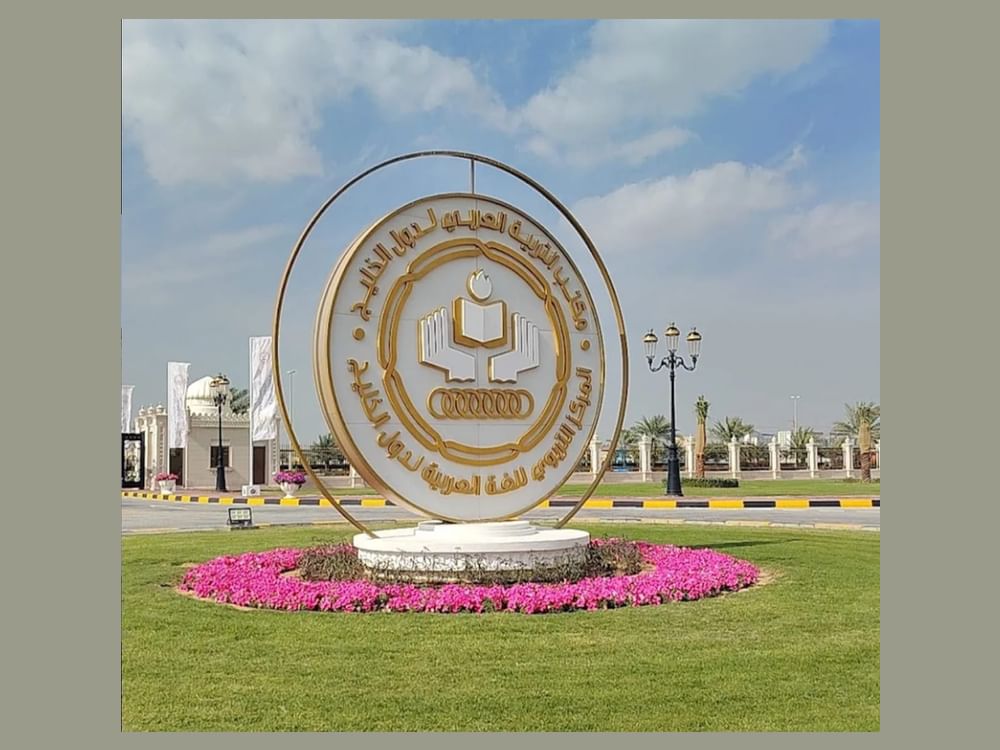
TUNIS, 12th September, 2026 (WAM) -- The Arabic Language Education Centre for the Gulf States (ALECGS) participated in an international academic forum organised by the Arab League Educational, Cultural and Scientific Organisation (ALESCO) in cooperation with the Computational Linguistics Laboratory at Manouba Faculty in Tunisia.
Held under the title “The Integrated Approach to Teaching Arabic Language Skills to Non-Native Speakers: Contemporary Challenges and Prospects for Pedagogical and Technological Development”, the forum brought together experts and specialised regional and international institutions active in the field.
The event took place amid rapid changes in the teaching of Arabic to non-native speakers, highlighting the need to reconsider traditional educational approaches. The discussions focused on enhancing learners’ ability to engage in authentic communication while taking into account the specific characteristics of the Arab linguistic community and the diversity between Modern Standard Arabic and everyday language use.
The forum addressed three main academic themes. The first focused on integrated curriculum design and the management of linguistic diglossia. The second examined applied linguistics and technological innovation, including artificial intelligence applications, natural language processing and digital learning.
The third theme covered assessment and evaluation, the Common Arab Framework of Reference, and prospects for harmonising international standards, examinations, and certifications.
ALECGS contributed to the forum’s proceedings through a paper delivered by Dr Issa Saleh Al Hammadi, Director of the Centre in Sharjah.
Titled “The Centre’s Efforts to Develop Arabic Language Teaching and Learning for Non-Native Speakers”, the paper reviewed the centre’s main areas of work and initiatives, including studies and research, training programmes, and the organisation of the International Arabic Language Conference in Sharjah.
These efforts reflect the centre’s role in strengthening and developing Arabic language education for non-native speakers, expanding the reach of Arabic and facilitating its learning on a wider scale.
The presentation highlighted the centre’s research and studies aimed at developing Arabic language teaching and learning for non-native speakers.
The centre also developed the 2021 Quality Standards for Arabic Educational Institutions for Non-Native Speakers, a study on preparing Arabic language teachers for speakers of other languages in line with contemporary international standards, and the 2018 Standard Levels Framework for Teaching Arabic to Non-Native Speakers.
Dr Al Hammadi also reviewed the centre’s training programmes to develop Arabic language education for non-native speakers.
These include specialised training programmes for professionals involved in developing Arabic language teaching for speakers of other languages, as well as online training courses on the reference framework for teaching Arabic to speakers of other languages, covering authoring, teaching and training.
The programmes support specialist personnel and enhance their professional capabilities in teaching Arabic to non-native speakers.
The forum concluded with a general discussion among experts, researchers and specialists. The discussion focused on developing strategic recommendations to advance Arabic language teaching for non-native speakers, strengthen integration between educational approaches and digital innovation, and support the development of an Arab reference framework for assessment and evaluation.
The proposed framework aims to keep pace with the needs of 21st-century learners, furthering efforts to develop Arabic language education and to enhance its teaching practices and educational and technological tools.