
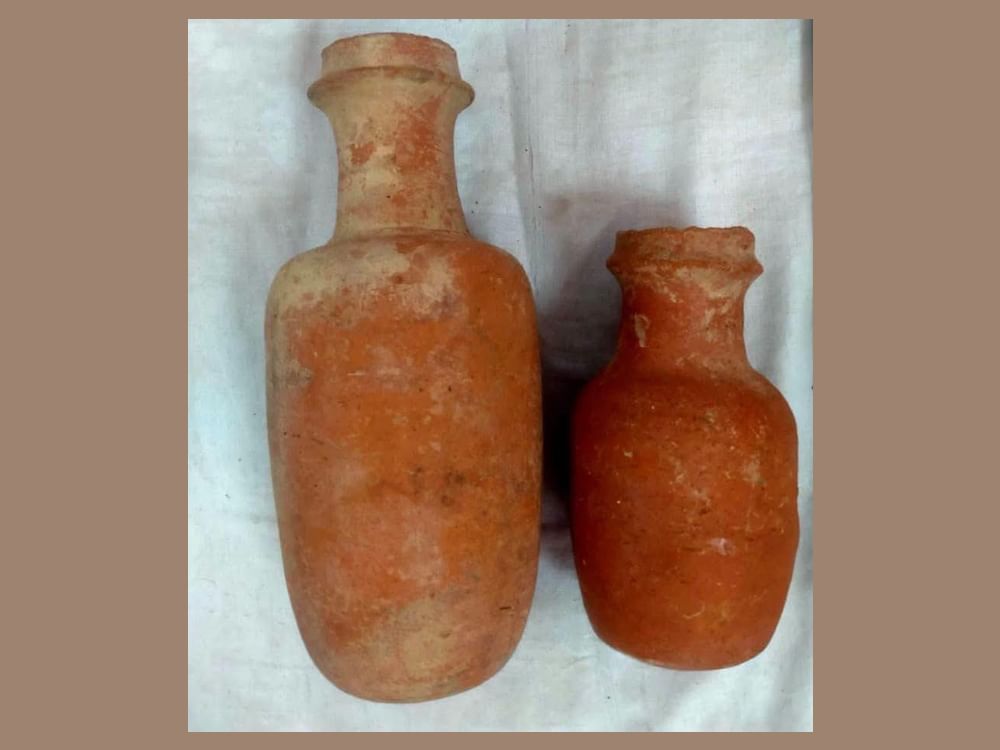
CAIRO, 20th September, 2026 (WAM) -- An Egyptian archaeological mission working at the Tell el-Yahudiya archaeological site in Qalyubia Governorate has uncovered a number of rock-cut tombs of different architectural styles, while continuing to excavate the remains of a Roman camp in the upper layers above the tombs.
Dr. Hisham El-Leithy, Secretary-General of Egypt's Supreme Council of Antiquities, said the discovery represents an important addition to the history of the area, particularly given the rarity of rock-cut tombs in the Nile Delta due to its predominantly clay soil.
He said the discovery would contribute to a better understanding of burial practices and their development in the eastern Delta across different historical periods.
El-Leithy said archaeological finds indicate that the tombs date to the late New Kingdom and continued to be used through the Late Period, reflecting the continuity of funerary activity at the site over successive historical periods.
He added that the discovery of the Roman camp remains above the tombs confirms the continued use of the Tell el-Yahudiya area during different historical periods and highlights its strategic importance over time.
The tombs belong to two architectural types. The first features a staircase leading to a hall containing burial niches, while the second consists of a rectangular shaft leading to two burial chambers.
Such tombs are rare in the Delta, with only a limited number of known examples, including rock-cut tombs at Kom El-Shoqafa in Alexandria and sites along Egypt's North Coast.