
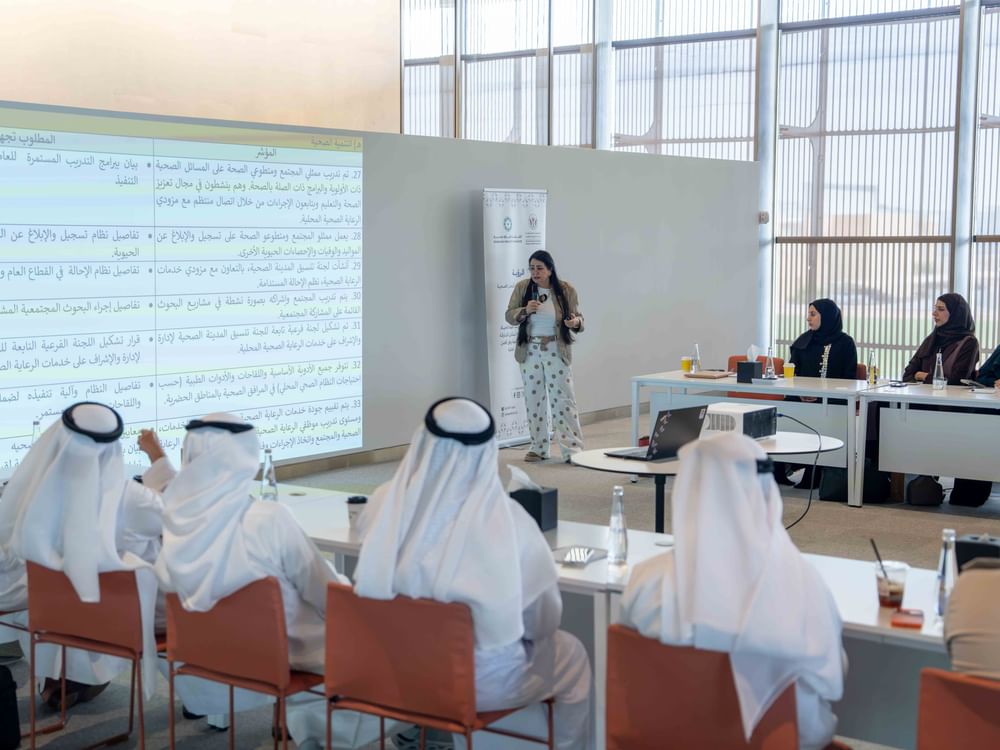
SHARJAH, 28th September, 2026 (WAM) -- The Executive Committee of the Sharjah Healthy Emirate Programme, in cooperation with the World Health Organisation (WHO), held a training workshop on Monday at the House of Wisdom to strengthen implementation of the programme’s standards.
The workshop brought together Executive Committee members, key coordinators and teams from relevant entities as part of the 2026–2028 action plan to expand the Healthy Cities Programme across Sharjah’s cities and regions.
It aimed to strengthen teams’ understanding of programme requirements, the documentation and submission of evidence, and mechanisms for monitoring progress in implementing standards, while preparing them for the next steps towards the final accreditation of Sharjah Healthy Emirate.
Abdulaziz Al Muhairi, Chairman of the Sharjah Health Authority and Chairman of the programme’s Executive Committee, said the workshop marks an important transition towards the implementation, monitoring and evaluation stage.
He said efforts are focused on strengthening team capabilities and unifying mechanisms for applying standards and documenting evidence through a clear and measurable approach, in line with the vision and directives of His Highness Sheikh Dr. Sultan bin Mohammed Al Qasimi, Supreme Council Member and Ruler of Sharjah, to place people and quality of life at the heart of the emirate’s development.
Al Muhairi added that continued cooperation with WHO enables teams to benefit from international expertise and practices and improve readiness for the programme’s upcoming stages.
The workshop was delivered by Samar ElFeky, Regional Adviser for Health Promotion and Social Determinants of Health at WHO’s Regional Office for the Eastern Mediterranean.
It reviewed the Global Healthy Cities Programme and its relationship with the Sustainable Development Goals, alongside programme standards, achievements and successful examples from countries in the Eastern Mediterranean Region.
The Department of Statistics and Community Development also presented the Evidence Submission Platform, which supports the collection and submission of programme-related data, monitors progress and helps identify opportunities for development and improvement.
The workshop concluded with a panel discussion on the benefits, opportunities, challenges and practical aspects of implementing Healthy City standards.
The training follows the Executive Committee’s second meeting in August, which identified the next-stage priorities, including approving the strategic plan, launching the evidence platform, completing evidence and data collection, conducting an internal assessment and preparing reports ahead of a planned WHO evaluation visit to review compliance with programme requirements.