
ABU DHABI, 29th September, 2026 (WAM) -- The UAE Government Media Office has launched the Guide to Agentic AI Applications for Government Communication Teams.
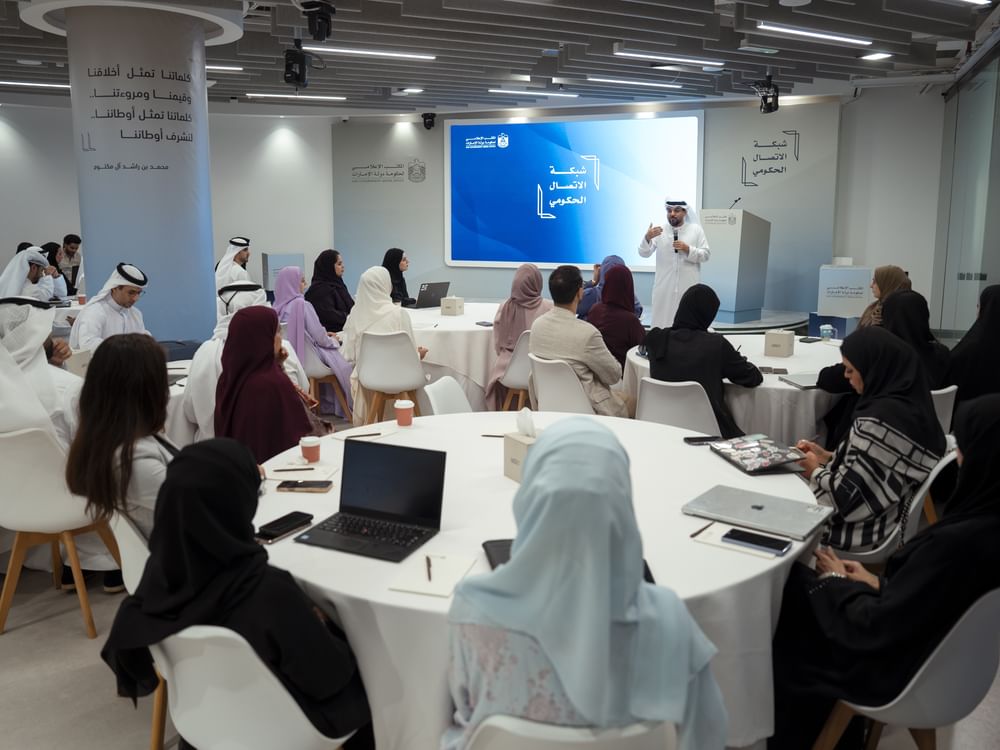
It also held a specialised workshop on agentic AI in government communication in collaboration with the New Media Academy, as part of the latest Government Communication Network meeting.
The guide forms part of the Office’s efforts to advance the federal government communication ecosystem and strengthen its readiness for rapid developments in artificial intelligence.
It is designed to help national talent use emerging tools to work more efficiently, improve content quality, sharpen government messaging, and reach and engage audiences more effectively.
Saeed Al Eter, Chairman of the UAE Government Media Office, said the guide marks a practical step forward in advancing government communication.
It will enable teams to use emerging technologies to improve efficiency, work faster and enhance the quality and accuracy of government content and messaging.
Opening the latest Government Communication Network meeting, Al Eter said, “Sharing the UAE’s story and achievements with the world clearly and powerfully is a central priority for government communication. Rapid advances in AI are giving our teams new ways to understand audiences, analyse information, develop content and deliver messages with greater precision and impact.”
He added, “Effective government communication begins with understanding people and turning policies, initiatives and achievements into clear messages and compelling stories that speak to their interests. AI does not replace communication professionals; it expands their capabilities and gives them more time to plan, create, understand audiences and develop ideas and messages that make a difference.”
Al Eter continued, “Technology can accelerate our work and broaden our options, but professional responsibility and final judgement must remain human. The accuracy and credibility of government communication, and the trust our institutions have built with the public, cannot be compromised, regardless of how advanced the tools become.”
The new guide gives government communication teams a unified, practical framework for applying agentic AI throughout their workflows, from research, preparation and planning to content development, visual production, media monitoring, analysis and impact measurement.
It is designed to help teams use agentic AI safely, responsibly and effectively, while improving written and visual content and strengthening planning, monitoring and analytical capabilities.
It also reinforces the need for professional controls, human review and institutional approval before publication.
The guide offers practical principles and guidance on selecting appropriate AI use cases, writing effective prompts, reviewing outputs and verifying their accuracy.
It also explains how the technology can support the preparation of press releases, media messages, talking points, digital content and visual assets.
Its main areas include responsible use, AI-enabled workflows, prompt development, practical applications in government communication, visual communication and creative production, as well as roles, responsibilities and wider governance requirements.
The guide places particular emphasis on review, verification and institutional approval. It also raises awareness of risks related to accuracy, privacy, bias and misleading content, ensuring that technology complements human expertise and professional accountability.
As part of the Government Communication Network meeting, the UAE Government Media Office and the New Media Academy held the Agentic AI in Government Communication workshop.
The intensive programme combined practical knowledge with hands-on exercises focused on applying agentic AI in communication workflows.
The workshop explored how AI tools and platforms can support the drafting and review of media content, the structuring of information for visual materials and design, media analysis, research, and preparation.
It brought together teams working in government communication, media relations, monitoring and analysis, and focused on three areas: media content and public relations; visual communication and infographics; and monitoring and analysis.
Participants also took part in a practical lab to build an AI assistant. The exercise covered defining its purpose and instructions, selecting approved knowledge sources, setting institutional tone-of-voice rules, and establishing review and verification processes, helping turn theoretical knowledge into practical tools suited to government workflows.