
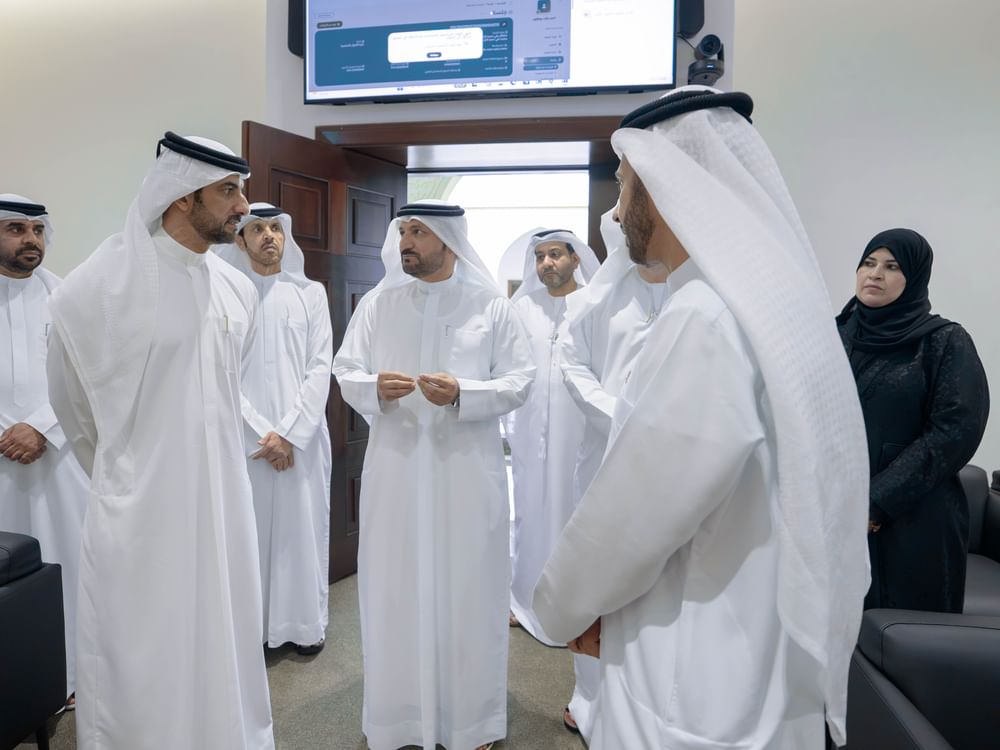
SHARJAH, 1st October, 2026 (WAM) -- H.H. Sheikh Dr Sultan bin Ahmed bin Sultan Al Qasimi, Deputy Ruler of Sharjah and Chairman of the Judicial Council, inspected the Judicial Department’s headquarters on Thursday.
During the visit, he reviewed updates to its facilities and buildings, ongoing development projects, and AI-powered services designed to enhance workplace efficiency and improve the quality of judicial and administrative services.
H.H. was briefed on the key services provided to customers, including designated areas for receiving applications and assisting customers in completing and submitting their transactions electronically, as well as lounges and cafés offering light refreshments.
H.H. was introduced to “Majlisna”, the virtual trainer for Sharjah’s judicial system that simplifies artificial intelligence technologies and makes knowledge more accessible to Judicial Department employees. The platform features awareness sessions covering the fundamentals of artificial intelligence, the art of prompt writing, and the responsible use of modern technologies, with the aim of making knowledge accessible, practical, and easy for employees to apply. It also includes future development plans focused on interactive training and measuring impact through data analysis, task simulation, and intelligent responses.
He was briefed via a video presentation on the AI-powered virtual assistant for marriage, notary and attestation services, which was launched on a pilot basis as part of efforts to develop judicial services, facilitate the customer journey, and move towards a more interactive experience that is responsive to the needs of society.
He was also briefed on the project’s implementation phases, with the first phase covering marriage, notary and attestation services. The pilot experience will be evaluated, its impact assessed, and users’ feedback incorporated to further develop the service, paving the way for its gradual expansion to the Department’s other services.
The Chairman of the Judicial Council also watched a video presentation on the “Athar” initiative, which aims to facilitate access to services for People of Determination by identifying the challenges they face when using the Public Prosecution’s electronic services. The initiative will provide solutions that enable them to submit applications easily and conveniently, offering an experience that takes into account their diverse abilities and helps them complete their transactions independently and in privacy.
H.H. also reviewed the model for the new courtrooms at the Court of Cassation, equipped with the latest facilities and technologies in line with developments in judicial work. The courtrooms provide an integrated judicial experience that serves both the judicial system and customers, supporting both in-person and remote hearings via videoconferencing, while ensuring the highest levels of privacy and enabling judges to review case files and documents smoothly and efficiently.
H.H. was briefed on the development plans to extend this model to all 21 courtrooms, thereby enhancing operational efficiency, improving the quality of judicial services provided to customers, and supporting the Court’s efforts to adopt modern technologies and develop the judicial work environment.
The Chairman of the Judicial Council also visited “Al Dar Lounge”, a multi-purpose space that provides a suitable, stimulating, and supportive work environment. The facility reflects the strong emphasis on enhancing quality of work life and creating a positive workplace that contributes to higher levels of satisfaction and happiness, while promoting interaction and communication in a comfortable and suitable setting that fosters teamwork and institutional belonging. This aligns with the Council’s commitment to providing a stimulating and sustainable work environment that supports productivity and institutional excellence.
He then visited the new offices of the General Secretariat of the Judicial Council, where he was briefed on their modern facilities and equipment, and on the advanced working environment they provide to support employee performance and enhance institutional efficiency, in line with the requirements of judicial and administrative work and contributing to the improvement of the quality of services provided.
H.H. was also briefed on the layout of the offices, workspaces, and supporting facilities, as well as the modern equipment and technologies provided to facilitate the completion of tasks, enhance productivity, and create a stimulating work environment that meets employees’ needs and supports their performance.