
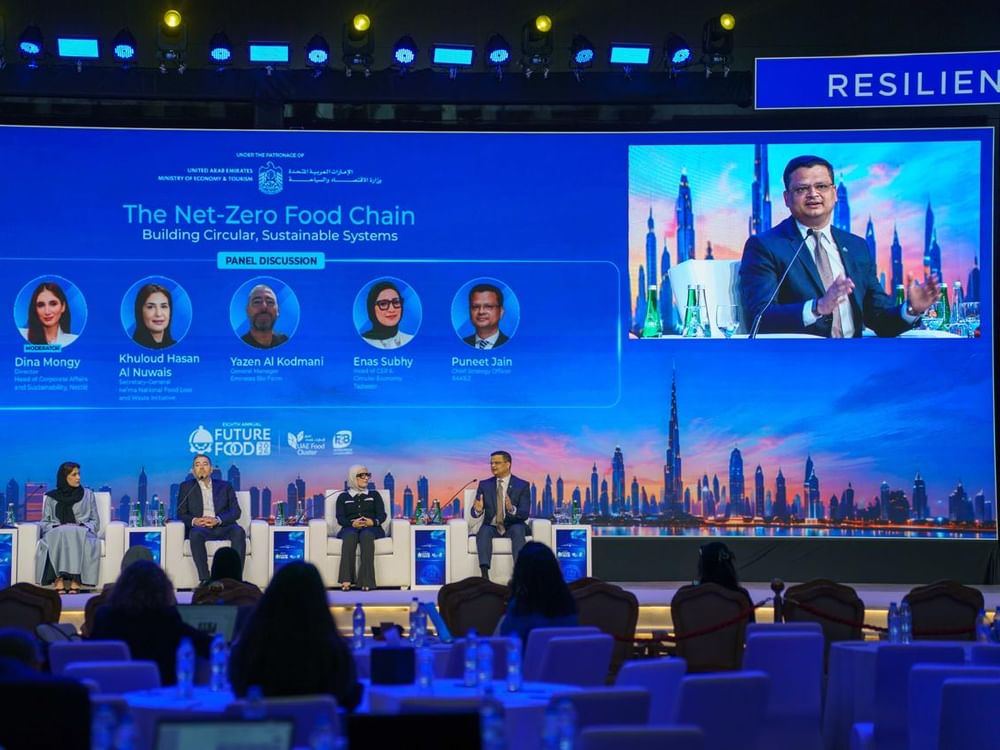
RAS AL KHAIMAH, 2nd October, 2026 (WAM) -- Ras Al Khaimah Economic Zone (RAKEZ) participated as a Silver Sponsor in the eighth edition of Future Food Summit 2026, organised by the UAE Food Cluster and the UAE Food & Beverage Business Group under the patronage of the Ministry of Economy and Tourism.
The annual summit brought together key players from the UAE’s food ecosystem to discuss food security, trade, supply chains and sector growth.
RAKEZ engaged with food and beverage manufacturers, suppliers, investors and industry stakeholders, highlighting Ras Al Khaimah’s operating environment and business and industrial solutions available to F&B companies.
Ramy Jallad, Group CEO of RAKEZ, said, “Food and beverage manufacturing is an important part of the UAE’s industrial growth story, and Ras Al Khaimah offers a strong platform for companies looking to establish, scale and serve regional markets. At RAKEZ, our focus is on creating the right conditions for that growth through competitive industrial solutions, connected infrastructure and practical business support.”
He added that sustainability and resource efficiency were becoming increasingly important as the sector evolved, and that RAKEZ was working to help manufacturers access the facilities, services and partnerships needed to grow responsibly and competitively.
As part of RAKEZ’s participation, Puneet Jain, Chief Strategy Officer at RAKEZ, joined the panel discussion ‘The Net-Zero Food Chain: Building Circular, Sustainable Systems’, which explored how circular production models and collaboration can support the UAE’s transition towards a more sustainable food system.
Jain highlighted the role economic zones can play in enabling circularity by bringing manufacturers, suppliers, logistics providers, technology companies and service providers together within connected ecosystems.
He said closer collaboration can make it easier for businesses to share infrastructure and resources, including opportunities for by-products or materials from one operation to be repurposed as inputs for another.
Jain also stressed the importance of making sustainable practices commercially viable for F&B businesses through shared infrastructure and solutions involving cleaner energy, water efficiency, waste management and resource recovery.
The panel also examined opportunities to strengthen water reuse, waste segregation, recycling and recovery and encourage greater resource exchange across the food value chain.
RAKEZ said its participation reflected its efforts to support the development of the food and beverage sector and a more sustainable business ecosystem, in line with the objectives of the UAE’s National Food Security Strategy 2051.