
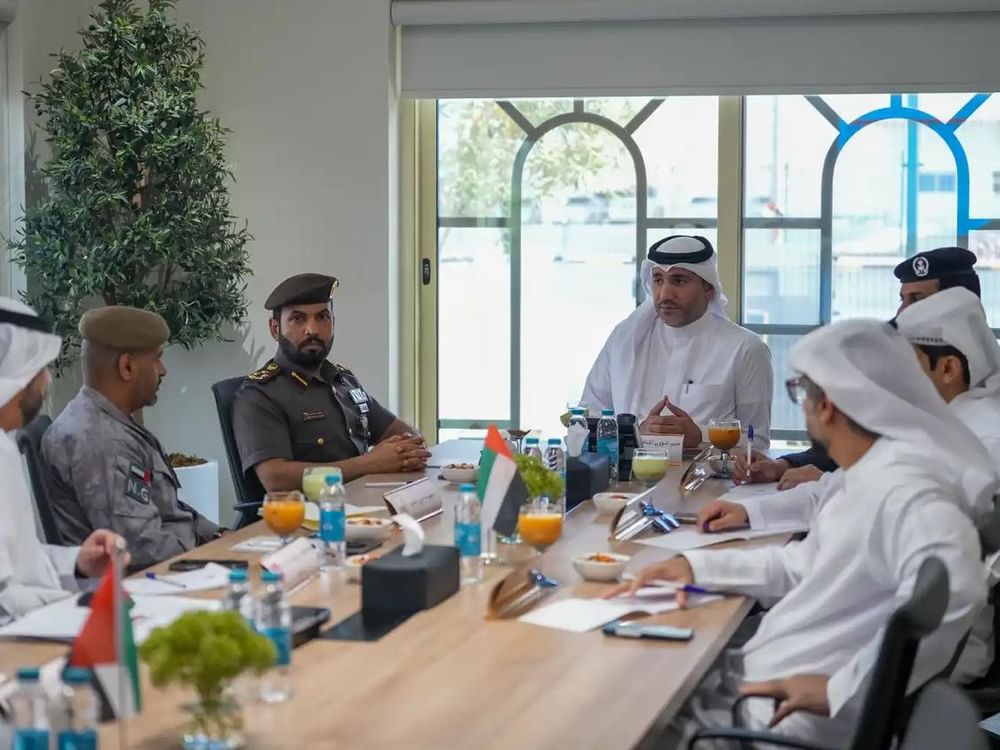
SHARJAH, 4th October, 2026 (WAM) -- The Organisational Committee of Ports and Border Points in the Emirate of Sharjah held its 9th meeting of 2026 at Khatmat Malaha Border, chaired by Mohammed Ibrahim Al Raisi, Director of Ports and Border Points Affairs at the Sharjah Ports, Customs and Free Zones Authority and Chairman of the Committee.
The meeting brought together Committee members representing the relevant government and security entities to review the latest developments across Sharjah’s ports and border points and discuss a range of organisational, security and operational matters on the agenda.
Al Raisi stressed the importance of continuing to work as one team and intensifying efforts to further develop Sharjah’s ports and border points system, while strengthening operational and security readiness and efficiency in step with the emirate’s continued growth and development.
He said: “Ports and border points serve as vital gateways for both Sharjah and the UAE. Continued growth in passenger and commercial traffic places a responsibility on the entities operating at these facilities to continue developing their operational systems, improve procedural efficiency and strengthen coordination and integration. These efforts are essential to balancing smooth movement with faster processing while maintaining the highest standards of security, oversight and safety.”
The meeting examined ways to align efforts to improve performance, respond effectively to operational and security requirements, and continue enhancing services for travellers.
The Committee was briefed on the latest developments at Sharjah’s ports and border points and discussed a number of operational and security matters and observations raised by the relevant entities.
These included further developing inspection procedures, improving the efficiency of inspection points and strengthening security and oversight, alongside following up on recommendations from previous meetings and the measures taken in response.
The meeting underscored the importance of maintaining close field coordination and exchanging information and expertise among the relevant entities, as well as responding swiftly to operational requirements and observations.
Such coordination will strengthen the readiness of ports and border points, improve operational efficiency and help deliver smoother, more efficient procedures for travellers while maintaining security and safety requirements.