
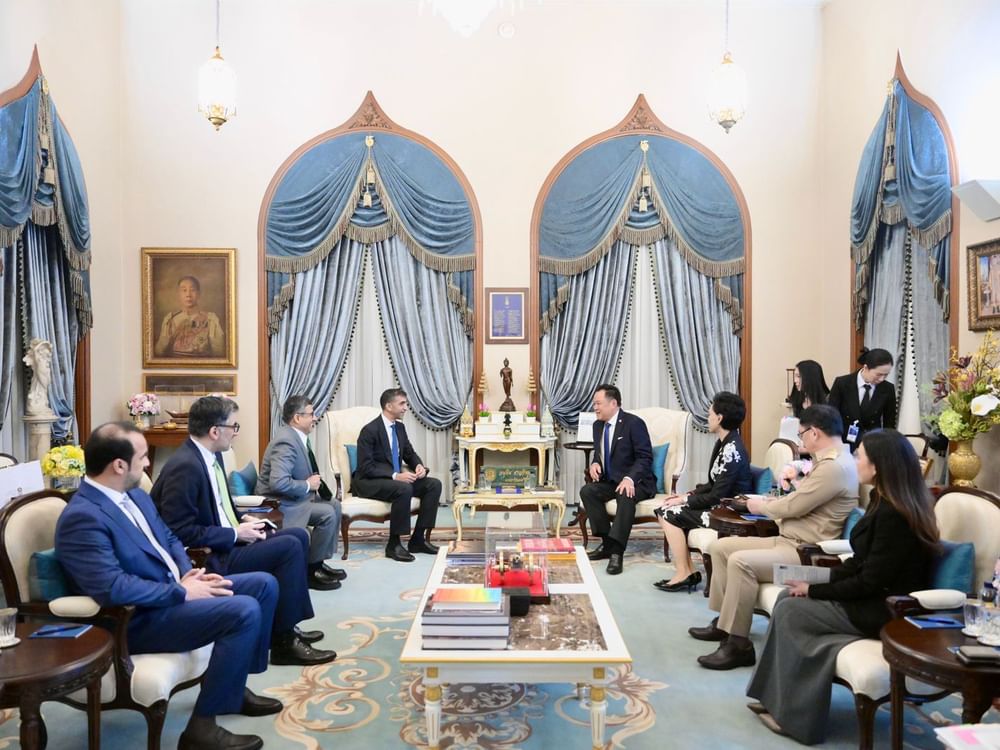
BANGKOK, 8th October, 2026 (WAM) -- The United Arab Emirates and the Kingdom of Thailand have successfully concluded negotiations on a Comprehensive Economic Partnership Agreement (CEPA), marking a significant milestone in bilateral relations and paving the way for a new phase of trade and investment cooperation between two of the most dynamic economies in their respective regions.
The conclusion of negotiations was announced in Bangkok during a meeting between Dr. Thani bin Ahmed Al Zeyoudi, Minister of Foreign Trade; Anutin Charnvirakul, Prime Minister of the Kingdom of Thailand; and Suphajee Suthumpun, Deputy Prime Minister and Minister of Commerce of the Kingdom of Thailand in the presence of Obaid Saeed Al Dhaheri, UAE Ambassador to the Kingdom of Thailand.
The two sides discussed ways to strengthen bilateral trade and investment ties, and reviewed opportunities to expand cooperation and deepen partnerships between the business communities of both nations.
Al Zeyoudi said, "The conclusion of negotiations on the UAE-Thailand CEPA embodies our shared commitment to building stronger economic bridges between Southeast Asia and the Middle East. Thailand is one of the most dynamic and diversified economies in the region, and this agreement will open new avenues for companies, investors and entrepreneurs in both countries to expand and access high-growth markets."
He added, "By reducing trade barriers, enhancing market access and stimulating investment flows, the CEPA will support our long-term economic objectives and generate new opportunities across a wide range of strategic sectors. It will also reinforce the UAE's position as a leading global hub for trade and investment, connecting markets across Asia, Africa and Europe."
PM Charnvirakul emphasised the importance of the CEPA in elevating economic and trade relations between Thailand and the UAE to new levels, noting that the successful conclusion of negotiations reflects the commitment of both countries to continue working together and to expand cooperation for mutual benefit.
He affirmed that the agreement will create new opportunities for the private sector and business communities in both countries, strengthen partnerships and two-way investment, and support economic growth, while enhancing the competitiveness of Emirati and Thai companies in each other's markets and across the wider region.
During the visit, Al Zeyoudi held a series of meetings with leading Thai companies and institutions operating across the trade, investment, industrial and services sectors. Discussions focused on strengthening partnerships and two-way investment, capitalising on the opportunities the CEPA will create, and expanding the presence of Emirati and Thai companies in each other's markets, supporting the development of supply chains, increasing trade and investment flows, and creating new growth opportunities for the private sector.
Once signed, ratified and entered into force, the UAE-Thailand CEPA is expected to accelerate trade flows, unlock new investment opportunities and strengthen private sector cooperation in priority sectors including advanced manufacturing, logistics, food security, digital trade, renewable energy and precious metals.
The conclusion of negotiations comes amid strong momentum in bilateral trade. Non-oil trade between the UAE and Thailand reached US$12.3 billion in 2025, a 65.2 percent increase on 2024, and continued its upward trajectory in the first half of 2026, reaching US$10.2 billion, up 75.4 percent on the same period of 2025.
UAE non-oil exports to Thailand rose to $4.5 billion in 2025, driven by strong growth in gold, aluminium products and other industrial goods, while imports from Thailand reached $7.2 billion. These figures reflect the growing integration of the two economies and the scale of opportunity the agreement can unlock.
In the coming phase, both sides will finalise the legal and technical procedures required for the official signing and entry into force of the agreement, which is expected to deliver a more stable and attractive business environment and create new opportunities for companies and consumers in both countries.
The CEPA programme is a key pillar of the UAE's foreign trade agenda, which aims to increase non-oil foreign trade to $1.1 trillion (AED4 trillion) by 2031.
Since the programme's launch in September 2021, the UAE's network of trade partnerships has expanded across Asia, Africa, Europe and the Americas, reflecting its commitment to open, rules-based trade as a driver of economic growth and diversification and a means of creating new opportunities for businesses in high-growth markets worldwide.