
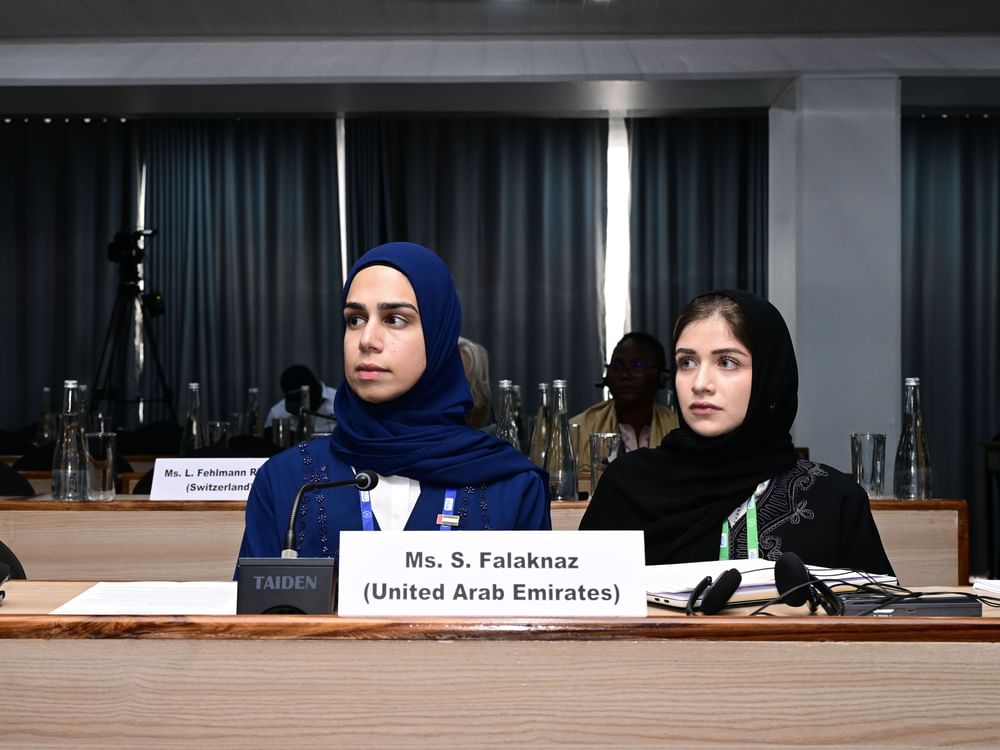
ARUSHA, Tanzania, 8th October, 2026 (WAM) -- The Federal National Council (FNC) participated in meetings of the Inter-Parliamentary Union's (IPU) Committee on Middle East Questions and Standing Committee on United Nations Affairs, held over two days in Arusha, Tanzania, as part of the 153rd IPU Assembly.
The UAE Parliament was represented by Sarah Mohammed Falaknaz and Khalid Omar Al Kharji, members of the FNC's IPU Parliamentary Group.
The Committee on Middle East Questions discussed developments in the region, including prospects for peaceful coexistence, the situation in the West Bank and its implications for the Palestinian cause, as well as the legal and humanitarian dimensions of Israeli settlement expansion.
During discussions on peaceful coexistence in the Middle East and the committee's future role, Falaknaz stressed the importance of parliamentary diplomacy in fostering dialogue, building trust and strengthening communication between peoples.
She called for broader participation by experts and stakeholders in the committee's discussions, greater involvement of women and a shift towards practical, measurable initiatives capable of delivering tangible results in the near term.
Meanwhile, the Standing Committee on United Nations Affairs discussed ways to improve the effectiveness of the UN system at the national level, conflict prevention and resolution, and cooperation between the UN and regional organisations.
Addressing a session on the UN Country Team in the United Republic of Tanzania as a reflection of UN reform, Al Kharji emphasised the importance of stronger institutional partnerships between UN country teams and national parliaments to align UN programmes with national priorities.
He called for regular reviews of programmes and outcomes, alongside greater parliamentary oversight to strengthen accountability, transparency and the effective allocation of development resources.
Al Kharji also stressed the need for closer coordination among UN agencies to avoid duplication of efforts, noting that successful UN reform at the country level depends not only on improved coordination but also on sustainable partnerships with national parliaments in their legislative and oversight capacities.