
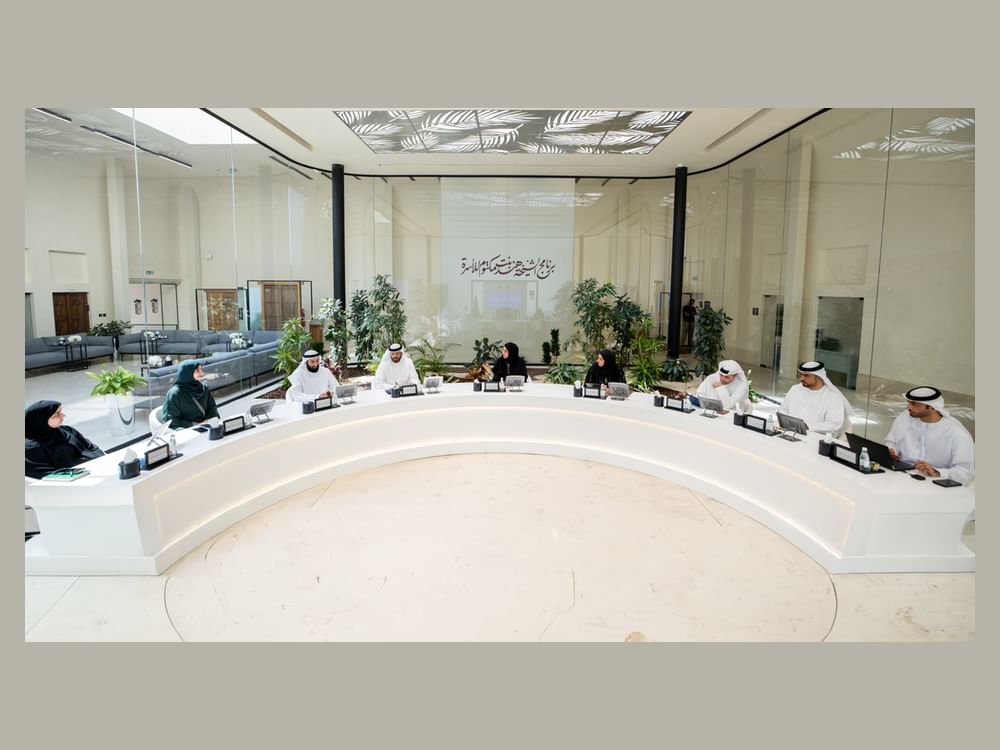
DUBAI, 8th October, 2026 (WAM) -- The Supervisory Committee for Initiatives under the ‘Sheikha Hind bint Maktoum Family Programme’ held its first meeting, chaired by Hessa bint Essa Buhumaid, Director General of the Community Development Authority in Dubai.
The meeting reviewed the outcomes of initiatives aimed at supporting Emirati families, including the ‘Dubai Weddings’ initiative, which accounted for 48% of all Emirati weddings held in Dubai in 2026. The Committee also discussed priorities for the next phase and ways to enhance coordination among government entities to support the objectives of the Dubai Social Agenda 33.
The meeting was attended by members of the Committee, including Eng. Marwan Ahmed bin Ghalita, Director General of Dubai Municipality and Vice Chairperson of the Committee; Aisha Abdulla Miran, Director General of the Knowledge and Human Development Authority in Dubai; Omar Hamad Bu Shehab, Director General of the Dubai Land Department; Abdullah Ali bin Zayed Al Falasi, Director General of the Dubai Government Human Resources Department; and Mona Bajman, CEO of the Corporate Support Sector at the Dubai Health Authority.
The Committee reviewed the latest developments of the ‘Sheikha Hind bint Maktoum Family Programme’ and the outcomes achieved through its ongoing initiatives. It also discussed priorities for the next phase under the Dubai Family-Friendly Strategy, which provides an integrated framework for enhancing the quality of life of Emirati families and supporting their stability and growth.
The Committee explored ways to strengthen integration among government entities and align policies and services supporting families, as well as mechanisms for monitoring implementation, performance indicators, and outcomes and impact measurement. These efforts aim to enhance the efficiency of the family support ecosystem and ensure a more integrated response to the needs of families across different stages of their lives.
The Committee emphasised the importance of using data and outcomes to inform the development of policies and initiatives and strengthening coordination among relevant entities, ensuring that efforts and resources are directed towards priorities that have a direct impact on family stability and quality of life.
Hessa bint Essa Buhumaid affirmed that the Committee’s first meeting marks the beginning of a new phase focused on translating integration among government entities into tangible and sustainable outcomes for Emirati families.
She said: “Our responsibility as a Committee goes beyond monitoring initiatives. It extends to ensuring that efforts, policies and services are integrated around the needs of families, monitoring implementation and measuring impact, while proactively developing an ecosystem capable of responding to the needs of families today and in the future.”
She added: “The true measure of the Committee’s success is not the number of initiatives we launch, but the impact they have on the lives of Emirati families, and the extent to which they contribute to supporting family formation, stability and quality of life.”
The Committee reviewed its roles and responsibilities, including overseeing the implementation of the ‘Sheikha Hind bint Maktoum Family Programme’ initiatives in accordance with approved plans and targets; strengthening coordination among government entities; monitoring performance indicators and measuring impact; and developing proposals and recommendations related to policies and initiatives supporting families for submission to the Higher Committee for Development and Citizens Affairs.
The results reviewed by the Committee showed that participation in the ‘Dubai Weddings’ initiative reached 48% of the total number of Emirati weddings held in Dubai in 2026, reflecting the growing reach of the initiative and its role in supporting Emirati families as they establish and build stable households.
The ‘Sheikha Hind bint Maktoum Family Programme’ has contributed to the establishment of around 1,500 Emirati families since its launch. In addition, 1,300 individuals have benefited from financial support, while 472 births were recorded among the outcomes of the ‘Dubai Weddings’ initiative up to September 2026. The programme also recorded a 99.5% beneficiary satisfaction rate.
These results reflect the continued development of initiatives and services supporting families, as well as integrated government efforts to facilitate the journey of family formation and strengthen family stability and quality of life.
On the sidelines of the meeting, a number of partnerships supporting the ‘Dubai Weddings’ initiative were signed. These included an agreement with Dubai Health covering reproductive health, consultations, and health and awareness programmes, as well as a MoU with the Emirates Food Bank to enhance the utilisation of surplus food generated by weddings and events, in accordance with applicable regulations and requirements.
The partnerships also included an agreement with the Esaad Card Centre of Dubai Police and Al Rais Travel, providing newlyweds with a range of benefits and supporting services.
The first meeting marks the beginning of a new phase in the Committee’s work, centred on integrated government responsibilities, implementation governance, data-driven decision-making, and measuring outcomes and impact. This will strengthen the sustainability of the family support ecosystem and contribute to achieving the objectives of the Dubai Social Agenda 33 in promoting family stability and quality of life.