
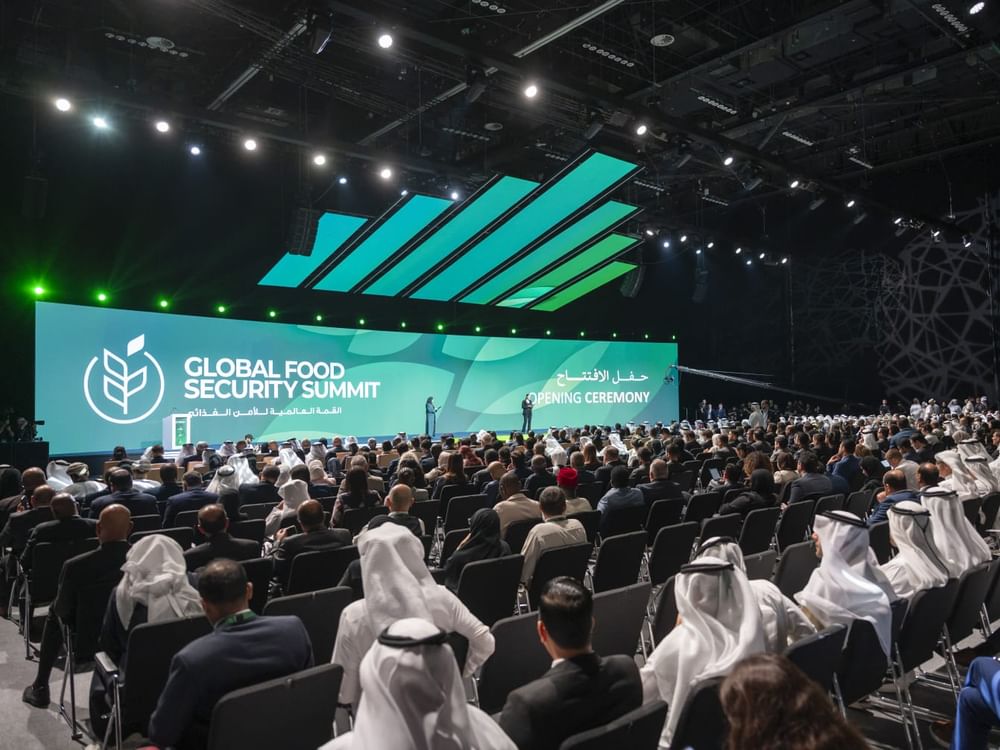
ABU DHABI, 8th October, 2026 (WAM) -- Ahmad Mukhtar, Representative of the Food and Agriculture Organisation of the United Nations (FAO) in the UAE and Subregional Coordinator for GCC States and Yemen, has said that the UAE, through hosting Global Food Week in Abu Dhabi, is providing an international platform to promote innovation and investment in the food sector, contributing to global food security and ensuring access to safe, nutritious and affordable food for all.
Speaking to the Emirates News Agency (WAM), Mukhtar said the UAE has provided a valuable platform for global dialogue on food security, particularly through its focus on agricultural innovation and knowledge exchange with countries facing similar challenges, including water scarcity.
He noted that FAO is a key partner in Global Food Week, contributing through the Global Food Security Summit, the FAO Policy Majlis, the Agritech programme and YALAFAST, which brings together around 70 young leaders and innovators.
Mukhtar stressed the importance of ensuring that the event delivers lasting benefits through stronger partnerships, practical solutions and investments that respond to national priorities.
On the role of technology and artificial intelligence in strengthening food security, he said innovation should help farmers and businesses make better decisions throughout the food value chain.
He explained that sensors, satellite information and artificial intelligence can support more precise irrigation, earlier detection of crop problems and better production planning.
"FAO's WaPOR platform, for example, provides satellite-derived information on agricultural water productivity, helping institutions and practitioners make more informed water-management decisions," he said.
Mukhtar added that digital tools can improve demand forecasting and monitor storage and transport conditions, helping prevent spoilage. He stressed that these technologies must be accompanied by investment in cold chains, processing and market access.
"Our priority is to make these solutions affordable and accessible, particularly for small-scale producers, women and young people. Technology delivers value when it saves resources, reduces losses and improves incomes, supported by practical training and reliable infrastructure," he said.
Mukhtar noted that FAO can help connect the UAE's innovation experience with countries facing similar agricultural and food security challenges through knowledge exchange, assessment of results and identification of solutions adaptable to different conditions.
On the main areas of cooperation between the UAE and FAO, he said, "Our cooperation with the UAE focuses on sustainable agriculture, water efficiency, climate resilience, food safety, and fisheries and aquaculture, supporting the objectives of the National Food Security Strategy 2051."
He explained that the partnership combines policy support with practical initiatives, including agricultural planning with the Abu Dhabi Agriculture and Food Safety Authority, strengthening national food control systems with the Ministry of Climate Change and Environment (MOCCAE), and training date palm farmers in sustainable production and pest management.
"We also work together to advance innovation, knowledge exchange and regional cooperation. Global Food Week provides an opportunity to connect these efforts with investment and youth entrepreneurship," he added.
Mukhtar emphasised that the shared priorities are to translate cooperation into more resilient food supplies and better access to safe, nutritious and affordable food for all.