
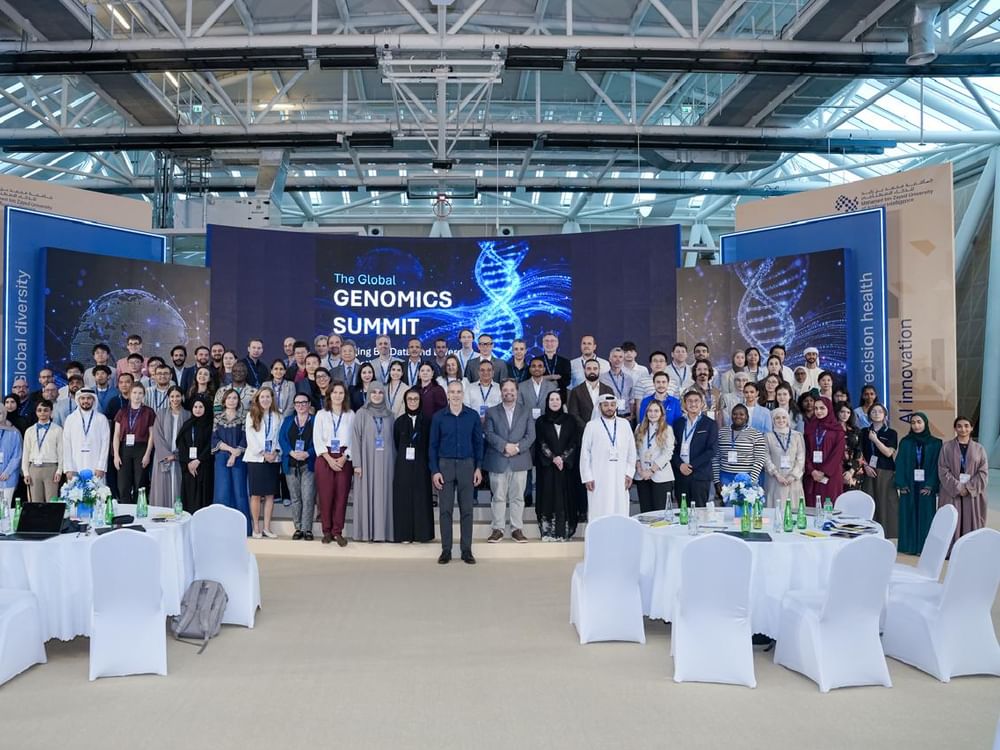
ABU DHABI, 13th October, 2026 (WAM) -- Mohamed bin Zayed University of Artificial Intelligence (MBZUAI) hosted the Global Genomics Summit, bringing together international researchers and healthcare leaders from around the world to explore how artificial intelligence (AI) and large-scale genetic data can advance precision medicine, an approach that tailors care to individual patients.
The summit focused on three questions: how to include non-European populations, whose genetic data remains underrepresented in research; how AI can help interpret genetic information; and how research can be turned into clinical care that serves everyone fairly.
Most of the world’s genetic research draws on narrow slice of humanity. As of September 2026, around 88% of participants in genome-wide association studies, the large studies that link genetic differences to disease, are of European ancestry, according to the GWAS Diversity Monitor, which tracks published research. Arab populations, roughly 5-6% of the world’s people, make up less than 1% of participants in these studies. A 2024 paper highlights the benefits of including diverse populations in developing polygenic risk scores. Incorporating this diversity into training data can improve predictive performance across all populations.
Carlos Bustamante, summit co-chair and Acting Director of Research Translation, Associate Dean for Research and Professor of Personalized Medicine, stressed that AI models need training data that reflects the diversity of the global population. Even extensive sequencing within a single country, he noted, would leave gaps.
“One of the big challenges in trying to build good AI models is access to sufficient data to train and the most important thing we want to guard against is bias in the training data,” he said.
Bustamante called on researchers to collaborate to close these gaps, adding that bringing teams together helps build the relationships needed for joint scientific work.
The programme included sessions on genomic infrastructure in East Asia, genomics networks in Africa and biobanking, which involves storing biological samples and health data for research. Discussions also covered predicting disease from medical records and genetic information, polygenic risk scores (estimates of a person’s likelihood of developing a disease based on many small genetic differences), and AI models for interpreting rare genetic variation.
Yulia Medvedeva, summit co-chair and Assistant Professor of Computational Biology at MBZUAI, said the growing availability of genetic and supporting biological data creates opportunities to build AI models with practical uses in research and precision medicine. She highlighted the value of sharing experience in how biobanks and data banks are run and stressed the importance of trust and approved access to sensitive genetic information.
“Trust is important when working with sensitive genetic data and conducting research based on it,” she said.
Medvedeva pointed to federated learning as a potential area for further collaboration. The technique would let AI models learn from several biobanks without sharing the underlying sensitive data, provided the datasets are structured compatibly. She also highlighted opportunities to exchange research tools to make AI models more useful.