
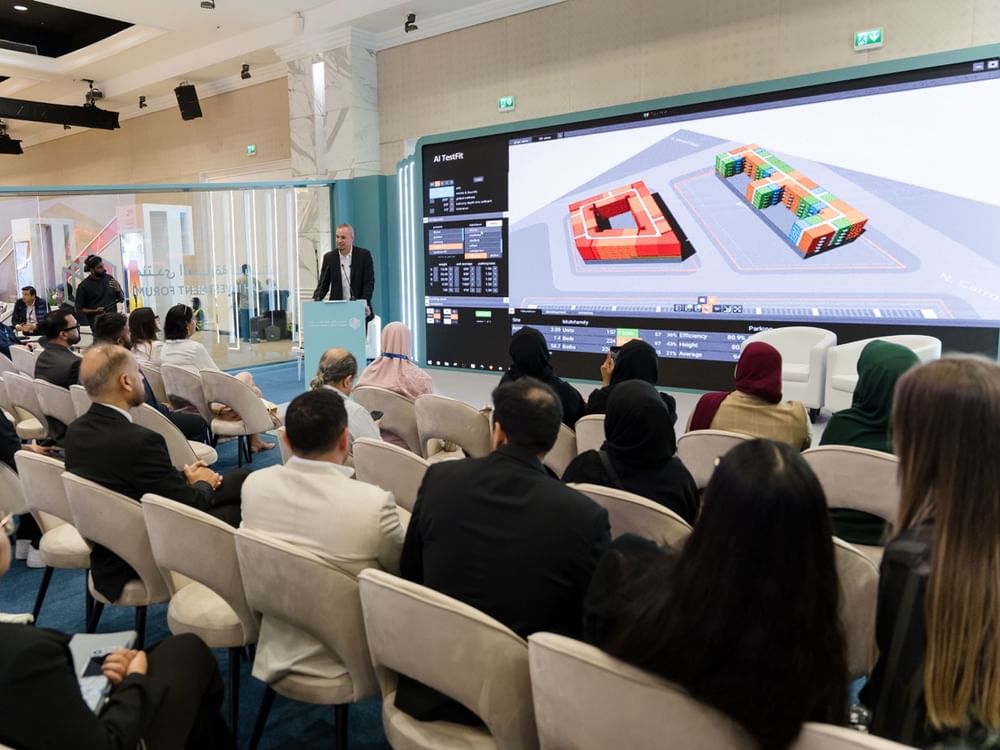
SHARJAH, 14th October, 2026 (WAM) -- The ninth Sharjah Investment Forum (SIF 2026) hosted a series of workshops on Wednesday examining how artificial intelligence, resilient supply chains and commercial arbitration can help businesses meet regulatory requirements, manage risks and support investment.
As UAE tax regulations continue to evolve, specialised AI systems are helping businesses access legislation, identify applicable rules and manage compliance obligations. These applications were examined during ‘Investing in the UAE: How AI Simplifies Tax and Compliance’.
Omar Odeh, CEO and Founder of MIO & Partners and Asly AI, said: “The UAE's tax landscape has changed considerably since 2018, and businesses must keep pace with regulations that continue to evolve. AI can help process information from multiple sources, but while AI is intelligent, it is not wise. Human judgement remains essential in making decisions.”
The session covered VAT, corporate tax and electronic invoicing, including how AI can help identify relevant legislation and official guidance.
Mohamed Ghazala, CEO and Lead Tax Partner at ACME Group for Accounting and Tax Advisory, said: “Tax specialists today must keep track of hundreds of laws, decisions and guidance documents, including amendments and superseded provisions. AI can significantly reduce the time spent searching these sources and help professionals identify the applicable rules with accurate legal references. The responsibility for interpreting and applying those rules remains with the tax adviser.”
AI's applications in architecture were also explored in ‘Designing a Future That Thinks Ahead’, where Matthias Hollwich, Founder of HWKN Architecture D.P.C., discussed designing buildings and cities that can adapt to changing needs.
Hollwich said: “Sharjah is already planning for the future, and projects such as Sharjah Research, Technology and Innovation Park and the House of Wisdom demonstrate that ambition. AI is opening new possibilities for architecture, allowing us to design flexible buildings that can evolve with changing needs. An office could become a residence, or a hotel could be converted into housing. We need cities and master plans that can accommodate these changes.”
Building resilient supply chains
Access to reliable information and timely decision-making were central to a session on strengthening supply chains against disruptions. In ‘Building Supply Chain Resilience: The Role of AI and Organisational Capabilities’, Ali Almutawa, Senior Director of Operations at Shurooq, examined how businesses can use AI to improve operations and respond to uncertainty.
Almutawa said: “Supply chain resilience depends on having the right knowledge and making timely decisions. AI can help businesses analyse information, improve operations and mitigate disruptions. The challenge is turning that intelligence into effective decisions.”
He also called for businesses to treat supply chain management as a strategic priority and adopt advanced technologies to improve operational resilience.
Investor confidence in commercial dispute resolution and the practical training of arbitrators were the focus of ‘TAHKEEM: Empowering Investment, Developing Future Arbitrators’.
Dr. Ahmed Saleh Al Echlah, Director of the Sharjah International Commercial Arbitration Centre (TAHKEEM), said: “Investors need confidence in the legal system and dispute resolution mechanisms. Through public and private-sector partnerships, we provide training and awareness programmes while ensuring transparency and confidentiality.”
The session also addressed the experience and qualifications needed to develop future arbitration professionals.
Eng. Amna Sultan Mohamed Alsuwaidi, Secretary of TAHKEEM, said: “Arbitration requires academic qualifications and practical experience. TAHKEEM has enabled us to work on real cases across different sectors, gaining valuable experience in proceedings that demand accuracy and confidentiality.”
The workshops were among more than 140 activities scheduled as part of the two-day SIF 2026 programme.