
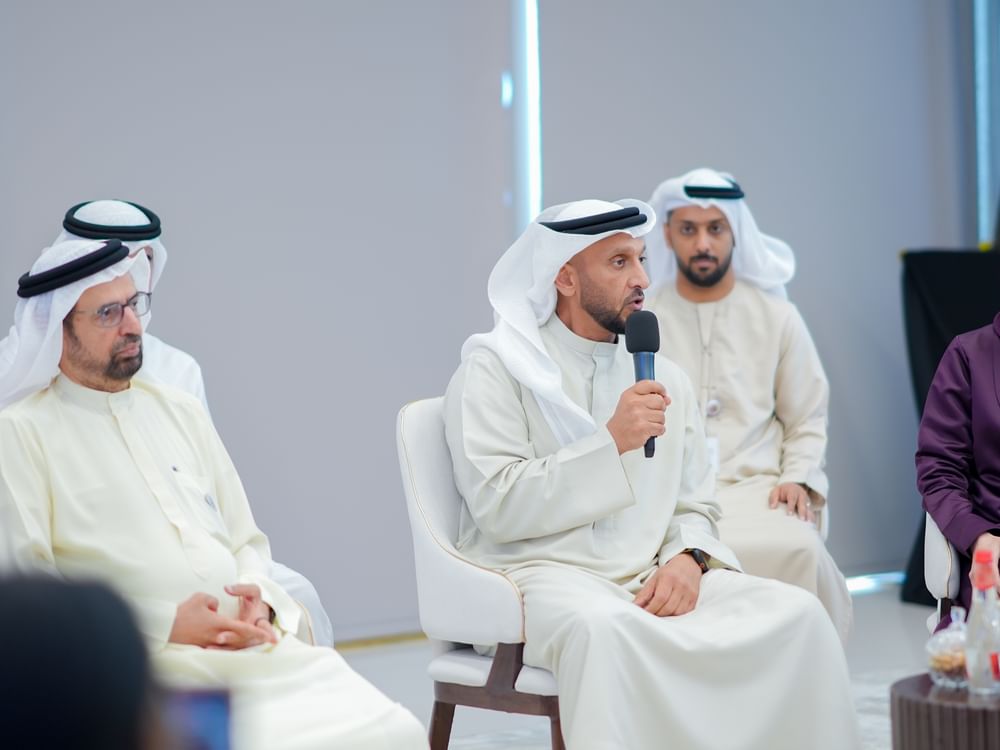
ABU DHABI, 15th October, 2026 (WAM) -- Abdulla bin Mohammed bin Butti Al Hamed, Chairman of the National Media Authority, affirmed that the Authority embraces a philosophy of direct engagement, open partnership and transparency with international media organisations. He said the Authority was established to serve them and therefore remains open to anyone with a question, observation or request.
He explained that the Authority believes journalists’ needs and questions deserve to be heard and addressed, and that strong, professional media begins with frank dialogue. Criticism raised in the presence of those concerned opens the door to solutions and creates opportunities for development, whereas criticism expressed in their absence serves no one.
These remarks came during a dialogue session organised by the National Media Authority, with the participation of Dr Ali Rashid Al Nuaimi, Chairman of the Defence, Interior and Foreign Affairs Committee at the Federal National Council, and representatives of international media outlets operating in the UAE.
The session discussed developments in the media landscape and the sector’s future amid rapid transformations, with the aim of bridging gaps, strengthening communication channels and direct dialogue, and providing an open space for discussion.
Al Hamed said: “We aspire to build relationships with international media organisations characterised by boldness in raising issues and openness in dialogue. These should be relationships between partners working together to create a more accurate and deeper picture of the UAE, rather than between an entity that monitors and one that is monitored.
“We believe in the need for constructive criticism and dialogue that brings people together. Partnership begins with frank engagement, and media built on direct dialogue remains more credible and enduring. The National Media Authority will not be a barrier between your organisations and the truth; it will be a bridge to it.”
He added: “We do not want journalists merely to write about challenges from a distance. We want them to be partners in discussing those challenges and proposing solutions. Challenge us with your questions, discuss your observations with us, and criticise us openly. Direct dialogue gives us an opportunity to understand, correct and improve, turning differences into a gateway to progress rather than an obstacle.
“We are laying the foundations for a new phase defined by open dialogue and transparency in the service of truth and the advancement of the media landscape.”
Al Hamed stressed that relations between regulatory authorities and media organisations should be founded on mutual trust, freedom to ask questions, and respect for journalists’ right to inquire and hold institutions accountable. He emphasised that transparency does not mean the absence of difficult questions, but rather a willingness to address them and respond responsibly and clearly.
The Chairman of the National Media Authority affirmed that the UAE has presented a distinctive model of coexistence among people of different nationalities, religions and cultures. He highlighted the cohesion of Emirati society and its ability to confront challenges, learn from experience and continue to develop. He also stressed the importance of preserving this model, strengthening its foundations and continuing to develop it in ways that reinforce coexistence and social cohesion.
Al Hamed said: “The UAE continues to develop its regulatory and media environment in line with the rapid transformations taking place in the global media landscape. Under the guidance of our wise leadership, the National Media Authority is working to establish a globally competitive media ecosystem that is open, innovative and responsible, further strengthening the country’s position as an international media hub.”
He also revealed that the National Media Authority is preparing a Charter on Journalists’ Rights and Duties in the UAE. The charter is intended to serve as an ethical framework that responds to changes in the media environment, safeguards freedom of journalistic work and strengthens trust between media organisations and the public, without becoming a constraint on journalistic practice.
He explained that the charter’s primary objective is to raise professional standards in journalism and reinforce the principles of accuracy, integrity and responsibility. He emphasised that it would not replace the law, but would instead serve as a professional reference that promotes responsible practice and helps media organisations and journalists navigate complex situations according to clear standards.
For his part, Dr Ali Rashid Al Nuaimi, Chairman of the Defence, Interior and Foreign Affairs Committee at the Federal National Council, affirmed that the UAE regards international correspondents and media organisations operating in the country as partners and members of its community.
He highlighted the importance of ensuring that their coverage is informed by an understanding of the UAE experience, particularly its investment in people and its commitment to the values of coexistence, respect and acceptance of different nationalities, religions and cultures.
Al Nuaimi explained that the UAE is a young nation that, guided by the vision of its leadership, has pursued a distinctive development path, enabling people from around the world to live and work safely and pursue opportunities to fulfil their aspirations.
He emphasised that viewing the UAE solely through the lens of regional crises and conflicts or placing it in the same context as other countries in the region without taking into account the unique nature of its experience, could lead to conclusions that do not reflect reality.
He noted that the UAE believes in building bridges, fostering dialogue and investing in human values. Differences in opinions and political positions, he said, should not turn into division or conflict.
Al Nuaimi called on international media outlets to report fairly on the UAE’s experience and to ensure their coverage does not overlook the country’s achievements in promoting coexistence, respecting human dignity and building a society in which people feel safe and a sense of belonging.
The session witnessed active engagement from attendees, with representatives of participating international media outlets raising a wide range of questions. Topics included the National Media Authority’s role in regulating the media sector, the future of media in the UAE, developments in the regulatory and legislative environment, journalistic standards, and the future of media amid rapid advances in artificial intelligence. Discussions also addressed ways to combat misinformation and fabricated content, as well as strengthening verification tools and credibility.
International media representatives commended the openness and transparency demonstrated during the session, noting that such meetings help deepen understanding of the UAE’s realities and support the development of more effective professional relationships with the National Media Authority. They said these relationships should be based on information sharing, factual accuracy and mutual respect, thereby improving the quality of media coverage and fostering a more mature and responsible media environment.
The session forms part of the National Media Authority’s efforts to strengthen institutional communication with international media organisations, listen to their perspectives and challenges, and develop a competitive, open and responsible media environment.
These efforts aim to deepen mutual understanding of the UAE context, enhance the accuracy and objectivity of journalistic coverage, and reinforce the country’s position as a leading and trusted destination for international media organisations. They also seek to keep pace with the rapid transformations taking place in the media industry and provide journalists with the information and facts they need to fulfil their professional responsibilities efficiently and independently.