
DUBAI, 15th October, 2026 (WAM) -- During the Annual Meeting of Global Future Leaders 2026, organised by the UAE Government and the World Economic Forum in collaboration with Dubai Future Foundation, officials and experts highlighted the growing role of young people as key partners in policymaking and shaping the future, calling for more inclusive participation and greater readiness for rapid technological transformation and an evolving labour market.
During “Reading the Youth Pulse”, Khalid Mohammed Al Nuaimi, Director of the Federal Youth Authority; Tiffany Lee, Curator of the Global Shapers Vancouver Hub; Sakshi Sharma, Global Shaper from the Jaipur Hub; and Kacha (Shogun) Mahadumrongkul, Community Champion for Mainland Southeast Asia, discussed the future of work, artificial intelligence and youth participation in decision-making.
Al Nuaimi said the UAE leadershi’s vision of empowering future generations and developing future leaders laid the foundation for the UAE’s approach to engaging young people in decision-making. He highlighted the UAE’s efforts to involve youth in designing policies and strategies from their earliest stages, ensuring they are active partners in shaping the future.
Lee said young people increasingly view challenges such as housing, education, transport and community services as interconnected, requiring more comprehensive and sustainable solutions.
South Asia has one of the world’s largest youth populations, making investment in skills and technology critical to ensuring young people can benefit from future economic opportunities. She also highlighted initiatives to expand the adoption of technology and artificial intelligence in rural communities, noting that relevant training and aligning technological solutions with local needs can help young people develop new skills and create more impactful employment opportunities.
Kacha (Shogun) Mahadumrongkul said artificial intelligence has become one of the key forces shaping the future of jobs amid rapid changes in the labour market. He stressed the need for more flexible education models aligned with the requirements of the new economy, alongside stronger entrepreneurial skills, critical thinking and continuous learning, enabling young people to seize the opportunities created by emerging technologies rather than simply responding to their challenges.
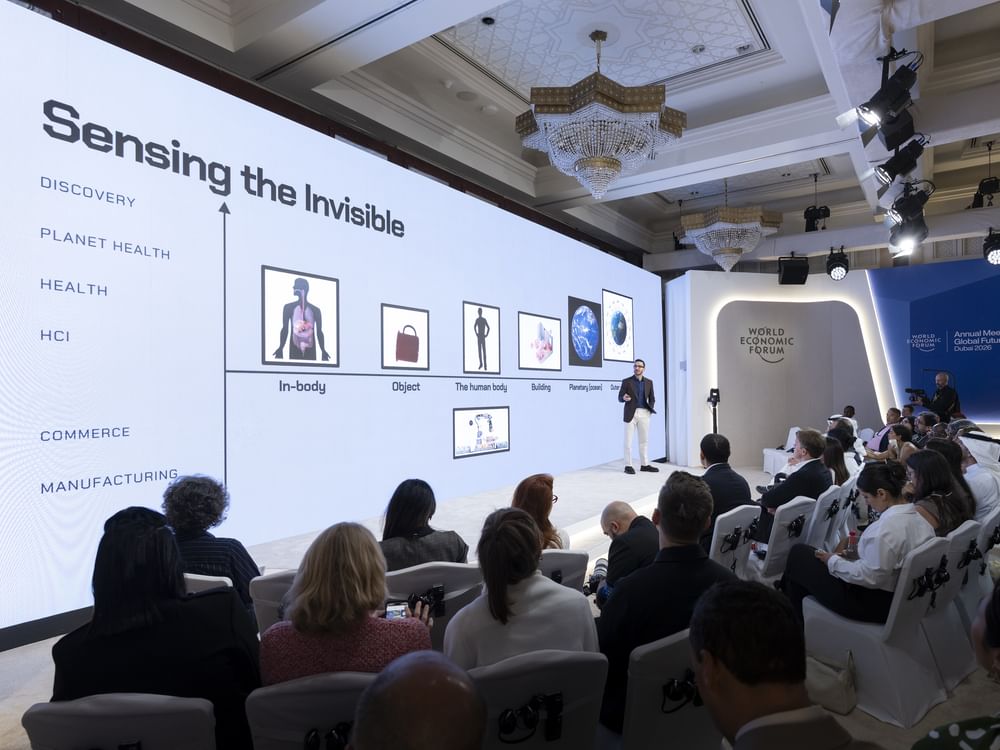
At “Betazone: Sensing the Invisible”, Fadel Adib, Professor at MIT, entrepreneur and member of the Young Global Leaders Community, explored the potential of wireless sensing technologies to transform invisible signals into actionable insights across healthcare, robotics, sustainability and other sectors.
He highlighted applications ranging from monitoring vital signs without wearable devices to enabling robots to better understand their surroundings, underwater climate monitoring and smart agriculture. Adib stressed that the greatest value of these technologies will emerge when they evolve from experimental innovations into infrastructure that supports decision-making, while safeguarding privacy and ensuring responsible use.
During the concluding panel, Dawn Rosen Hansen, Founder and CEO of Imagine If; Katy Knight, President and Executive Director of the Siegel Family Endowment; Benjamin Pfeifer, Chief Strategy Officer at Meridian AI and member of the Global Shapers Community; and Elisabeth Burda, shareholder at Burda Media and Co-Founder of the Malisa Foundation, discussed the future of leadership, artificial intelligence, collaboration and strategic thinking in creating opportunities for future generations.
The Annual Meeting of Global Future Leaders 2026, held in Dubai from 13 to 15 October, brought together more than 700 leaders and experts from around the world.