
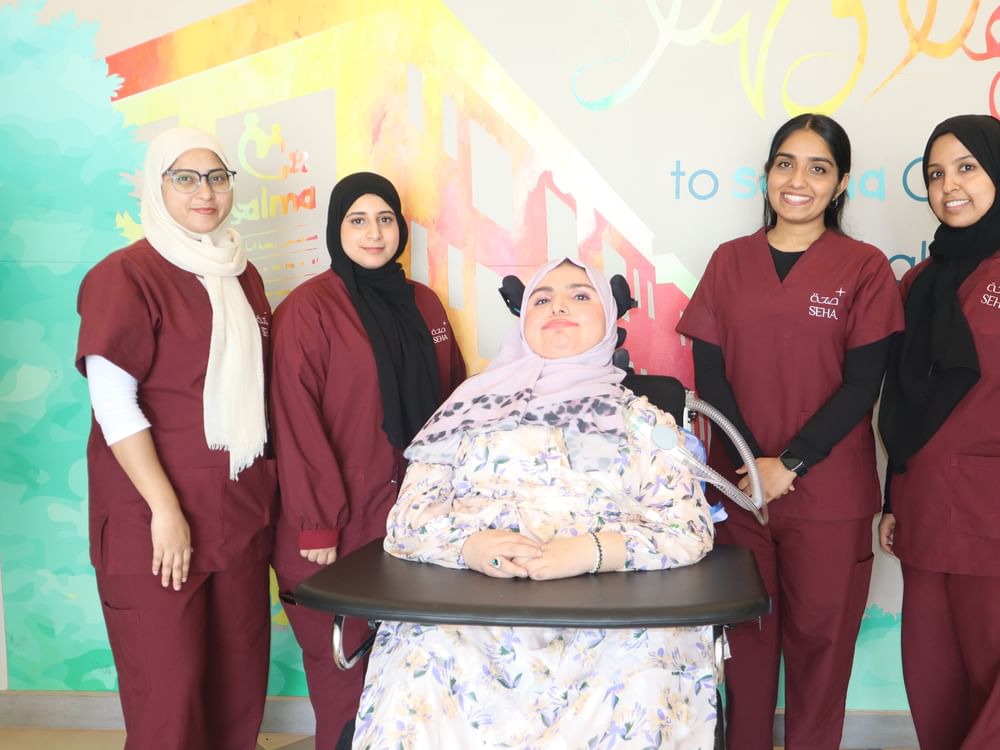
ABU DHABI, 20th October, 2026 (WAM) -- SEHA, a subsidiary of PureHealth, has highlighted the journey of an Emirati woman of determination, whose experience at SEHA’s Salma Rehabilitation Hospital reflects a renewed understanding of rehabilitation as restoring confidence and enabling participation in everyday life.
Living with a progressive neuromuscular condition, the patient experienced a gradual decline in physical abilities over several years, eventually becoming fully dependent on others for daily activities.
Following her admission, the hospital developed a personalised rehabilitation plan focused on her long-term needs, communication, comfort and independence.
A multidisciplinary team comprising physiotherapists, occupational therapists, speech and language therapists, and education and recreation specialists helped her build confidence and improve her social and vocational participation.
A key part of her rehabilitation involved advanced assistive technology, including a toe-controlled device that allows her to navigate digital platforms, communicate independently and create digital content.
Using the technology, she has developed practical digital skills, prepared her CV and begun exploring part-time employment opportunities, including a potential role in a library.
Nouf Alhadrami, Physiotherapist at Salma Rehabilitation Hospital, said, “This journey reminds us that rehabilitation is not always about reversing a condition. In long-term care, success can mean comfort, participation, and maintaining control over life decisions. She is not defined by her limitations, but by the way she continues to engage, express herself, and shape her daily life.”
Shahnaz Ansari, Occupational Therapist at Salma Rehabilitation Hospital, said, “Occupational therapy focuses on meaningful activity and purpose. For her, independence has been reimagined through technology, digital skills, and vocational readiness. Being able to type, create, prepare a CV, and work towards employment are important milestones that reflect her determination and the value of personalised rehabilitation.”