
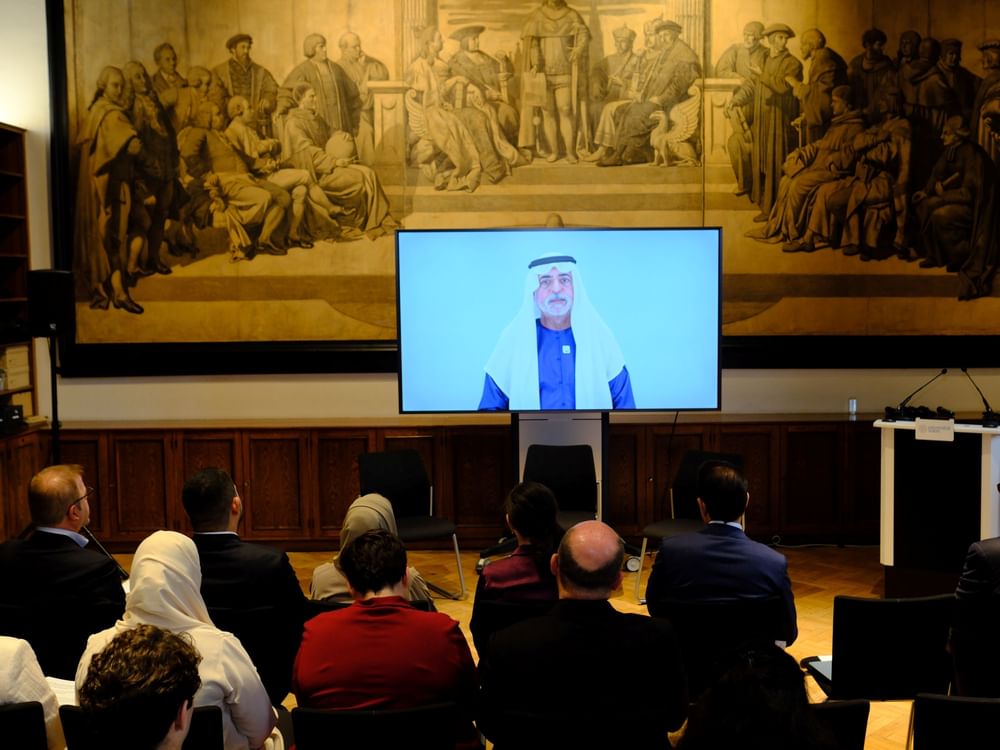
VIENNA, 20th October, 2026 (WAM) -- Sheikh Nahyan bin Mubarak Al Nahyan, Minister of Tolerance and Coexistence, has emphasised that tolerance, in the UAE's vision, goes beyond merely accepting others to respecting them, building bridges between different cultures and beliefs, and laying the foundations for societies where people can live together in dignity, security and mutual respect.
He said the UAE-Austria Intercultural and Interreligious Dialogue Forum is particularly significant, as it reaffirmed that relations between nations are, fundamentally, relations between peoples. The forum, he added, provides an opportunity to listen to one another, learn from one another and discover the shared values and aspirations that unite them.
Sheikh Nahyan made the remarks in an address to the forum, which opened Monday in Vienna and runs for three days under the theme "Youth and Religion: Digital Space as a Platform for Responsible Religious Awareness".
The Ministry of Tolerance and Coexistence heads the UAE delegation to the forum, which focuses on youth, artificial intelligence, global citizenship, digital ethics, the formation of young people's religious identity in the digital age, human fraternity in the digital public sphere, AI and ethics, the future of religious education, and the shared responsibility of educating global citizens.
The forum's inaugural edition was held two years ago at the Abrahamic Family House in Abu Dhabi.
Opening his address, Sheikh Nahyan said, "It is a pleasure to address your gathering, which brings together friends from the Republic of Austria and the United Arab Emirates, two countries bound by close and enduring relations founded on friendship, mutual respect and a shared desire to build a better future for our peoples. I am delighted to share some thoughts with you on this occasion, and I wish your meeting and discussions every success."
He noted that although Austria and the UAE differ in their histories, cultures and experiences, they share a firm belief that dialogue between peoples, respect for human dignity and mutual openness are essential foundations for building peaceful and prosperous societies.
At a time when the world continues to face conflicts, divisions and misunderstandings, he said, these values are particularly important. Human fraternity and tolerance are not merely abstract concepts but fundamental principles that shape how people live together, how nations cooperate and how they address challenges affecting everyone.
Sheikh Nahyan said that this conviction lies at the heart of the UAE's national experience. The country is home to people from across the world, representing diverse nationalities, languages, religions, cultures and traditions, who live and work together and contribute collectively to the nation's progress and prosperity.
He reaffirmed the UAE's commitment to respecting the diverse peoples and beliefs represented by those who live and work in the country, encouraging everyone to take pride in their identities and values while recognising the shared human values that unite them.
"This approach to diversity is a central part of the vision of the United Arab Emirates. Our firm commitment to these values is also reflected in the establishment of the Ministry of Tolerance and Coexistence. Through the Ministry's efforts, we affirm that tolerance is deeply rooted in our Arab and Islamic identity and must extend to everyone, without discrimination based on nationality, religion, culture, language, gender, age, ability or social status," he added.
Sheikh Nahyan stressed that these principles are directly aligned with the forum's objectives, offering Austria and the UAE an opportunity not only to strengthen their friendship but also to reaffirm the value of dialogue and human connection in an increasingly complex world.
He expressed his deep appreciation for the participants' commitment to strengthening human ties between the two countries, voicing hope that UAE-Austria relations would continue to flourish and remain a living example of what nations and peoples can achieve when united by respect, trust and a shared commitment to peace.
Ambassador Regina Rusz, Director-General for International Cultural Relations at Austria's Federal Ministry for European and International Affairs and head of the Austrian delegation to the forum, welcomed the UAE delegation to the second edition. She said Vienna's hosting of the event reflects the longstanding strategic partnership between Austria and the UAE and their shared commitment to tolerance and peaceful coexistence.
She added the forum focused on empowering younger generations and coordinating efforts among government institutions, academic bodies and religious communities in both countries to foster a safe and informed digital environment where young people can engage in constructive dialogue based on mutual respect and responsible citizenship.
Dr. Alexander Filipović, Dean of the Faculty of Catholic Theology at the University of Vienna, welcomed the forum's second edition, highlighting the role of academic institutions in addressing pressing contemporary issues, particularly the influence of digital platforms on young people's religious awareness and sense of social responsibility. He expressed hope that the forum would produce practical recommendations to advance tolerance and coexistence and empower young people to engage in responsible dialogue amid rapid digital transformation.
Afra Al Sabri, Director-General of the Ministry of Tolerance and Coexistence and head of the UAE delegation, commended the Austrian side's efforts in organising the forum.
In her opening remarks, she said digital technologies offered significant opportunities but also placed greater responsibility on societies to protect young people from online risks and empower them to use technology positively and responsibly. She stressed that tolerance, respect for diversity, dialogue and human fraternity must guide interactions both online and offline.
Al Sabri also emphasised the importance of equipping young people with confidence in their identities and the critical thinking skills needed to distinguish reliable knowledge from divisive discourse. She said AI could expand access to education, communication, translation and knowledge but must be used responsibly and ethically, particularly in religious education, while preserving the essential role of teachers.
The forum's first session examined the formation of young people's religious identities in the digital age.
Khalid Mohammed Al Nuaimi, Director of the Federal Youth Authority, outlined the UAE's approach to youth empowerment and identity development, highlighting initiatives and programmes that harness digital innovation to foster responsible awareness among younger generations.
Participants also discussed the influence of digital platforms, social media and influencers on young people's religious identities, alongside initiatives through which educational and religious institutions can strengthen critical thinking and encourage positive engagement with digital technologies.