
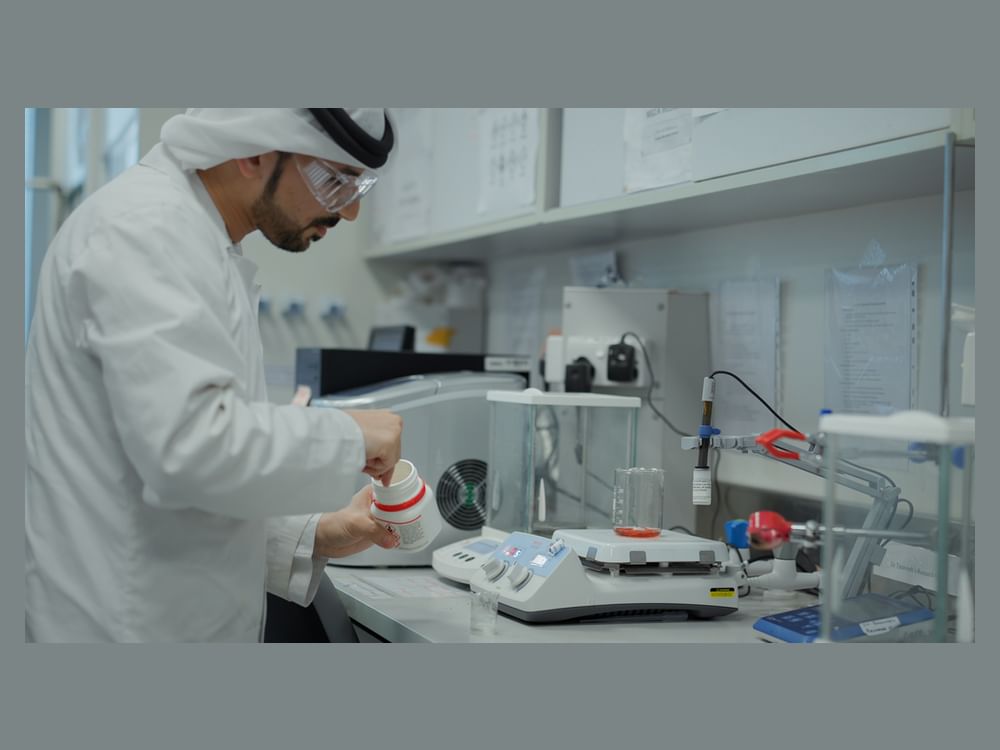
AL AIN, 26th October, 2026 (WAM) -- A research team at the United Arab Emirates University (UAEU) has developed a photocatalyst that uses light to remove antibiotic residues from water and produce hydrogen, a clean fuel.
The project combines efforts to address water pollution with the development of sustainable energy solutions.
Entitled “From Polluted Water to Clean Energy,” the project demonstrated the removal of more than 98 percent of the antibiotic ciprofloxacin within 90 minutes under visible light from LED lamps. The experiments also showed that 88 percent of the antibiotic was converted into harmless products, while the hydrogen production rate was five times that achieved using either of the catalyst’s constituent materials alone.
The project addresses the persistence of antibiotic residues in wastewater, their environmental impacts and their contribution to bacterial resistance to antibiotics. It aims to harness light to break down these pollutants while using the same technology to produce hydrogen.
The research team combined two materials—manganese dioxide and zinc indium sulfide—and treated the surface of the manganese dioxide with phosphate. This treatment improved the catalyst’s response to light and enhanced its efficiency in removing pollutants and producing hydrogen.
The catalyst works by using light to generate electrical charges that drive chemical reactions. These charges typically recombine rapidly, reducing their effectiveness. However, the phosphate treatment helped keep them separated long enough to be used more efficiently in breaking down pollutants and producing clean fuel.
The findings open up opportunities to develop technologies that could eventually harness sunlight to treat polluted water and produce renewable energy. Conducted under visible-light lamps, the experiments represent a research step towards broader applications that connect the protection of water resources with efforts to meet energy needs.
The research team comprised Prof. Mohammednoor Altarawneh and Dr. Ranjit Bariki from the College of Engineering at UAEU, alongside Dr. Labeeb Ali from Abu Dhabi Polytechnic, and Mohammed Alkaabi, a PhD student at the College of Engineering at UAEU under the supervision of Prof. Mohammednoor Altarawneh.
The project reflects UAEU’s commitment to directing scientific research towards environmental challenges and developing solutions that support sustainability and connect scientific knowledge with societal needs.