
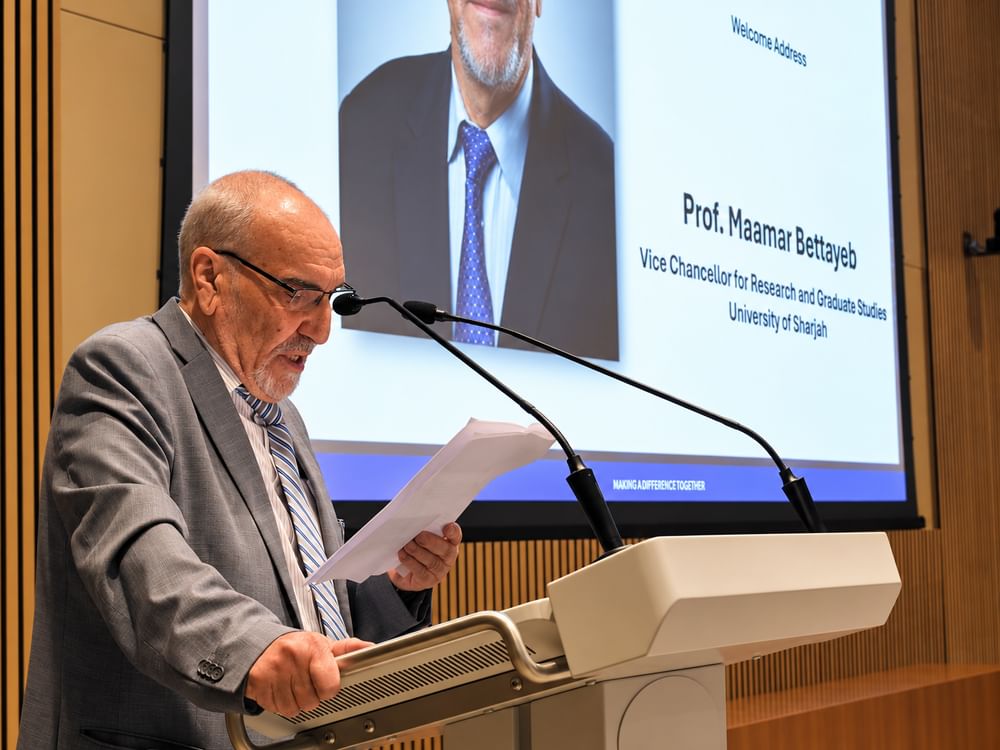
SHARJAH, 28th October, 2026 (WAM) -- The University of Sharjah (UoS) hosted the 23rd International Conference on Computer Systems and Applications (AICCSA 2026), a four-day gathering focused on advances in computing, artificial intelligence, and digital technologies.
Organised in cooperation with the Association for Computing Machinery and the Institute of Electrical and Electronics Engineers, the conference provided a forum for researchers, academics, and specialists to present their latest findings and innovations and discuss the future of computer systems and their applications.
The programme featured 77 research papers presented by researchers from 41 countries, reflecting the international breadth and scientific calibre of contributions. It also included specialised technical sessions, keynote addresses by leading experts and academics, virtual workshops, and a competition showcasing research and graduation projects by students in the University’s College of Computing and Informatics.
Prof. Maamar Bettayeb, Vice Chancellor for Research and Graduate Studies at UoS, emphasised the importance of international research and academic cooperation in computer science and emerging technologies.
Hosting the conference, he said, aligned with the University’s 2030 strategy, which prioritises digital transformation, innovation, and the development of research expertise.
Prof. Bettayeb further highlighted the rapid advances in AI and intelligent systems, stressing the need to develop these technologies according to standards that ensure security, privacy, and reliability. He also underscored the role of universities in translating research findings into practical solutions that support sustainable development and a knowledge-based economy.
Prof. Mohammed Adel Serhani, Acting Dean of the College of Computing and Informatics at UoS, described the conference as an important opportunity to strengthen research cooperation and exchange scientific expertise. He noted the growing role of AI, cybersecurity, cloud computing, and emerging technologies in reshaping societies and economies.
He also called for interdisciplinary research and international partnerships among universities, research institutions, and industry to address challenges involving information security, privacy, and the responsible use of technology. Such cooperation, he said, helps turn scientific innovations into practical solutions that serve society.
The keynote addresses covered a range of subjects. Prof. Ernesto Damiani discussed recent advances in intelligent systems, cybersecurity, big data analytics, and privacy protection, while Dr. Basel Soudan examined the role of intelligent robots and drones in search-and-rescue operations during disasters.
Other conference sessions addressed intelligent systems, AI and its applications; cybersecurity and privacy; 6G and future networks; data science and machine learning; natural language processing; quantum computing; cloud and distributed computing; blockchain; and digital twins. Other topics included sustainable computing and the use of digital technologies across different sectors.