
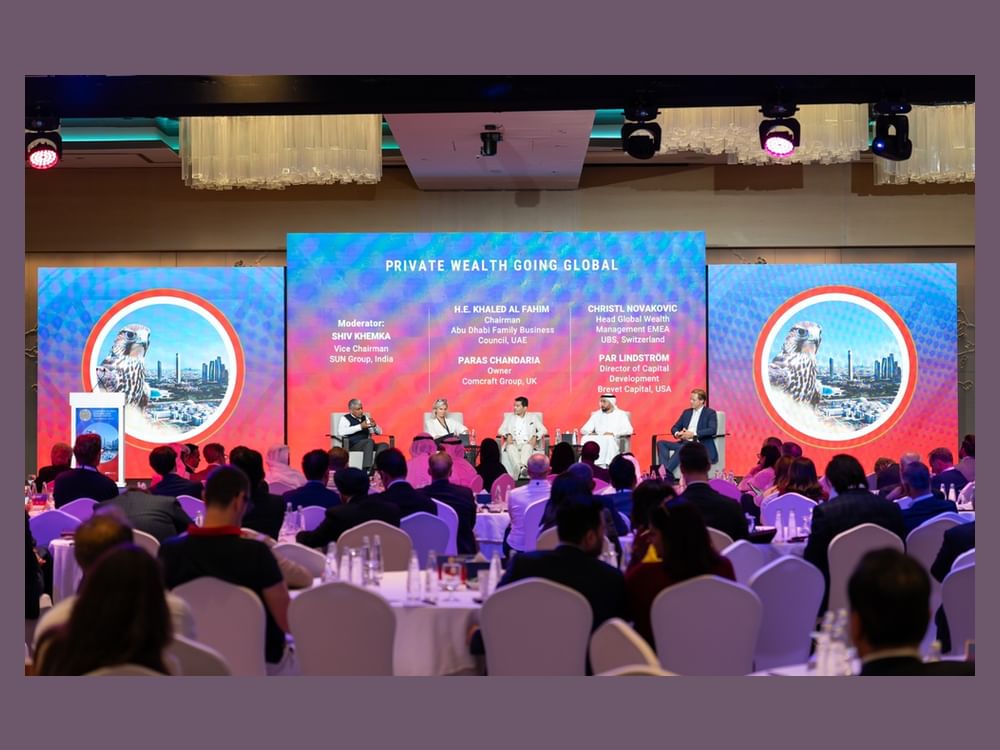
ABU DHABI, 28th October, 2026 (WAM) -- The fourth Global Owners and Family Office Congress concluded in Abu Dhabi, bringing together family business leaders, family office executives, investors and entrepreneurs from around the world.
The congress was organised by Campden Wealth in cooperation with the Abu Dhabi Family Business Council, an affiliate of the Abu Dhabi Chamber of Commerce and Industry.
Khaled Abdulkarim Al Fahim, Chairman of the Abu Dhabi Family Business Council and Board Member of the Abu Dhabi Chamber of Commerce and Industry, said that the sustainability of family businesses depends on three core priorities: developing governance systems, adopting innovation and advanced technologies, and preparing a new generation of leaders able to keep pace with economic change and create future growth opportunities.
In his opening address at the congress, Al Fahim noted that Abu Dhabi's selection to host the Global Owners and Family Office Congress over the next three years reflects the emirate's growing importance within the global family investment landscape. It also creates new opportunities for engagement, knowledge exchange and long-term investment partnerships between local family businesses and their international counterparts.
The congress was held under the theme “The Power of Family Capital to Deliver Change”. Discussions focused on governance and succession, next-generation leadership, global private wealth trends, long-term investment strategies and alternative investments, as well as the role of artificial intelligence and other advanced technologies in supporting innovation and sustainable economic growth.
Al Fahim highlighted the historic role family businesses have played in Abu Dhabi's economic development. He stressed that their contribution was not limited to keeping pace with economic change, but extended to taking an active part in shaping it, from establishing commercial activities and developing infrastructure to investing in hospitality and attracting international brands.
He said their long-term outlook has enabled them to grow alongside Abu Dhabi's economy. He highlighted the sector's strengths, including institutional stability, long-standing relationships and a long-term commitment to the markets and communities in which they operate.
On the future of family businesses, Al Fahim stressed that preserving a family's economic legacy does not mean settling for traditional business management models. It requires readiness for technological change and stronger governance. In this context, he pointed to the Abu Dhabi Family Business Council's partnership with the Mohamed bin Zayed University of Artificial Intelligence, which aims to enable family businesses to benefit from artificial intelligence applications in managing their businesses, strengthening their governance and developing their decision-making processes.
He emphasised that successful transition between generations is one of the most prominent strategic challenges facing family businesses globally. It requires early planning and clear governance frameworks, and greater involvement of future generations in decision-making.
He noted that the Council is working to translate these priorities into practical initiatives, including the Next Generation Family Business Leaders Programme, which recently took its first cohort from Abu Dhabi to Lausanne, Switzerland, for a leadership development programme.
Al Fahim stressed that investing in the development of future leaders is as important as investing in assets and projects, given its essential role in ensuring the continuity and competitiveness of family businesses amid rapid economic change.
He also highlighted the mutual trust and long-standing commercial relationships built across generations as key strengths of Abu Dhabi's family business community, contributing to the emirate's attractiveness to international investment families seeking a stable business environment and long-term partnerships.
Al Fahim said that Abu Dhabi Chamber established the Abu Dhabi Family Business Council two years ago to support the sustainability and growth of family businesses through three main priorities: strengthening governance and succession readiness, developing future leaders, and expanding international networks and partnerships.
He also highlighted the Council's efforts to strengthen engagement with international family offices, including recent discussions with family offices in London to explore opportunities for cooperation and expand the international investment presence of Abu Dhabi's family businesses.
Al Fahim concluded by stressing that the future of family businesses is shaped not only by the wealth passed down through generations, but also by the value each generation adds to the legacy it inherits. He called on the leaders of family businesses and investment offices attending the congress to turn dialogue and knowledge exchange into relationships and partnerships that leave a lasting impact and build a sustainable economic legacy for future generations.