
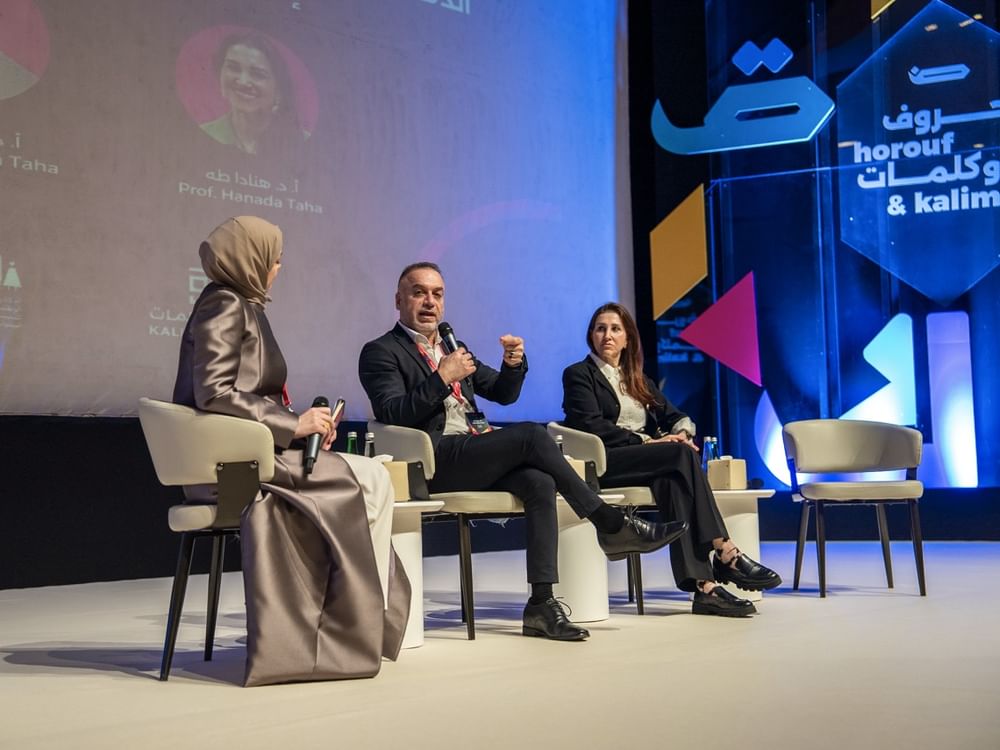
ABU DHABI, 4th November, 2026 (WAM) -- The third edition of the Horouf & Kalimat – Early Childhood Literacy Conference 2026 concluded in Abu Dhabi, drawing 810 participants and issuing recommendations to improve early Arabic literacy through research-based teaching, teacher training and greater involvement from families.
Organised by Kalimat Group at ERTH Abu Dhabi, the three-day conference brought together 50 academics, researchers and educators from the region and beyond for 16 panel discussions, 23 interactive workshops and four keynote presentations. A further 48 teachers took part in an intensive 18-hour training programme. The event recorded 1,554 registrations in its first edition held in the UAE capital.
Held in strategic partnership with the National Academy for Childhood Development, and supported by the UAE Ministry of Education and IFA Hotels & Resorts as main sponsors, the conference focused on addressing gaps in children’s reading and writing skills, improving Arabic educational content and strengthening cooperation between schools and families.
The conference recommended aligning curriculum development with teacher training and school policies, focusing on addressing gaps in children’s reading and writing skills. It also called for improving the quality of Arabic books and educational content to suit children’s ages and interests better.
To strengthen Arabic learning at home, participants recommended regular reading and conversations with children, alongside storytelling, play and interactive activities. They also emphasised the need for teaching approaches that accommodate different learning needs, including those of children of determination.
Ahmed Al Ali, General Manager of Kalimat Group, stressed the need for closer cooperation among educational institutions, families and content creators to strengthen Arabic language education.
He said: “We need to connect these efforts and draw on research and practical experience to identify areas for improvement in classrooms and at home. The true value of the conference discussions lies in turning ideas into practices that help children understand what they read, express their thoughts and develop a lasting connection with Arabic through reading, comprehension and a love of the language.”
A panel titled ‘How Can We Address Weak Foundational Skills and Learning Loss Among Today’s Children?’ examined ways to tackle gaps in reading and writing skills, with contributions from Dr. Asmaa Ammara, Dr. Boshra Kaddoura and Dr. Hanada Kanbar.
Another session, ‘What Is Missing from Arabic Language Education Today?’, brought together Dr. Ghadeer Abu Shamat and Dr. Ibrahim Al Amoush to discuss shortcomings in Arabic language teaching.
A session titled ‘Education Through Children’s Literature’ explored how books and stories can develop children’s reading and language skills, with contributions from Professor Hanada Taha, Dr. Fajr bin Rashid and Dr. Mahdi Mansour.
Lama Al Adnani, Nour Hammo and Masarra Touqan discussed ways to develop age-appropriate, engaging Arabic content in a session titled ‘What Is Missing from Arabic Content for Early Childhood Today?’
Another session, ‘How We Live Arabic’, featured Dr. Anisa Al Sharif, Nahla Al Malki and Dr. Fatima Saeed, who shared family experiences of encouraging children to use Arabic in everyday life.
On the conference’s final day, a panel titled ‘Arabic, National Identity and Their Impact on Society and the Family’ explored the role of language in strengthening national identity, with contributions from Dr. Maryam Al Hammadi, Sheikha Al Musafri and Dr. Badia Al Hashemi.
Dr. Bashar Al Hafni, Dr. Fatima Bailey and Iyad Darawsheh discussed the role of artificial intelligence in education.
Dima Zeidan delivered a presentation on language teaching based on international standards, while Asmahan Al Mundhiri examined the family’s role in instilling Emirati culture and the Arabic language in children.
A panel titled ‘Bringing Play and Fun Back to Arabic Teaching in Nurseries and Schools’ explored how play can encourage children’s participation and motivate them to learn. Speakers included Lama Al Adnani, Hanan Al Jafri and Dr. Maryam Al Jasmi.
Another session, featuring Nour Al Ashqar, Mona Sheikh Abu Bakr Al Kaf and Hamda Al Balushi, examined the role of Quran memorisation and recitation in early Arabic language acquisition.
The conference’s workshops covered interactive reading strategies and illustrated stories, led by Dr. Lamia Tawfik and Samia Ayish, as well as the development of children’s books and educational series, with contributions from Masarra Touqan, Nermin Magdy Badr and Dr. Asmaa Ammara. Lama Al Adnani led a workshop on writing children’s songs.
Other workshops focused on teaching Arabic to children of determination, led by Dr. Mohammed Hamdan, and using play and engaging activities in language learning, with Afaf Al Menhali and Israa Al Mal.
Masarra Touqan explored ways to make books a starting point for interaction and conversation, while Aisha Al Hashemi examined how stories can be integrated into teaching to strengthen children’s connection to their language, values and cultural heritage.
The conference also continued its specialised 18-hour training programme, ‘From the Brain to the Reader’, which focused on applying reading science research in the classroom and examined factors that contribute to children’s readiness to learn to read.